A jewelry box manufacturer is working at a smaller physical scale than most other packaging categories, but the margin for error is tighter — a jewelry box often sits on a retail counter as part of the sale itself, not just as a shipping container, and it has to securely hold a small, high-value item without a printed cavity shape doing all the work. Jewelers of America, the national trade association for the US fine jewelry retail marketplace, represents businesses across the full jewelry supply chain, from independent retailers to manufacturers and suppliers.
This guide covers what separates a capable jewelry box manufacturer from one that will cause fit or presentation problems later — structure types, materials, certification requirements, and the questions worth asking before a first order.
What a Jewelry Box Actually Needs to Do
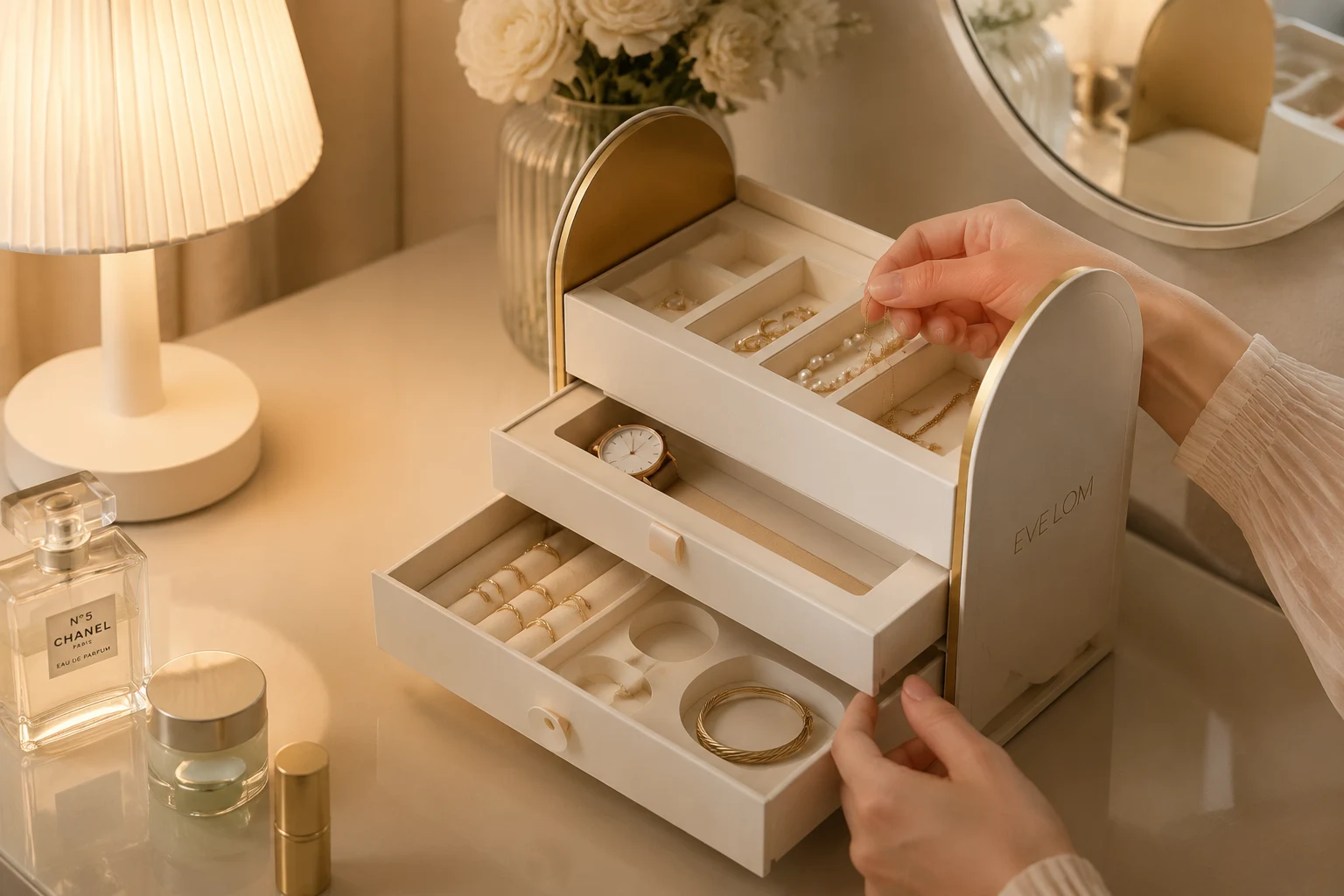
Jewelry boxes are small enough that tolerances matter more than they do for larger packaging — a ring slot cut a millimeter too wide lets the ring shift and rattle, while a necklace insert without the right hook or slit lets a chain tangle before the box ever opens. A jewelry box manufacturer needs insert-design experience across rings, earrings, necklaces, and bracelets specifically, since each shape needs a different cavity or fixing method rather than one generic foam slot.
Because jewelry boxes are handled directly by the customer at point of sale far more often than shipped boxes for other categories, hinge durability and lid-closing feel matter more here than raw drop-test performance — a hinge that feels loose or a lid that doesn’t seat with a clean click undercuts the perceived value of the piece inside.
Common Jewelry Box Structures
Most jewelry box manufacturer catalogs are built around a handful of recurring formats.
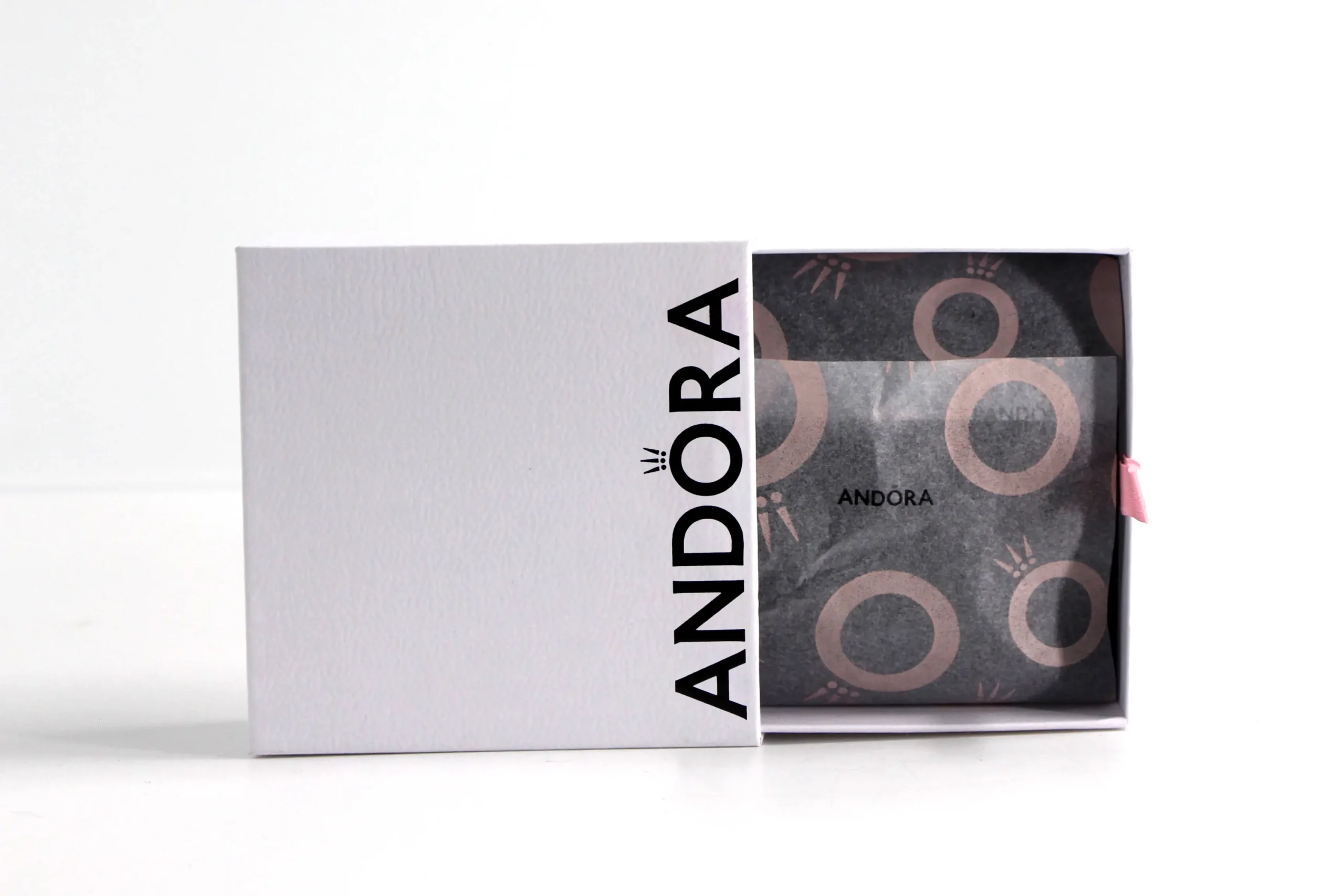
Hinged clamshell boxes. A small, hinged box with a fixed foam or velvet insert, the standard format for rings and small pendants. Our drawer box structure is built around a related sliding-tray mechanism for jewelry presentation.
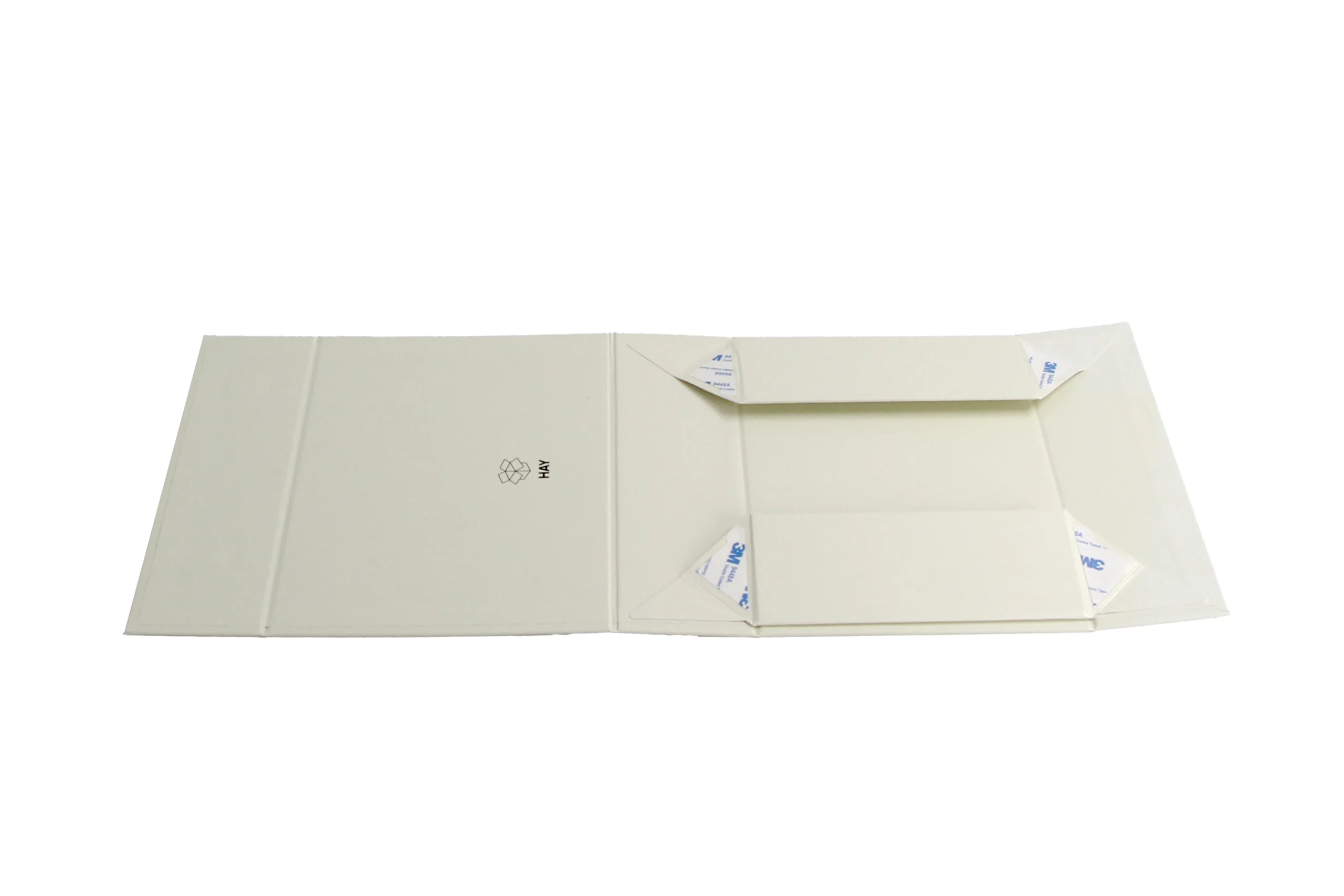
Multi-slot organizer boxes. Larger structures with several compartments for a jewelry set — earrings, necklace, and bracelet together — rather than a single-piece box. See our foldable rigid box line for a flat-shipping, multi-use structure that adapts well to this format.
Personalized and gift-occasion boxes. Structures designed to carry a name, date, or occasion-specific print element, common for proposal or anniversary gifting. Our personalized box line covers this range.
Materials and Finishing Options
The outer shell of most jewelry boxes is coated or specialty paper wrapped over a lighter greyboard than larger gift boxes typically need, often in the 600-1,000 gsm range given the smaller overall size. Velvet-effect paper, flocked lining, and satin fabric are the standard interior treatments, chosen for how they cushion and display the piece rather than for shock absorption in freight, which matters less here than in larger shipped categories.
Hot stamping and embossing on the lid remain common for a logo or brand mark, and a magnetic or spring-hinge closure gives a cleaner open-close action than a simple friction-fit lid, which becomes noticeable with repeated in-store handling.
Certifications Worth Asking About
A jewelry box manufacturer selling into the EU or working with major retail buyers should be able to provide specific certification documentation rather than a general compliance claim. FSC chain-of-custody certification matters whenever sourcing claims appear on the box — see FSC International for how chain-of-custody documentation works. PPWR compliance, ISO 9001, ISO 14001, and SEDEX audit standing round out the certification stack most retail jewelry buyers now expect on file, particularly for brands selling through department stores or larger jewelry retail chains.
Production Timelines and MOQs
A reasonable range to expect from a capable jewelry box manufacturer is a physical sample within 7 days of design confirmation, and bulk production of 20-35 business days depending on order volume and insert complexity. Minimum order quantities for fully custom structures typically start around 1,000 units, though the smaller physical size of most jewelry boxes means tooling costs are generally lower than for larger gift-box categories.
Buyers developing a new insert shape for the first time should still budget extra time for cavity sampling, since a slot cut for the wrong ring size or chain length is a common cause of returns even at this smaller scale.
Private Label vs. Fully Custom Tooling
Some jewelry box manufacturer catalogs offer semi-custom insert tooling — a slot or cavity shape that fits a range of common ring sizes or pendant shapes, with only the outer print customized per brand. This is faster and cheaper than fully custom tooling and works well for a smaller jewelry brand testing a new SKU before committing to piece-specific tooling.
Fully custom tooling, built around one exact piece shape, gives the cleanest fit and presentation but comes with a tooling cost and longer first-sample timeline. A jewelry box manufacturer should be able to explain clearly which category a given quote falls into.
Retail Counter Presentation
Beyond protecting the piece, a jewelry box functions as part of the in-store sale itself far more directly than most other packaging categories — the moment a sales associate opens the box in front of a customer is part of the purchase experience. A jewelry box manufacturer should be able to speak to how a given hinge and lining choice performs under repeated opening on a retail counter, not just how it performs once during unboxing at home.
Brands selling primarily online rather than through physical retail counters may weigh this differently, prioritizing shipping protection and unboxing presentation over the specific hinge-and-click feel that matters more for in-store sales.
Questions Worth Asking Before You Order
A few questions tend to separate a jewelry box manufacturer worth working with from one that will cause problems later. Has this exact insert shape — ring slot, necklace hook, earring card — been produced before, or does it require new tooling? What is the realistic sample lead time? Which certifications can be provided as documentation? And is production run in-house, or subcontracted without direct quality oversight?
Topvisio Packaging runs 14+ automated production lines alongside dedicated hand-assembly stations for small-format, insert-fitted structures like jewelry boxes, with FSC certification available on request alongside PPWR compliance, ISO 9001, ISO 14001, and SEDEX audit standing. You can read more on our About Us page, browse custom gift boxes for jewellery and accessories, or check FSC-certified packaging options for available material grades.
Packaging and Shipping the Finished Boxes
Because jewelry boxes are small, a jewelry box manufacturer can typically fit far more units per shipping carton than larger gift-box categories, which usually lowers per-unit freight cost noticeably. Flat-packed or partially folded boxes ship most efficiently by volume, with final hinge assembly sometimes completed on the buyer’s side for very high-volume orders.
Brands ordering across multiple retail regions should ask whether a jewelry box manufacturer can split a single production run across several shipment destinations without treating each as a separate order.
Buyers finalizing a new insert shape are welcome to request a filled sample rather than an empty box, since ring or chain fit is easier to judge with the actual piece seated than from a technical drawing alone.
Frequently Asked Questions
What’s the difference between a jewelry box manufacturer and a general packaging supplier?
A jewelry box manufacturer typically has insert-tooling experience specific to rings, earrings, necklaces, and bracelets, plus attention to hinge and closure feel that matters more for small boxes handled directly by customers.
How long does it take to get a sample from a jewelry box manufacturer?
A reasonable expectation is 7 days after design confirmation. A new insert shape may take longer for the first full sample.
What is the minimum order quantity for a custom jewelry box?
MOQs for fully custom structures typically start around 1,000 units. Tooling costs are generally lower than for larger gift-box categories given the smaller physical size.
Can a jewelry box manufacturer produce multi-slot organizer boxes for jewelry sets?
Yes. Structures with several compartments for a matching set — earrings, necklace, and bracelet together — are a standard offering alongside single-piece hinged boxes.
Is FSC certification available for jewelry boxes?
Yes. Most jewelry box manufacturers can offer FSC-certified paper and greyboard on request even when it isn’t the default material for a given structure.
Request a Custom Sample
Share your product dimensions, quantity, target market, and reference images. Our jewelry box manufacturer team will recommend the structure, materials, inserts, and finishes, with a real-material sample normally ready within 7 days.