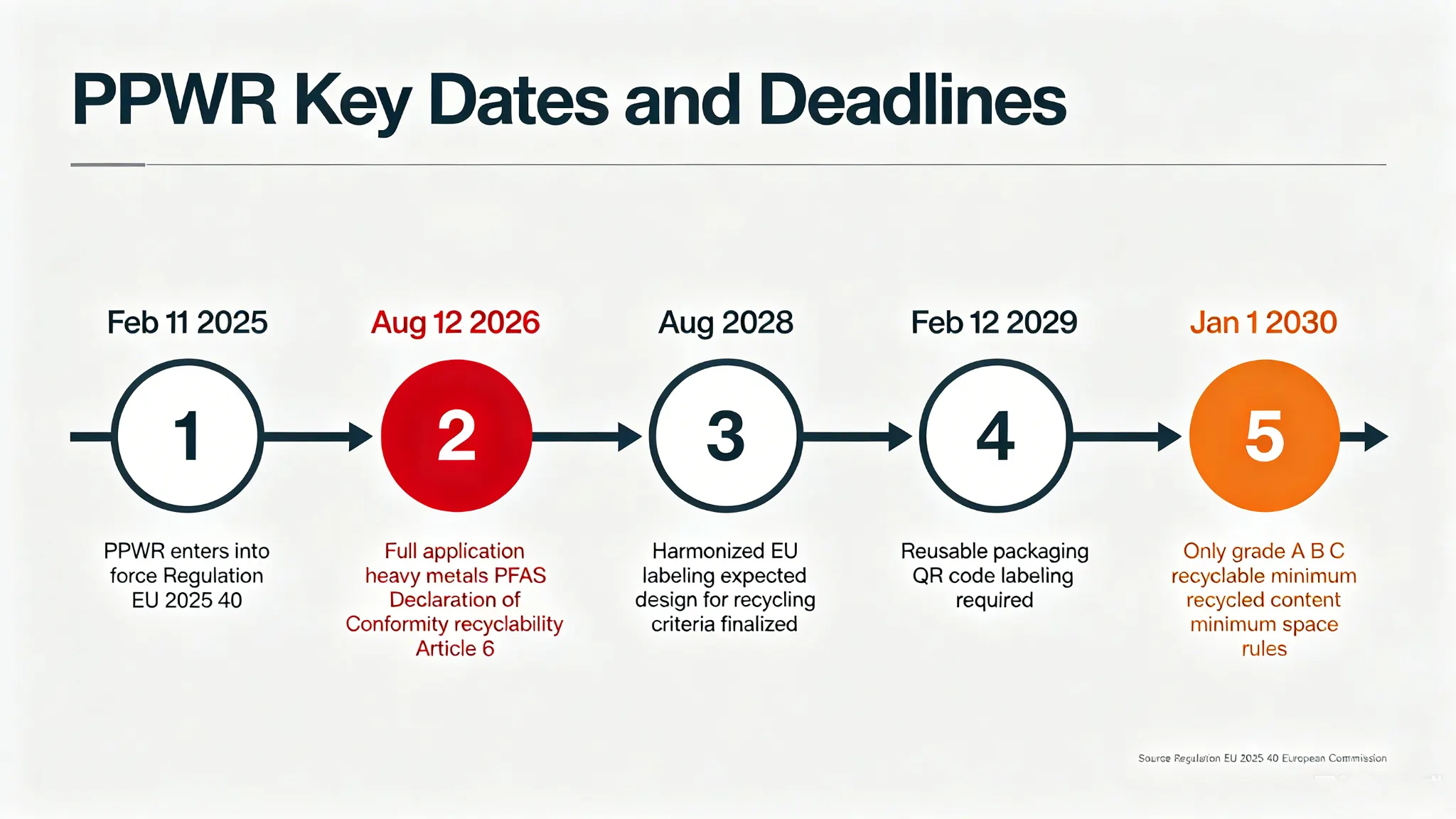
Sourcing PPWR packaging is less about finding a supplier who says the word “sustainable” and more about finding one who can hand over the paperwork to prove it. From August 12, 2026, packaging placed on the EU market needs a Declaration of Conformity, and by 2030 it needs to hit specific recyclability and recycled-content thresholds. Both of those depend on data your supplier has to provide — not data you can generate on your own after the boxes have already shipped.
Here are four questions worth asking before your next purchase order, and why each one matters for anyone buying PPWR packaging from an overseas factory.
Why PPWR Packaging Sourcing Looks Different Now
Until recently, sourcing rigid boxes or cartons from an overseas factory was mostly a conversation about price, print quality, and lead time. PPWR packaging changes what “quality” means. A box can look and perform exactly the same as it did last year and still fail to meet EU requirements, because the failure point isn’t visible in the finished product — it’s in the documentation trail behind it. A brand can order what looks like the same gift box it has ordered for three years and discover, only when a customs check or a retail partner’s audit asks for paperwork, that the supplier never tracked the data needed to prove compliance.
That’s why the four questions below focus on documentation and process rather than the finished box itself. The physical product is rarely the problem; the paper trail behind it usually is.
Can Your PPWR Packaging Supplier Provide a Declaration of Conformity?
A marketing page that says “eco-friendly materials” is not the same as a Declaration of Conformity prepared against the Annex VIII template required under the regulation. The Declaration of Conformity has to reference specific technical documentation — material composition, conformity assessment results, and the standards applied — and it has to be something your compliance team can produce on request, not something assembled after an auditor asks for it.
If your supplier’s answer to “can you provide a DoC” is a shrug or a general certificate of origin, that’s a signal the documentation side of PPWR packaging hasn’t been built into their process yet. Ask to see a sample DoC format before you commit to a production run, not after.
Further reading:Official PPWR regulation text (EU) 2025/40 · PPWR compliance guide
Is Your PPWR Packaging Backed by Chain-of-Custody Records?
From 2030, plastic packaging needs minimum recycled content — 30% for contact-sensitive PET, 10% for other contact-sensitive plastics, 35% for most other plastic packaging. Rigid boxes and cartons made primarily from paperboard aren’t subject to those specific plastic thresholds, but if your packaging includes any plastic components — laminates, windows, closures — the same logic applies: a supplier claiming “30% recycled content” needs documentation showing where that material came from and how it was tracked through production, not just a number on a spec sheet. US-market brands should separately review state single-use plastic restrictions, because their scope and effective dates differ from PPWR.
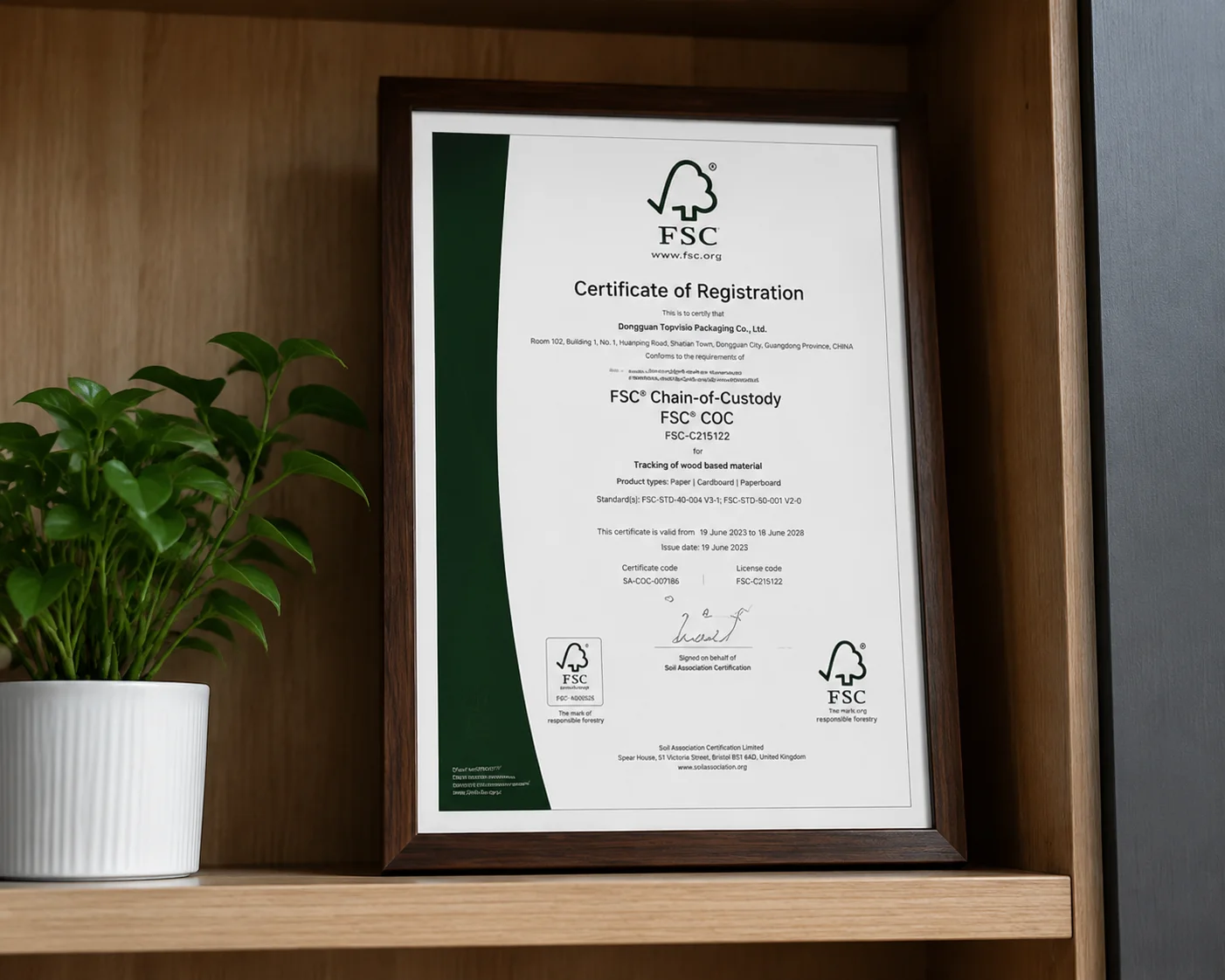
This is where chain-of-custody certification matters. FSC chain-of-custody, for paperboard and pulp-based materials, works the same way — it’s a paper trail showing the material’s path from a certified source to your finished box, not a one-time claim. A supplier that can produce chain-of-custody documentation alongside the physical product is operating differently from one that can only point to a general sustainability policy on its website.
Further reading:Avery Dennison on PPWR recycled content · Navigating PPWR for label manufacturers
Do You Know Your Recyclability Grade — or At Least What Determines It?
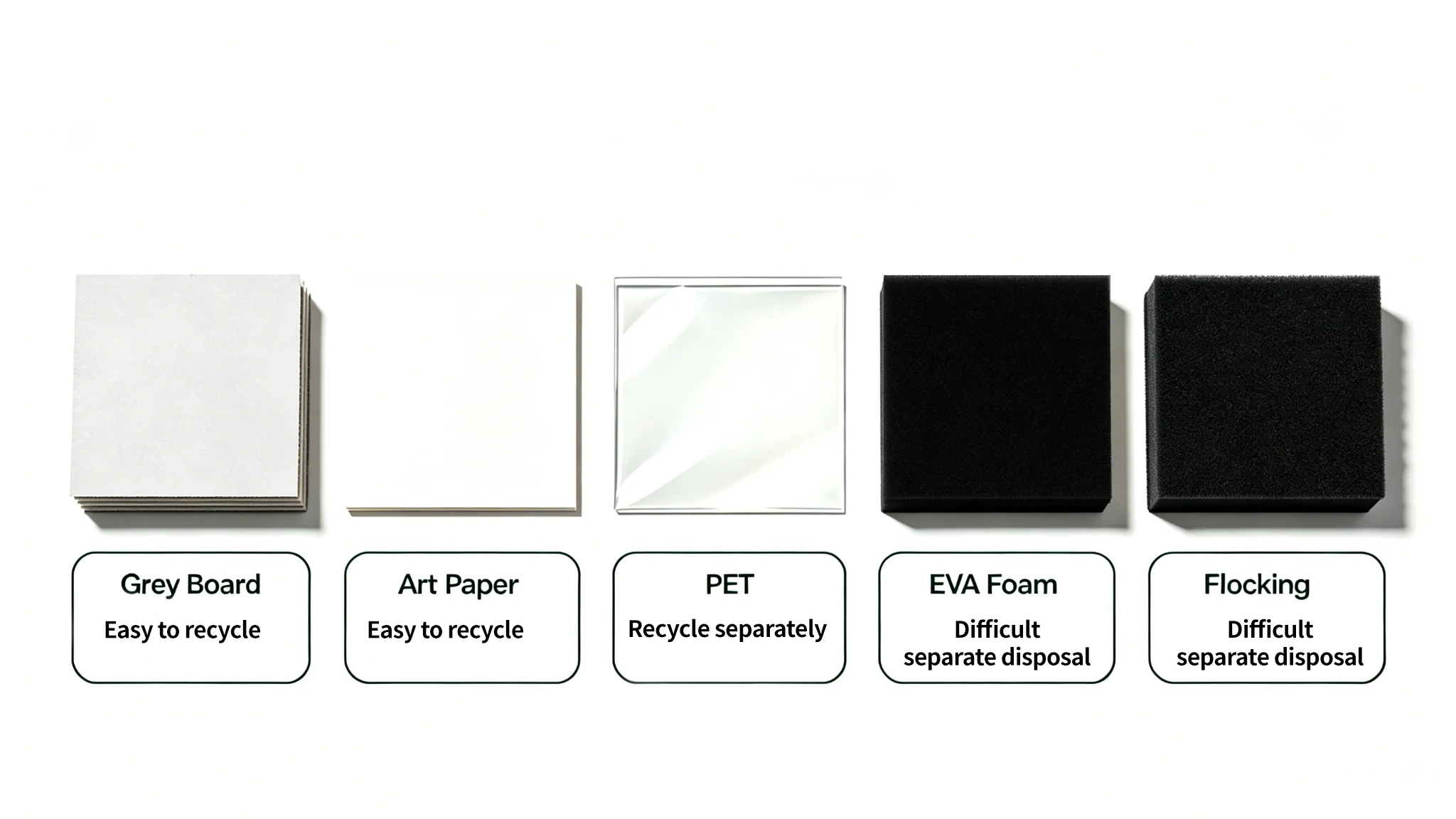
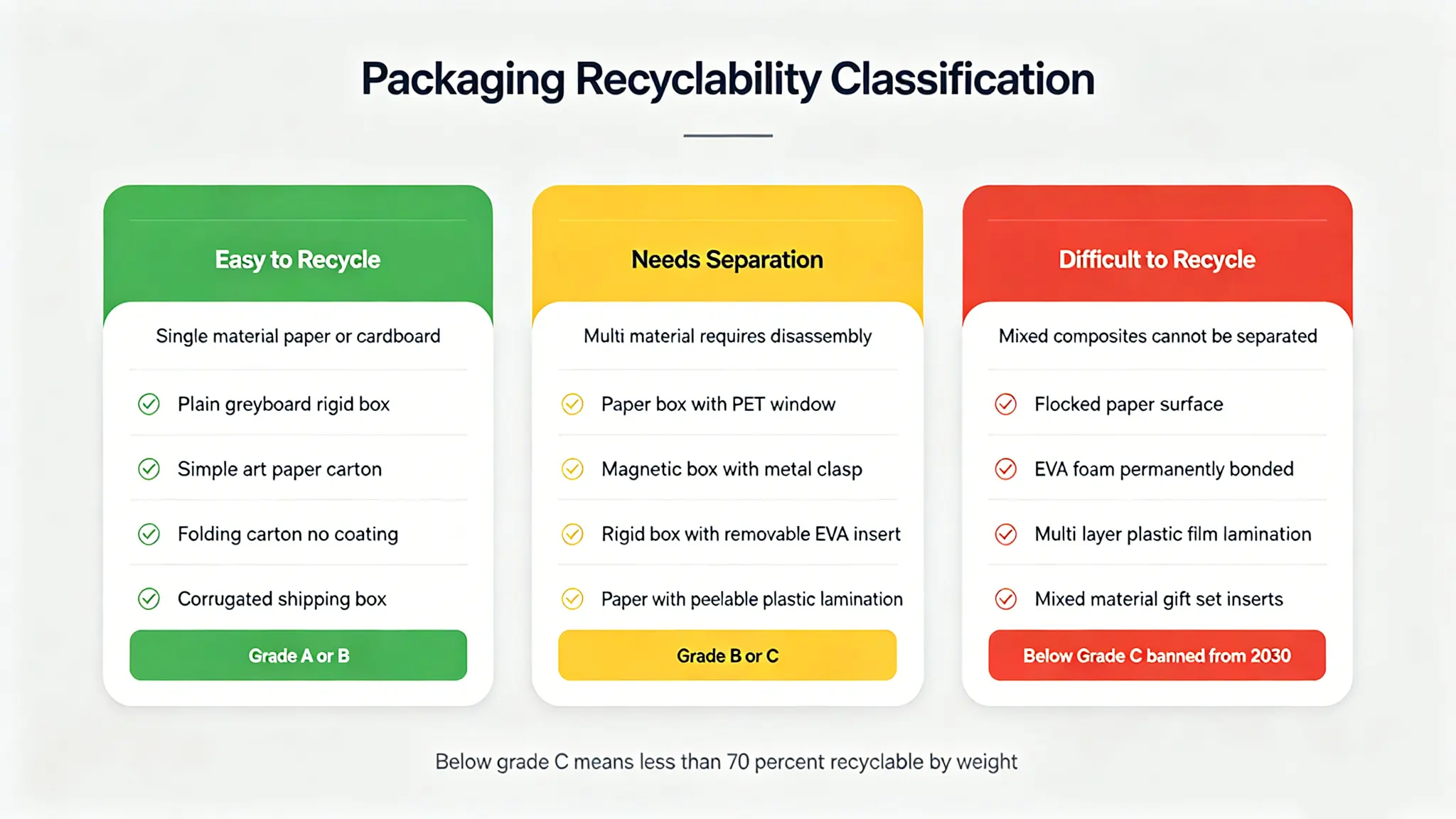
By January 1, 2030, only packaging rated grade A, B, or C can stay on the EU market, based on Design-for-Recycling criteria the European Commission is expected to finalize by 2028. Nobody can hand you a final grade today because the grading methodology isn’t published yet. What a well-prepared supplier can tell you is which structural and material choices tend to help or hurt recyclability — single-material construction versus mixed laminates, water-based adhesives versus solvent-based ones, minimal use of foil or metallic finishes that complicate paper recycling streams.
Asking this question now serves a practical purpose: it tells you whether your supplier is already thinking about the 2030 grading system, or waiting for the rules to be finalized before making any changes. Packaging designed and tooled today often stays in production for years. A structural choice locked in during 2026 can still be sitting in a warehouse — or failing an EU recyclability check — in 2030.
Do You Understand How EPR Registration Affects the Brand, Not the Factory?
Extended Producer Responsibility registration is a national process — LUCID in Germany, CITEO in France, Ecoembes in Spain — and in nearly every case, it’s the brand placing packaging on the market, not the overseas factory producing it, that has to register and pay fees. A supplier doesn’t need to handle your EPR registration, but a supplier who understands this distinction is more likely to hand over the material weight, composition, and packaging-type data your compliance team needs to complete that registration accurately. A supplier who’s never heard the term is one more thing your compliance team will have to chase down manually.
This question also surfaces a role confusion that trips up a lot of buyers. Under PPWR, the company whose name or brand appears on the packaging is generally the “Manufacturer” bearing the heaviest compliance obligations — technical documentation, conformity assessment, the Declaration of Conformity — even if a separate factory physically produced the box. The factory is typically classified as the “Supplier,” expected to provide accurate data but not directly liable for the paperwork. If your packaging supplier talks as though they’ll “handle PPWR compliance” for you, it’s worth clarifying exactly what that means, because the legal responsibility for the Declaration of Conformity doesn’t transfer to them just because they made the box.
Further reading:PPWR roles explained · PPWR roles and responsibilities across the supply chain · Certivo on PPWR compliance evidence
What “PPWR-Ready” Actually Looks Like in Practice
None of these four questions require your supplier to be a law firm or a compliance consultancy. What they require is a supplier that treats material documentation as a standing part of production, not a special request. In practice, that looks like:
Material specifications organized by product line and available on request, not scattered across old email threads
FSC chain-of-custody records that trace paperboard back to certified sources
A sample Declaration of Conformity format the supplier can walk you through before you place an order
Basic fluency in the vocabulary — Manufacturer versus Supplier, EPR versus DoC — so you’re not the only one in the conversation who has read the regulation
A clear answer, without hedging, about which parts of compliance they can support and which parts remain the brand’s responsibility
That last point is worth dwelling on. Some suppliers, aware that PPWR has become a selling point, will imply broader compliance guarantees than the regulation actually allows a Supplier to make. A supplier who’s upfront about the limits of their role — “we can give you the material data, but the Declaration of Conformity is yours to sign” — is often more reliable than one who promises to make the entire problem disappear.
Topvisio, a rigid gift box manufacturer supplying brands across the US, EU, Middle East, and APAC, builds its production process around that standard. Material sourcing runs through FSC-linked chain-of-custody documentation as a default, not an add-on, and specification records are organized so a customer’s compliance team can request them without a multi-week back-and-forth. That doesn’t make Topvisio responsible for signing your Declaration of Conformity — that responsibility sits with the brand under PPWR — but it does mean the underlying data exists before you need it, rather than after an auditor or a customs check asks the question first.
If your current supplier can’t answer these four questions clearly, that’s worth knowing now. PPWR has applied since August 12, 2026, so the time to close documentation gaps is before your next EU-bound order ships, not after a customs check or a retail audit asks for the paperwork.
FAQ
What does “PPWR packaging” actually mean?
It’s not an official regulatory term — it’s shorthand the industry uses for packaging designed and documented to meet the EU’s Packaging and Packaging Waste Regulation. There’s no separate certification called “PPWR packaging”; compliance is demonstrated through the Declaration of Conformity, material documentation, and recyclability data described above.
Can a supplier guarantee my packaging is fully PPWR compliant?
Not entirely on their own. Under the regulation, the brand placing packaging on the EU market — usually classified as the Manufacturer — carries the primary compliance obligations. A supplier can and should provide the underlying material and recyclability data, but the Declaration of Conformity itself is typically the brand’s responsibility, not the factory’s.
How much lead time should I give a supplier to prepare PPWR packaging documentation?
If a supplier is already tracking material and chain-of-custody data as a standard part of production, providing it takes days, not months. If they’re not, expect delays measured in weeks while they backtrack through purchase records — which is exactly why it’s worth asking these four questions before placing an order, not after.
For a broader walkthrough of what the regulation covers, see our companion article, PPWR Explained: 5 Things Every Brand Must Know in 2026. For the full deadline timeline from 2026 through 2030, read EU PPWR Regulation: 4 Key Deadlines From 2026 to 2030.
Send us your product specs and target market — we’ll respond with material recommendations, structural options, and a sample within 7 days.
Related Articles
12:06 pm
What Is Bespoke Packaging? Benefits for Your Brand
8:25 am
How to Design Cosmetic Packaging That Sells
Extended producer responsibility for packaging: who's responsible, which countries have EPR, and what buyers need to know. FSC on request, PPWR compliant.