How big is a ring box? Most ring boxes measure roughly 45-55mm on each side and 35-45mm tall, small enough to fit comfortably in a hand or pocket while giving the ring slot enough depth to hold the piece securely. Exact dimensions vary by insert style, since a slot insert, a pillow insert, and a clamshell hinge each need slightly different internal clearances.
Topvisio Packaging produces ring box structures in Dongguan, Guangdong, China, running 14+ automated production lines with capacity of up to 200,000 units/month for hand-assembled hinged structures. FSC certification is available on request, alongside PPWR compliance, ISO 9001, ISO 14001, and SEDEX audit standing. Our guide on choosing a jewelry box manufacturer covers the sourcing decision if you’re comparing suppliers.
The answer depends on what’s inside the box as much as the ring itself. A single ring with a simple slot insert needs less internal volume than a ring paired with a small card or a cushioned pillow presentation, and the outer dimensions follow from whichever insert style is chosen rather than the other way around.
Standard Ring Box Dimensions
Most ring boxes fall in the 45-55mm width and depth range, with a height of 35-45mm. This is small enough to sit comfortably in a hand during a proposal or gifting moment, but large enough to give the ring slot proper depth without the box feeling flimsy. Boxes designed for a matched pair, such as an engagement ring and a wedding band together, typically run slightly larger, often 55-65mm wide, to fit two slots or a dual-ring cushion side by side.
Insert Types and How They Affect Sizing
A slot insert, a simple cut that holds the ring band upright, is the most compact option and works well for a straightforward band without an elaborate setting. A pillow or cushion insert, where the ring rests on a small padded platform, needs slightly more depth and suits rings with a larger stone that a simple slot might not clear. A slot-and-groove insert, which holds the ring at an angle for a more presentational display, sits between the two in terms of space needed.
Materials for Ring Box Construction
Coated or specialty paper wrapped over a lighter greyboard, typically 600-1,000 gsm given the small overall size, is the standard build for most ring boxes. Velvet-effect paper, flocked lining, or satin fabric are common interior treatments, chosen for how they cushion and display the ring. Our drawer box structure uses a related sliding-tray mechanism, useful if the packaging needs to hold a slightly larger jewelry set alongside the ring.
Closure Types for Ring Boxes
A spring-hinge clamshell is the most common ring box format, giving a clean open-close motion with the lid attached to the base. A magnetic closure offers a similar action without a visible hinge, though it adds manufacturing complexity for a box this small.
A friction-fit lift-off lid is the least expensive option, but it lacks the satisfying click of a hinge or magnet. That matters more for ring boxes than most jewelry packaging, since the opening moment is often part of a meaningful occasion.
How Ring Box Size Affects Retail Counter Presentation
A ring box functions as part of the in-store sale more directly than most packaging, since the moment a sales associate opens it in front of a customer is part of the purchase experience. A box sized correctly for its insert opens smoothly and displays the ring at a flattering angle. One that’s oversized for its contents can make even a beautiful ring look understated, because the eye reads box size as a proxy for value before the ring is even visible.
Custom Sizing for Non-Standard Rings
Wider bands, stacked ring sets, or rings with an unusually large setting sometimes need custom insert dimensions beyond the standard range. A manufacturer with insert-tooling experience across multiple ring shapes should be able to confirm quickly whether a standard box works or custom tooling is needed. A slot cut for a narrow band typically won’t fit a wide statement ring without modification.
Real-World Scenarios: Matching the Box to the Occasion
An engagement ring box faces the highest scrutiny of any use case. The opening moment is often the entire point, so buyers prioritize a satisfying hinge action and a precisely fitted slot over cost.
A retail jeweler selling wedding bands at volume has different priorities: consistent fit across many standard ring sizes matters more than any single box feeling maximally premium. A subscription or gifting service sending rings by mail needs to weigh insert security more heavily, since the ring has to survive shipping rather than just a hand-to-hand presentation. Industry groups like Jewelers of America offer useful context on how retailers approach presentation and customer experience.
Sustainability Considerations for Ring Boxes
Given their small size, ring boxes use a fraction of the material larger gift packaging requires. FSC-certified paper and greyboard address sourcing for the outer structure, and velvet-effect linings are increasingly available in recycled or FSC-certified variants. Small footprint doesn’t remove the value of certification, though; department stores and specialty chains often request FSC documentation regardless of how little material a box uses.
For brands selling into Europe, the EU Packaging and Packaging Waste Regulation (PPWR) also puts growing attention on packaging that is oversized for its contents, another reason to size ring boxes tightly.
Cost Breakdown for Ring Box Packaging
The insert, whether slot, pillow, or cushion, typically represents a larger share of total cost than the outer structure, given the precision tooling required to hold a ring securely. Exterior finishing like foil stamping, embossing, or velvet lining adds cost on top.
Finishing is generally where budget cuts hurt function least. A plainer exterior with a well-fitted insert still protects and presents the ring correctly, while a beautiful exterior with a poorly fitted insert does not.
Ring Box Packaging Within a Larger Jewelry Set
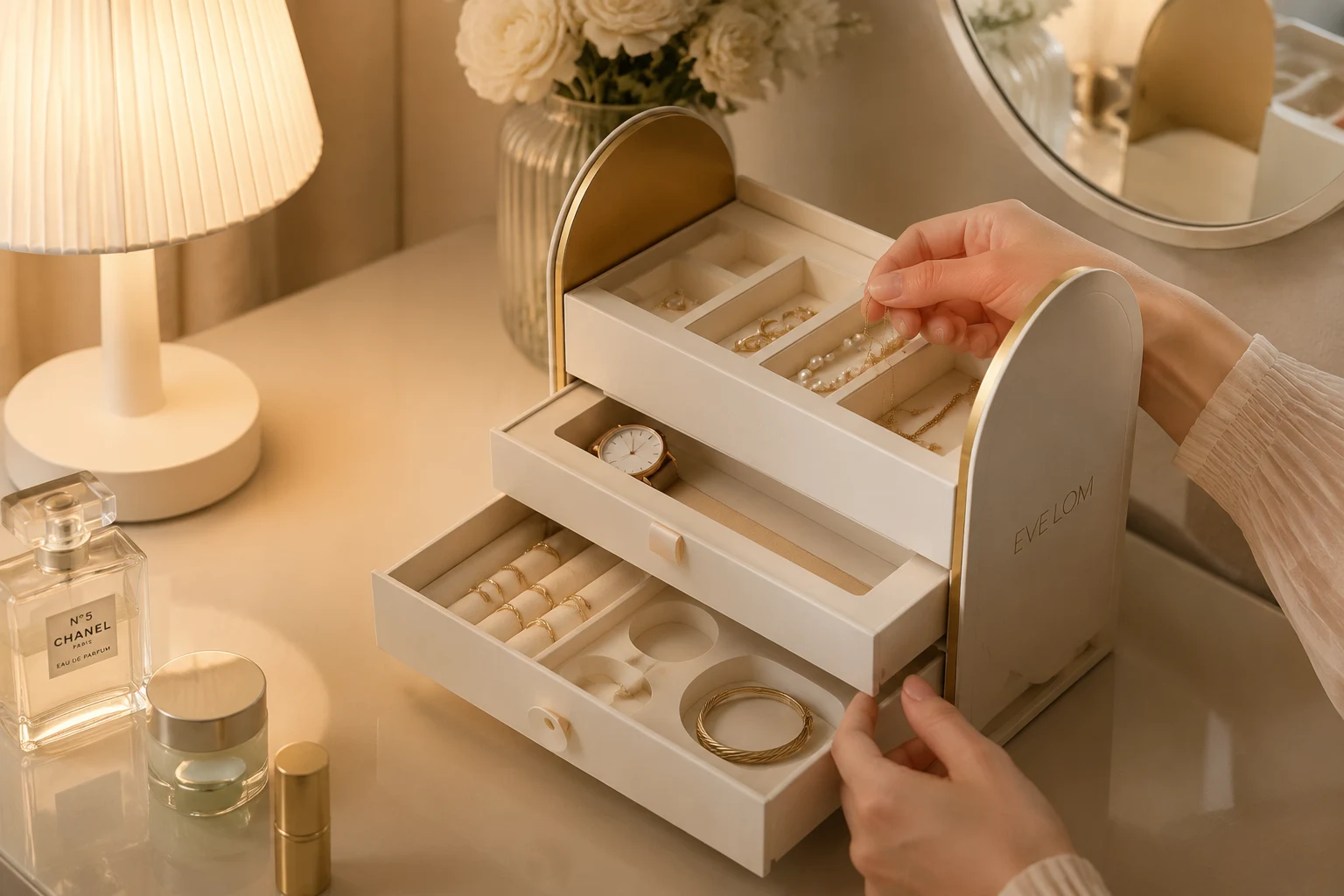
Some ring boxes are one component within a larger gift set that includes earrings, a necklace, or a bracelet. In these cases, ring box dimensions need to be planned alongside the overall set’s outer packaging, usually as a smaller insert nested within a multi-compartment structure. Our jewelry box manufacturer guide covers multi-slot organizer structures for exactly this scenario.
Working With a Manufacturer on Custom Ring Box Fit
Because tolerances matter more at this small scale, it’s worth requesting a filled sample with an actual ring or a same-diameter mock ring rather than relying on an empty structural sample. A slot that measures correctly on a technical drawing can still feel loose or tight once a real ring with its actual weight and profile sits inside it. This is one of the most common gaps between a rendering and a finished product in jewelry packaging.
Ring Box Materials Compared
Velvet-wrapped exteriors give a soft, tactile finish that reads as classic and formal, common for traditional jewelry retailers. Suede-effect paper offers a similar feel at lower cost than genuine fabric. High-gloss lacquer finishes, increasingly requested by modern or minimalist brands, give a sleek, contemporary impression instead. The right choice depends on the brand’s visual identity rather than any single material being universally superior.
Retail Packaging vs Shipping Packaging for Rings
A ring box designed for in-store presentation can prioritize hinge feel and visual impact over durability, since it only travels as far as the customer’s hand. A box for e-commerce needs to perform inside an outer shipping carton, where a loosely cushioned box can shift in transit even if the ring sits securely in its own insert.
Brands selling through both channels sometimes need two slightly different specifications. Shipping performance can be validated against test procedures from the International Safe Transit Association (ISTA).
Trends in Ring Box Design
Minimalist, single-color exteriors with one strong finishing detail, such as a single foil accent or embossed mark, have become increasingly common. This partly reflects broader packaging trends toward restraint, and partly how jewelry photography for social media favors a clean box that doesn’t compete with the ring. Brands developing a new design should consider how the box will photograph alongside how it performs in person.
Common Mistakes in Ring Box Sizing
The most common mistake is ordering a standard size without confirming it fits the specific ring; a wider band or raised setting can catch or sit awkwardly in an insert designed for a narrower profile. The second is prioritizing exterior finish over insert fit. A beautifully finished box with a ring that rattles inside undercuts the presentation more than a plainer box with a precisely fitted insert.
Production Timelines and MOQ
Expect a physical sample within 7 working days of design confirmation, and bulk production of 20-35 business days depending on order volume and insert complexity. Minimum order quantities for fully custom structures typically start around 1,000 units, and the small size of most ring boxes generally keeps tooling costs lower than for larger jewelry categories.
Manufacturing and Certifications
FSC-certified material is available on request, alongside PPWR compliance, ISO 9001, ISO 14001, and SEDEX audit standing. You can browse our full product range or check FSC-certified packaging options for available material grades.
For anyone still working out how big is a ring box right for a specific piece, the safest approach is confirming insert dimensions against the actual ring rather than a general size chart. Band width and stone height vary enough that a chart-based estimate often needs adjustment, and catching that early protects the moment when packaging performance matters most.
Frequently Asked Questions
How big is a ring box, on average?
Most ring boxes measure roughly 45-55mm wide and deep, with a height of 35-45mm. Boxes designed for a matched pair of rings typically run slightly larger, often 55-65mm wide.
What insert type is best for a ring box?
A slot insert works well for a simple band. A pillow or cushion insert suits rings with a larger stone or setting. The right choice depends on the ring’s profile and how it needs to be displayed.
Does a wider ring band need a custom-sized box?
Often, yes. A slot cut for a narrow band typically doesn’t accommodate a wide statement ring comfortably, so custom insert tooling may be needed for non-standard ring shapes.
What closure works best for a ring box?
A spring-hinge clamshell is the most common format, giving a clean open-close motion. Magnetic closure offers a similar effect without a visible hinge, though it adds manufacturing complexity.
What is the minimum order quantity for a custom ring box?
MOQs for fully custom structures typically start around 1,000 units, with generally lower tooling costs than larger jewelry packaging categories given the smaller physical size.
Is FSC certification available for ring box packaging?
Yes. FSC-certified paper and greyboard are available on request, alongside PPWR compliance, ISO 9001, ISO 14001, and SEDEX audit standing.
How long does it take to produce a custom ring box?
A physical sample takes 7 working days after design confirmation, with bulk production running 20-35 business days depending on order volume and insert complexity. Our Dongguan factory runs 14+ automated production lines to keep timelines predictable.
Do e-commerce ring boxes need different specifications than retail ones?
Sometimes. E-commerce ring boxes need additional cushioning to survive shipping inside an outer carton, while retail-only boxes can prioritize hinge feel and visual impact since they don’t travel beyond the point of sale.
Are minimalist ring box designs replacing more elaborate finishes?
There’s a trend toward single-color exteriors with one strong finishing detail, partly driven by how ring boxes photograph for social media and marketing alongside in-person presentation.