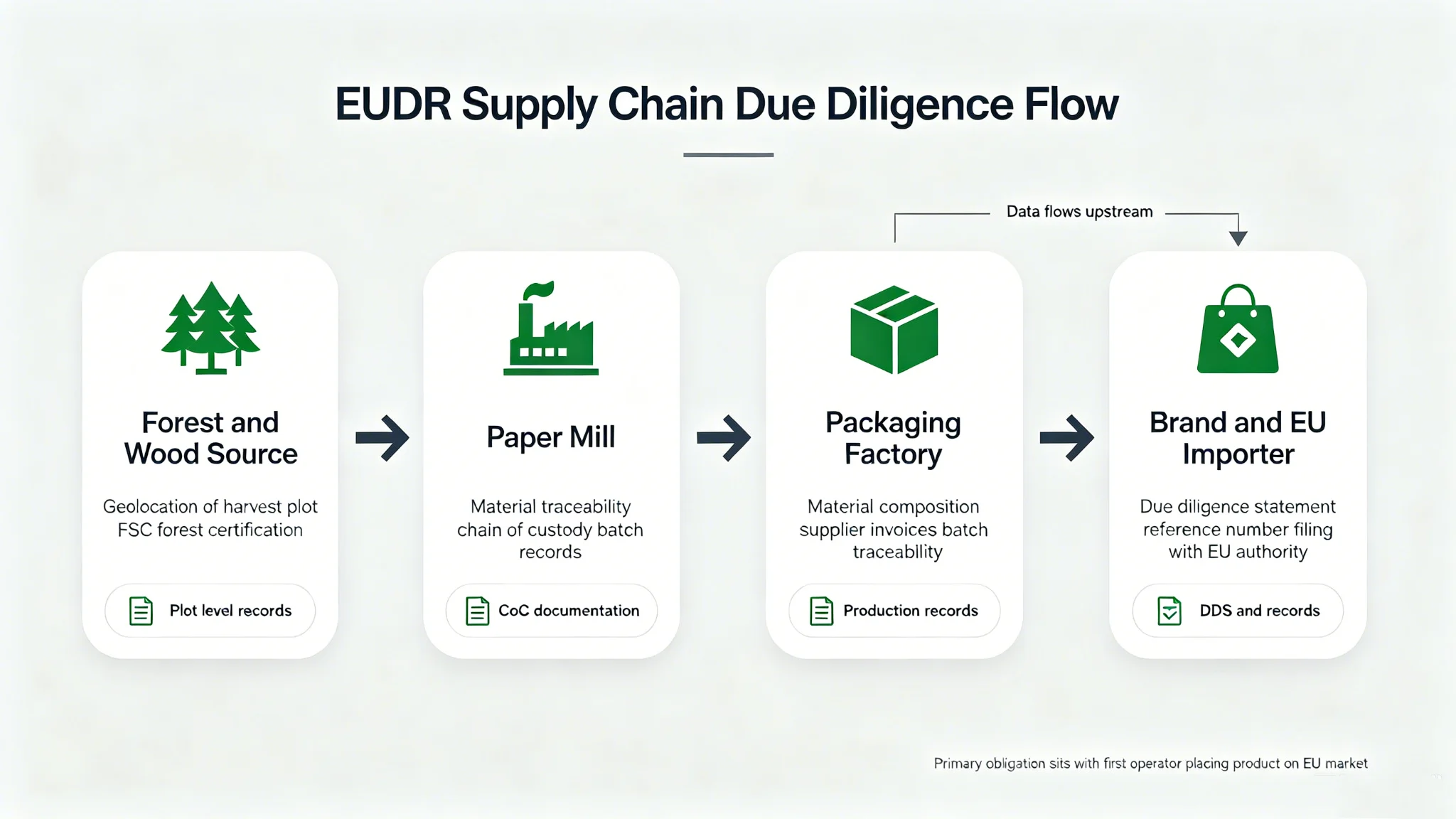
EUDR compliance depends on data that has to originate with your supplier, not something your own team can generate after a shipment has already arrived. From December 30, 2026, businesses placing wood, paperboard, cocoa, coffee, palm oil, rubber, or soy products on the EU market need to prove those products weren’t linked to deforestation after December 31, 2020 — and that proof requires plot-level information most brands don’t hold themselves.
Here are four questions worth asking a paperboard or packaging supplier before your next order, and why each one matters for EUDR compliance specifically.
Can You Provide Geolocation Data Back to the Forest Plot?
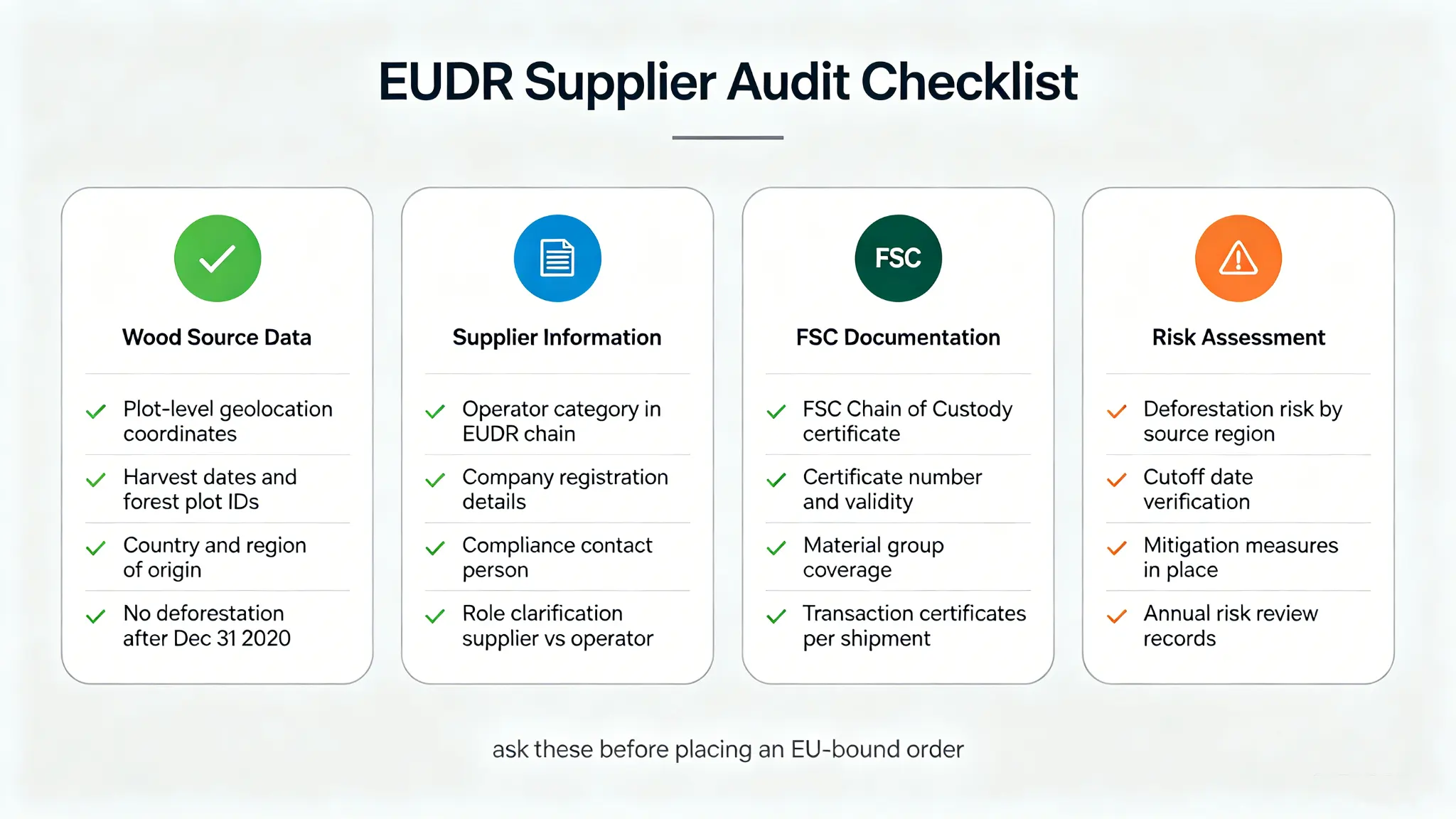
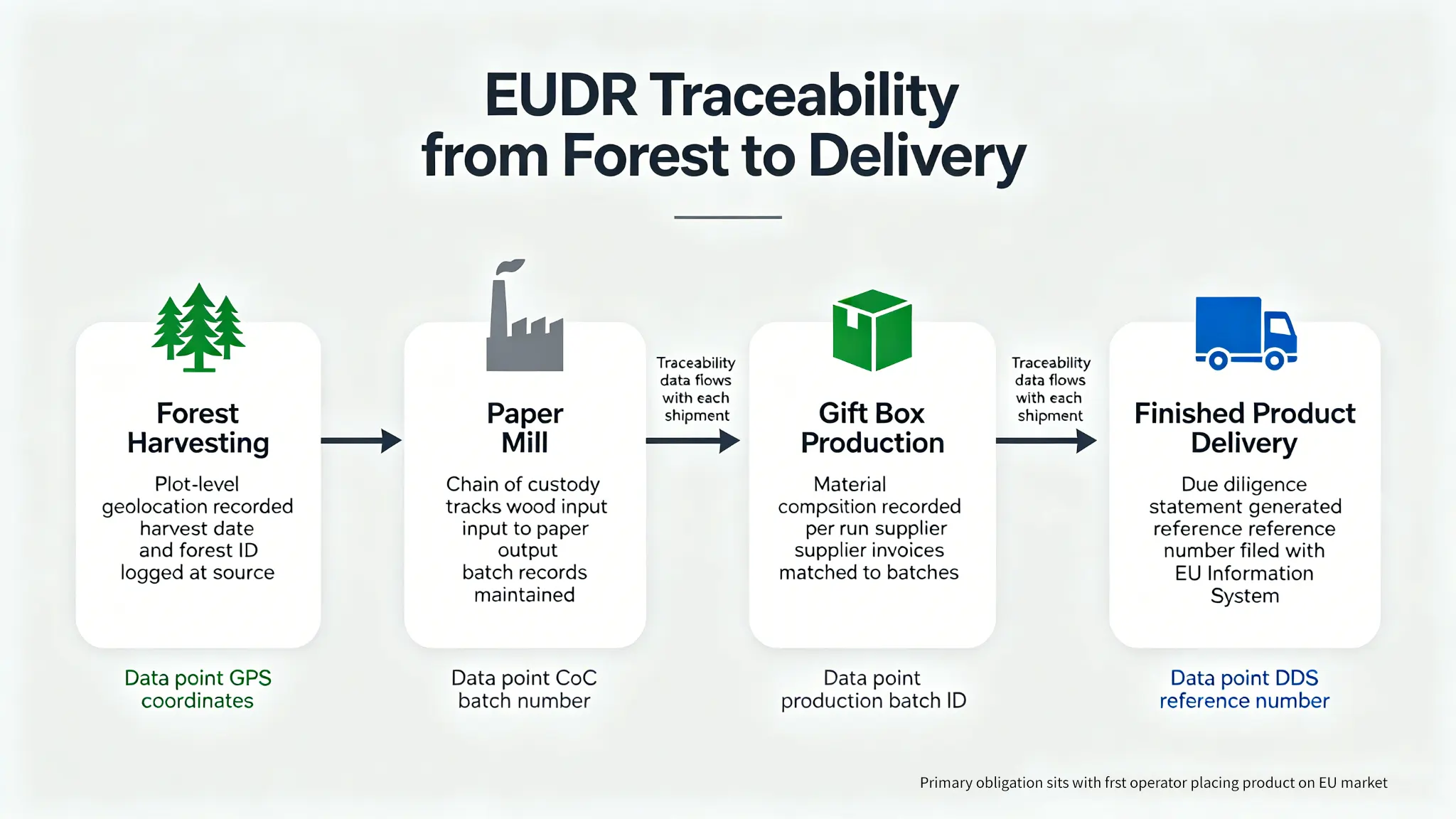
EUDR due diligence requires geolocation coordinates for the land where covered commodities were produced — not a country of origin, not a regional certificate, but plot-level data tied to a specific harvest. A supplier that can only offer a general sustainability statement or a national forestry certificate isn’t providing what the regulation actually requires.
Ask to see a sample of what this data looks like before committing to a production run. A supplier that already tracks plot-level sourcing as part of routine documentation is operating differently from one that would need to reconstruct this information after your order ships — reconstruction after the fact is slower, less reliable, and in some cases simply not possible if records weren’t kept at the point of harvest.
This is also where the difference between “we source responsibly” and “we can prove it” becomes concrete. A supplier’s marketing materials might describe sustainable forestry practices in general terms, but the regulation asks for something narrower and more specific: coordinates, harvest dates, and a clear link between a specific shipment and a specific plot of land. Suppliers who have never been asked this question before may need weeks, not days, to assemble it for the first time.
Further reading:European Commission: EUDR due diligence guidance · Coolset: EUDR compliance roadmap
Do You Know Which Operator Category You Fall Into?
EUDR compliance obligations depend heavily on role, and the 2025 amendments made the role categories more specific: operator, downstream operator, trader, and a new simplified category for micro or small primary operators in low-risk countries. Due diligence is now concentrated mainly on whoever first places a product on the EU market — but that determination isn’t always obvious in a multi-country supply chain involving a factory, an importer, and a distributor.
A supplier who can clearly explain where they sit in this chain — supplier to the operator, rather than the operator themselves — is one step ahead of a supplier who’s never considered the question. This matters because compliance failures often trace back to misclassification: a company assuming someone else in the chain carries the due diligence burden, when in fact no one has actually taken it on.
The 2025 amendments make this question more urgent rather than less, since responsibilities shifted for downstream operators and traders specifically. A company that spent the past year preparing documentation under the assumption it was a downstream operator with its own due diligence obligation may now find that obligation sits elsewhere entirely — which is either good news (less work) or a gap (if the company that now holds the obligation hasn’t realized it yet).
Is Your Packaging Actually in Scope — Or Does It Qualify for the Proposed Exemption?
A draft delegated act moving through the EU’s 2026 simplification process proposes exempting packaging used purely to support, protect, or carry another product from EUDR’s direct requirements. If your paperboard box is packaging around a non-covered product, this exemption — once finalized — may mean the box itself falls outside scope even though it’s made from a covered commodity.
That exemption doesn’t help if the product inside the box is itself an EUDR-covered commodity. A cocoa-based product in a paperboard gift box still triggers due diligence for the cocoa, regardless of whether the box qualifies for the packaging exemption. Ask your supplier — and your own compliance team — to separate these two questions rather than treating “the box is paperboard” and “the product is a covered commodity” as the same compliance question.
Until the delegated act is finalized, the safer working assumption is that the exemption may not cover every packaging format currently in production. A structural or material choice locked in now, on the assumption that an exemption will apply, could leave a brand exposed if the final text narrows the exemption’s scope or excludes certain packaging types from it.
Further reading:Latham & Watkins: 2026 EUDR simplification measures · Mayer Brown: EUDR product scope changes
Does FSC Certification Cover This, or Do You Need Something More?
FSC chain-of-custody certification and EUDR compliance overlap in spirit — both require traceability back through a supply chain — but they aren’t the same requirement. FSC certification demonstrates sustainable forest management practices under an independent standard; EUDR due diligence specifically requires evidence that production didn’t involve deforestation or forest degradation after the December 31, 2020 cutoff, backed by geolocation data submitted through the EU’s own Information System.
A supplier holding FSC certification is a good sign — it usually means the underlying traceability infrastructure already exists — but it’s worth confirming directly whether that infrastructure extends to the specific geolocation and cutoff-date evidence EUDR compliance requires, rather than assuming one certification automatically satisfies the other.
The practical way to test this is to ask a direct question: “Can you show me geolocation data tied to the December 31, 2020 cutoff for this specific shipment?” A supplier with a genuinely EUDR-ready system will have an answer that goes beyond pointing to a certification logo. A supplier without one may still be a perfectly good source of FSC-certified paperboard — that certification has real value on its own terms — but it means additional work is needed before that same material clears the regulation’s specific bar.
What EUDR-Ready Supplier Documentation Actually Looks Like
None of these four questions require a supplier to become a customs broker or a compliance consultancy. What they require is a supplier that treats sourcing traceability as a standing part of production rather than a special request assembled after the fact. In practice, that looks like:
Plot-level geolocation records maintained at the point of harvest, not reconstructed later
A clear, documented understanding of where the supplier sits in the EUDR operator chain
Awareness of which specific products or packaging formats might qualify for the pending exemptions
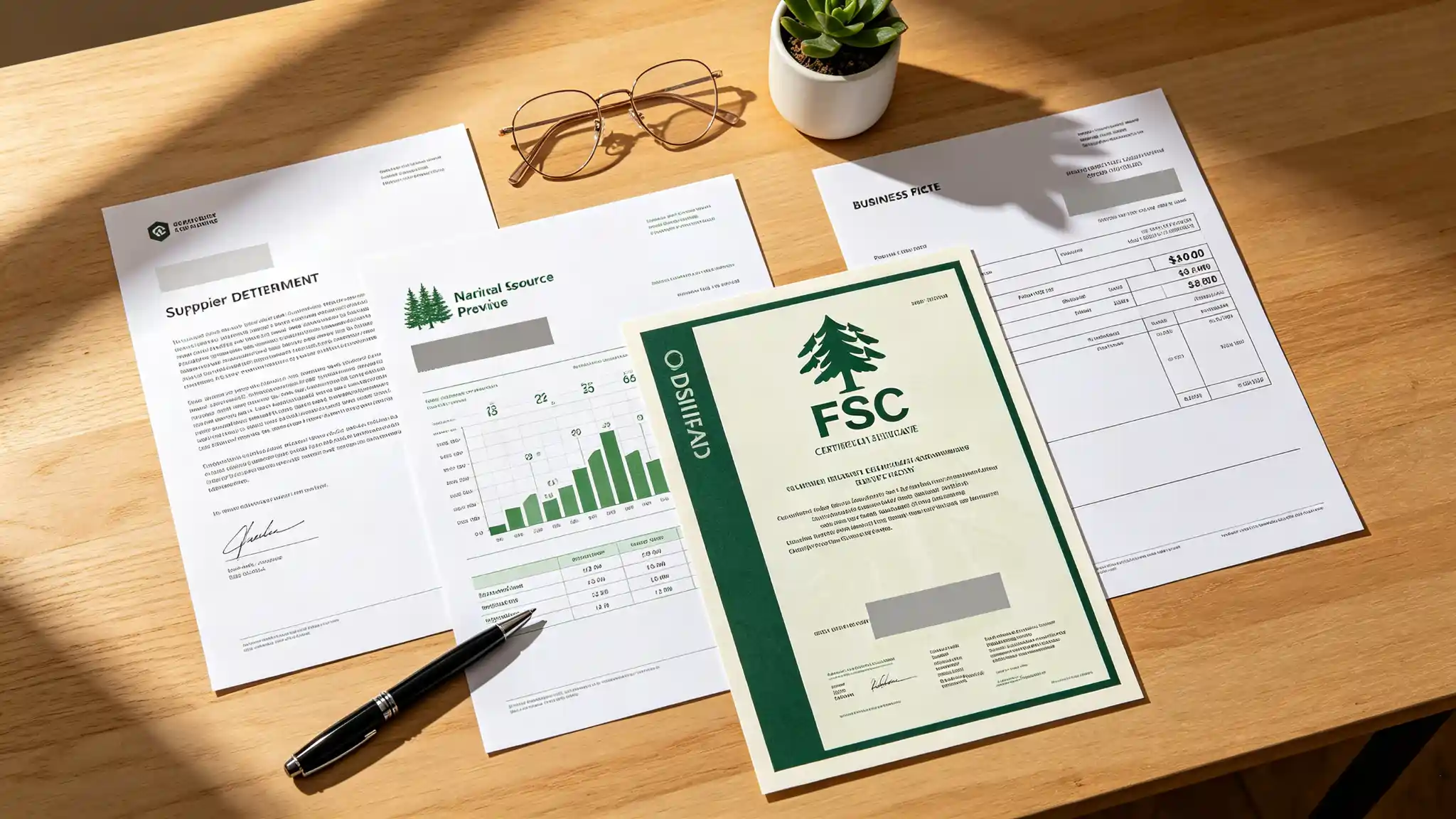
FSC or equivalent certification records organized and available on request, with an honest answer about what that certification does and doesn’t cover for EUDR purposes
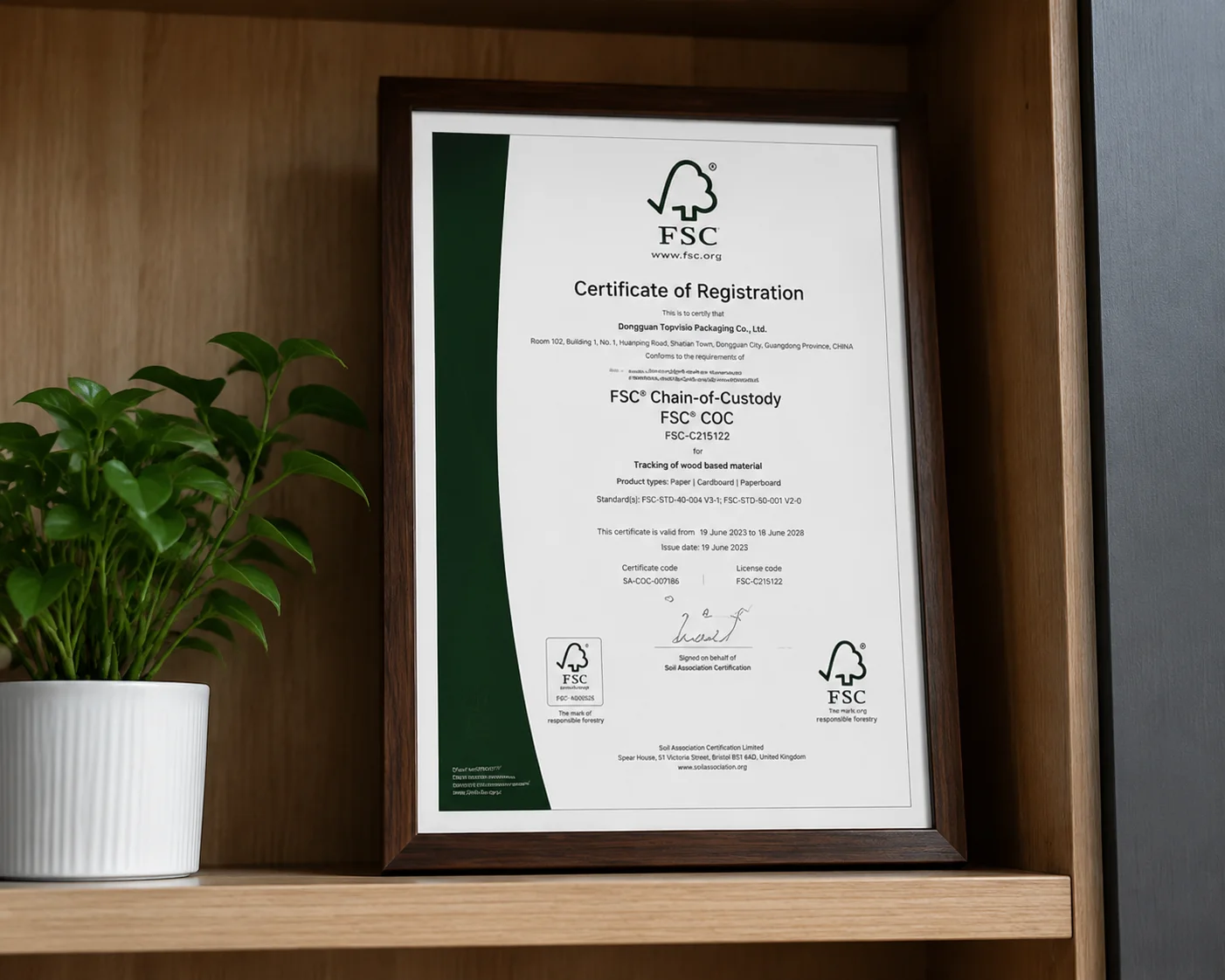
Topvisio, a rigid gift box manufacturer supplying brands across the US, EU, Middle East, and APAC, maintains FSC-linked material sourcing documentation as a standard part of production. That documentation doesn’t determine EUDR compliance on a customer’s behalf — the due diligence obligation and the final compliance determination sit with the EU-based operator placing the product on the market — but it does mean the underlying traceability data exists before a customer’s compliance team has to ask for it, rather than being assembled under deadline pressure.
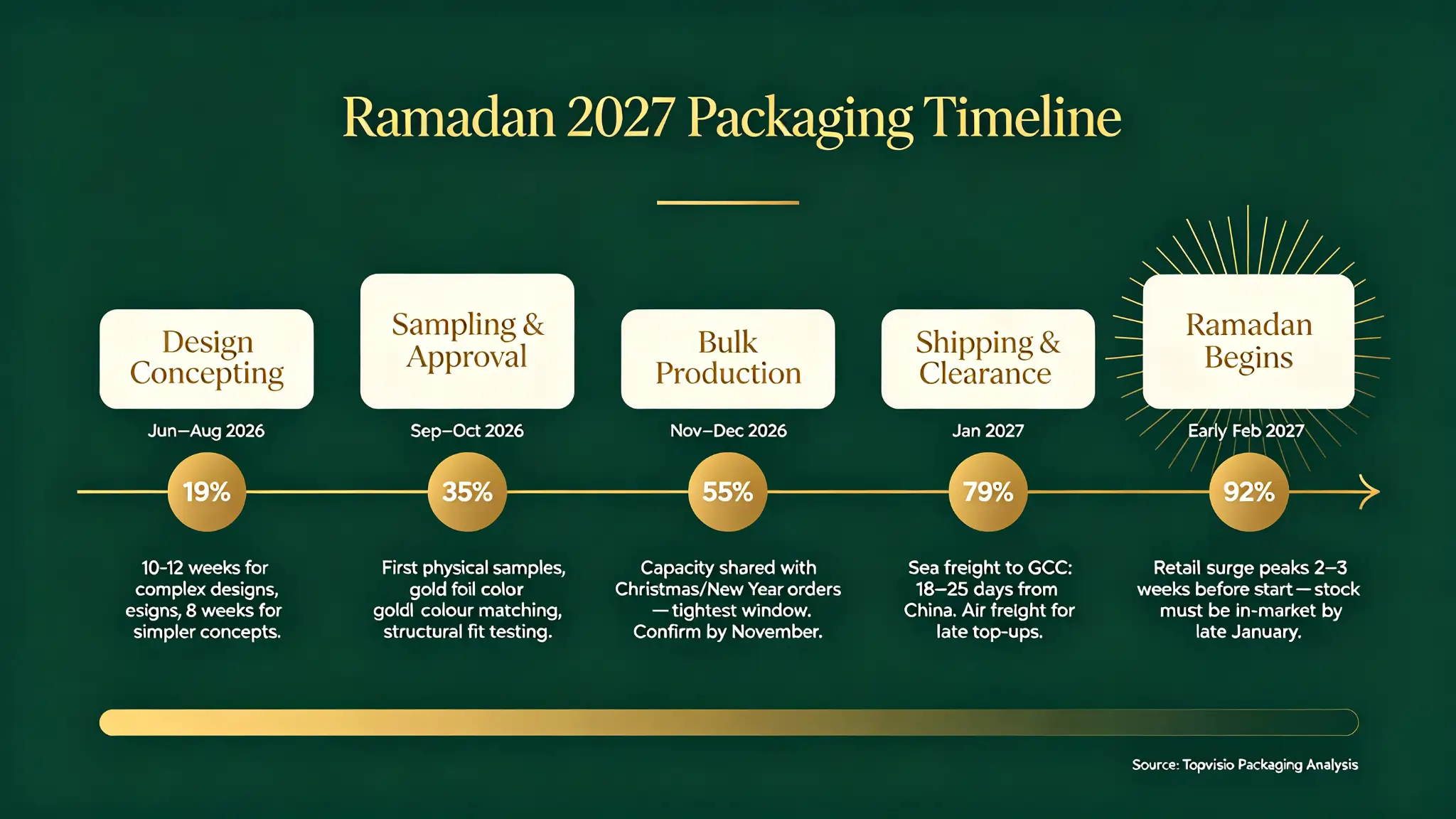
If your current supplier can’t answer these four questions with any specificity, that’s worth knowing well before December 2026, while there’s still time to build the missing documentation or adjust sourcing — not in November 2026 with a container already booked.
FAQ
What is EUDR compliance, exactly?
It’s the set of due diligence obligations under Regulation (EU) 2023/1115 requiring businesses to prove that covered commodities — including wood and paperboard — placed on the EU market weren’t produced on land deforested after December 31, 2020.
Can a supplier guarantee my packaging is fully EUDR compliant?
Not entirely on their own. Under the regulation, the EU-based operator placing a product on the market generally carries the primary due diligence obligation. A supplier can and should provide the underlying geolocation and sourcing data, but the final compliance determination is typically the operator’s responsibility.
How much lead time should I give a supplier to prepare EUDR compliance documentation?
If a supplier already tracks plot-level sourcing data as standard practice, providing it takes days. If they don’t, expect a longer process reconstructing historical records — which is exactly why it’s worth asking these questions before placing an order rather than after.
Is EUDR compliance only relevant to companies buying raw commodities directly?
No. Compliance obligations flow through the supply chain via due diligence statements and reference numbers, so a packaging buyer several steps removed from the original forestry source can still be affected by how well documentation was kept upstream.
This article reflects publicly available information on EUDR as of publication. The regulation’s implementing details, including the delegated act on product exemptions, remain subject to finalization, so confirming current requirements with your supplier and against official EU guidance is worth doing before finalizing orders for EU-bound packaging.
Send us your product specs and target market — we’ll respond with material recommendations, structural options, and a sample within 7 days.
Related Articles
12:06 pm
What Is Bespoke Packaging? Benefits for Your Brand
8:25 am
How to Design Cosmetic Packaging That Sells
Extended producer responsibility for packaging: who's responsible, which countries have EPR, and what buyers need to know. FSC on request, PPWR compliant.