Picking a cosmetic packaging supplier is a different decision than picking a specific box structure. A structure question is about what the product needs; a supplier question is about whether the company behind the quote can actually deliver it — on time, at consistent quality, across however many production cycles your brand runs per year. According to Cosmetics Europe, the European trade association for the industry, 72% of European consumers say cosmetics are an important part of their daily lives, which is part of why packaging quality gets scrutinized closely once a product actually ships.
This guide focuses on the supplier relationship itself — what to check before signing, red flags worth taking seriously, and how to structure a first order so a new cosmetic packaging supplier earns trust gradually rather than all at once.
Start With What the Supplier Actually Owns
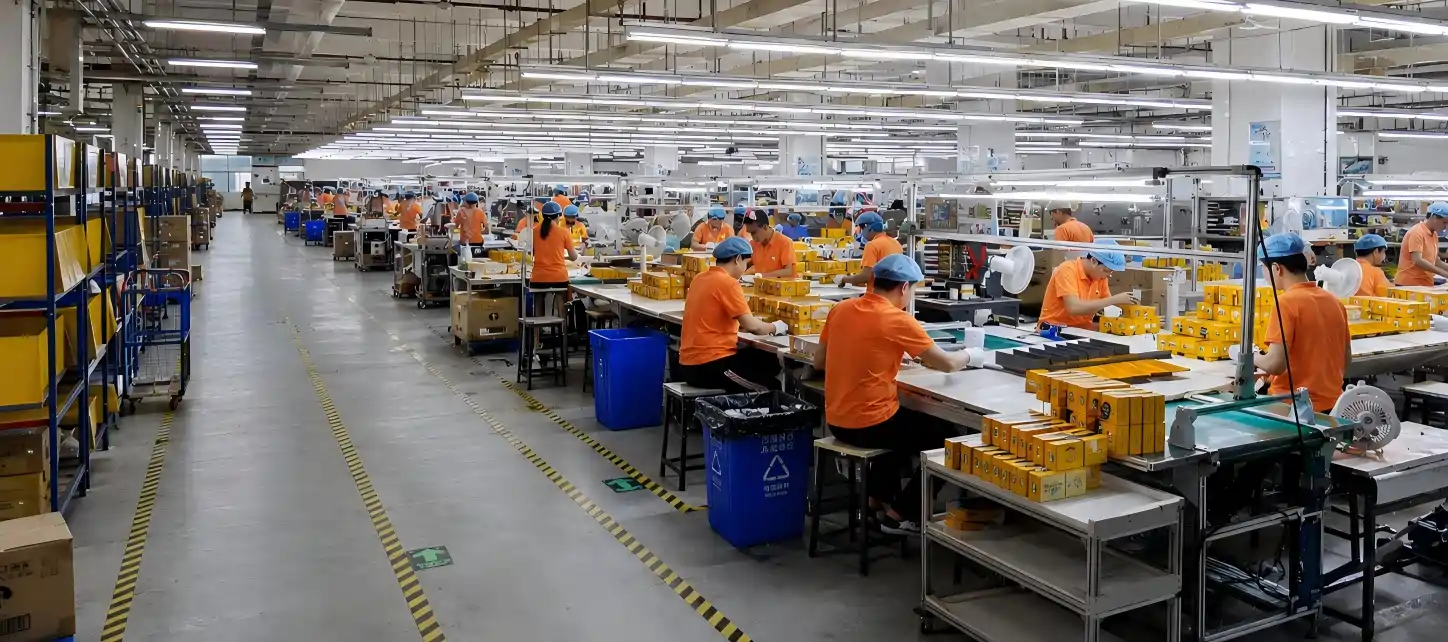
A meaningful share of companies presenting themselves as a cosmetic packaging supplier are trading companies that quote on behalf of one or more subcontracted factories, without directly owning production or quality control. This isn’t automatically disqualifying — some trading companies manage subcontractors well — but it changes who’s accountable when something goes wrong with a print color or a foil registration issue.
A straightforward way to check is to ask directly whether the company quoting the project is the factory that will physically produce it, and whether a factory visit or a documented third-party audit is available. A cosmetic packaging supplier confident in its own production shouldn’t hesitate to answer this plainly.
Quality Systems Worth Asking About
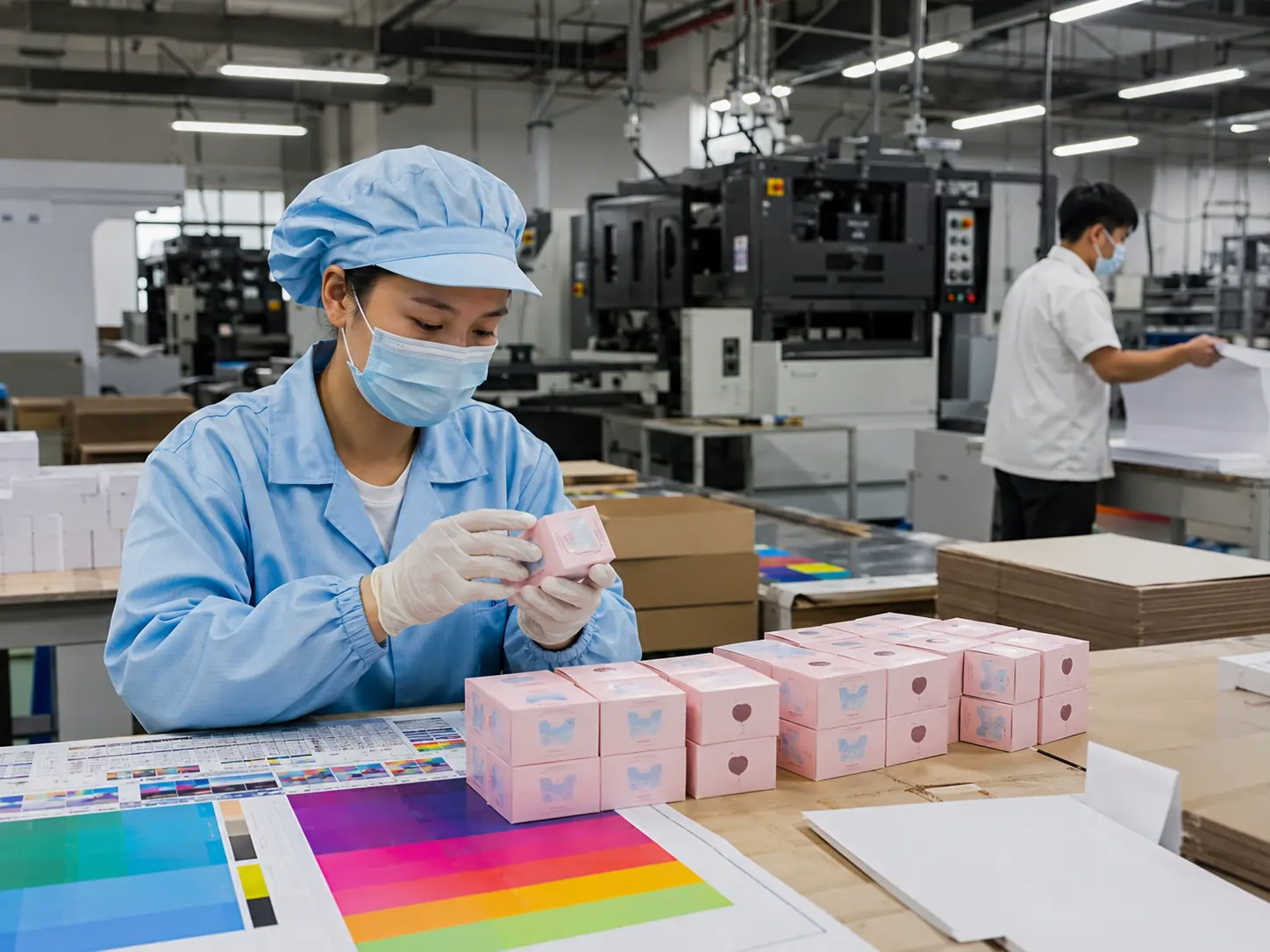
Beyond a general claim of “quality control,” it’s worth asking a cosmetic packaging supplier what specific checkpoints exist in their process — incoming material inspection, in-line sampling during production, and pre-shipment inspection are the three stages most established manufacturers run as standard. A supplier who can describe these stages specifically, rather than gesturing at quality assurance in general terms, is usually further along in formalizing the process than one who can’t.
ISO 9001 certification is the most common external validation of a documented quality management system, and it’s reasonable to ask for the certificate itself rather than a general mention of compliance.
Certifications and Compliance Documentation
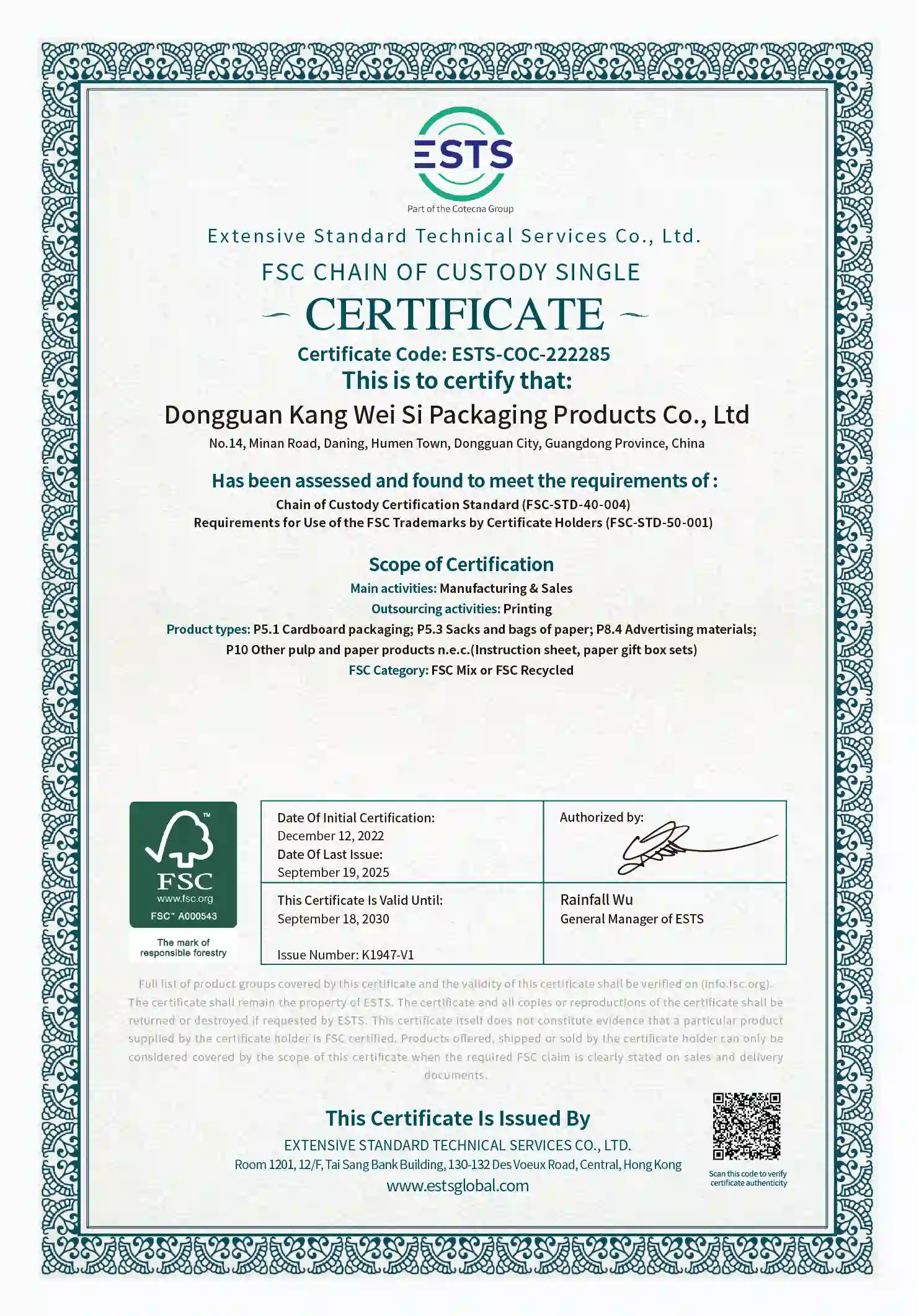
A cosmetic packaging supplier selling into the EU or working with major retail buyers should be able to provide certification documentation on request, not just claim compliance verbally. FSC chain-of-custody certification matters whenever sourcing claims appear on the box or in marketing — see FSC International for how chain-of-custody documentation actually works. PPWR (the EU’s Packaging and Packaging Waste Regulation) compliance is increasingly requested for packaging entering the EU market, and SEDEX audit standing is commonly required by beauty retailers running formal ethical-sourcing programs.
Buyers weighing sustainability commitments alongside supplier reliability may also want to review the Sustainable Packaging Coalition‘s independent guidance on material selection, which is worth reading alongside any single supplier’s own recommendations before finalizing a structure.
Cosmetic products themselves fall under Regulation (EC) No 1223/2009 in the EU, which governs product safety and labeling rather than the packaging supplier directly — but a supplier familiar with this regulation will generally understand labeling-space requirements better than one working purely from a generic packaging brief.
Evaluating the Sample Process
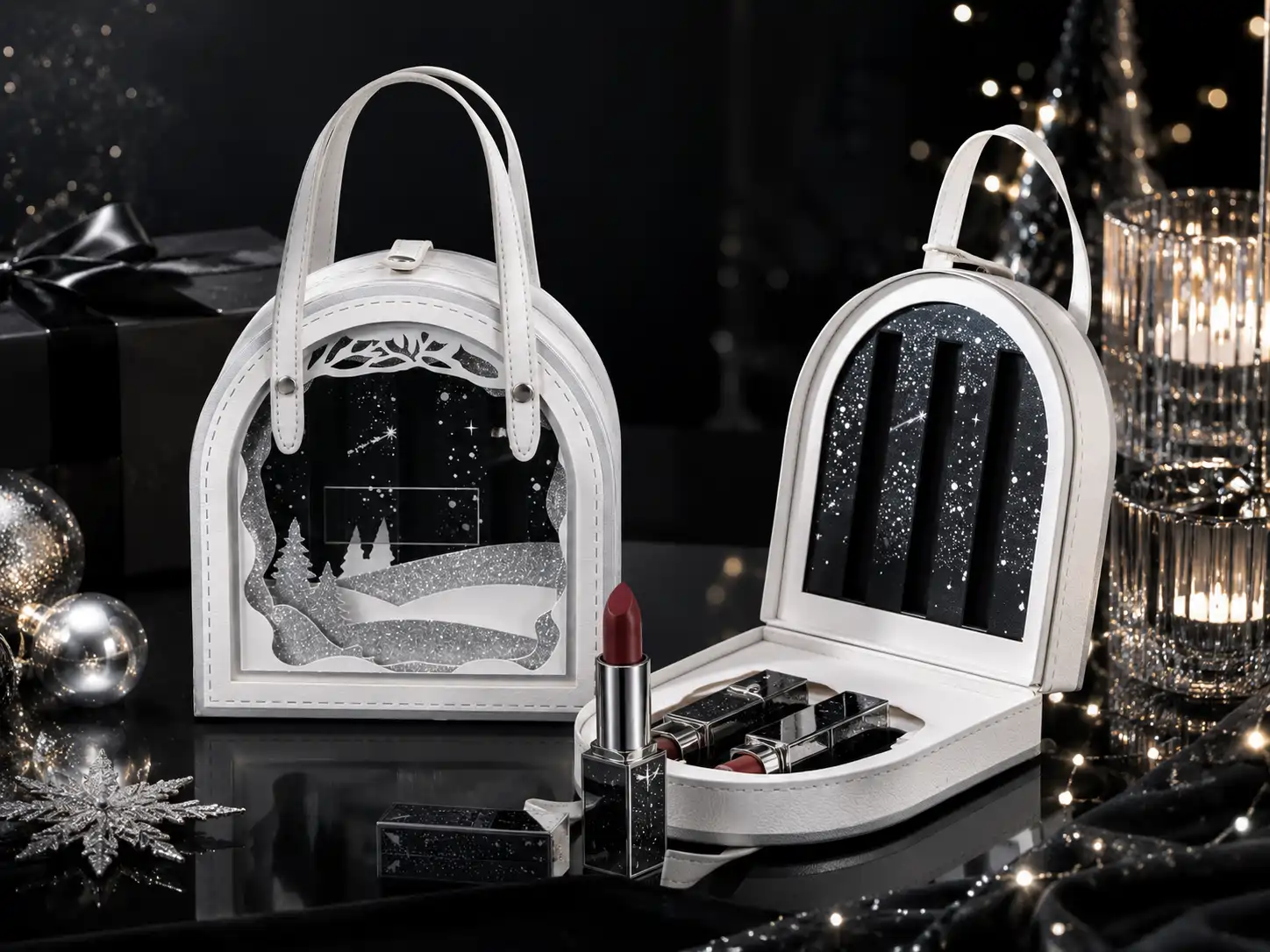
How a cosmetic packaging supplier handles the sample stage tells you a lot about how the full production run will go. A realistic sample lead time for most standard structures is 5-10 business days after design confirmation; a supplier consistently quoting much shorter than that is worth double-checking, since rushed sampling is a common source of finish problems that only show up once bulk production starts.
It’s also worth asking whether sampling fees, if charged, are credited against a confirmed production order — a fairly standard practice among established suppliers, and one worth confirming before the first sample is ordered rather than after.

Structuring a First Order
With a new cosmetic packaging supplier, it’s reasonable to start with a smaller order than your eventual target volume, even if the unit economics are less favorable at that scale. A first order at, say, 1,000-2,000 units — roughly the minimum order quantity most fully custom structures require — lets you evaluate consistency across an actual production run before committing to a larger volume.
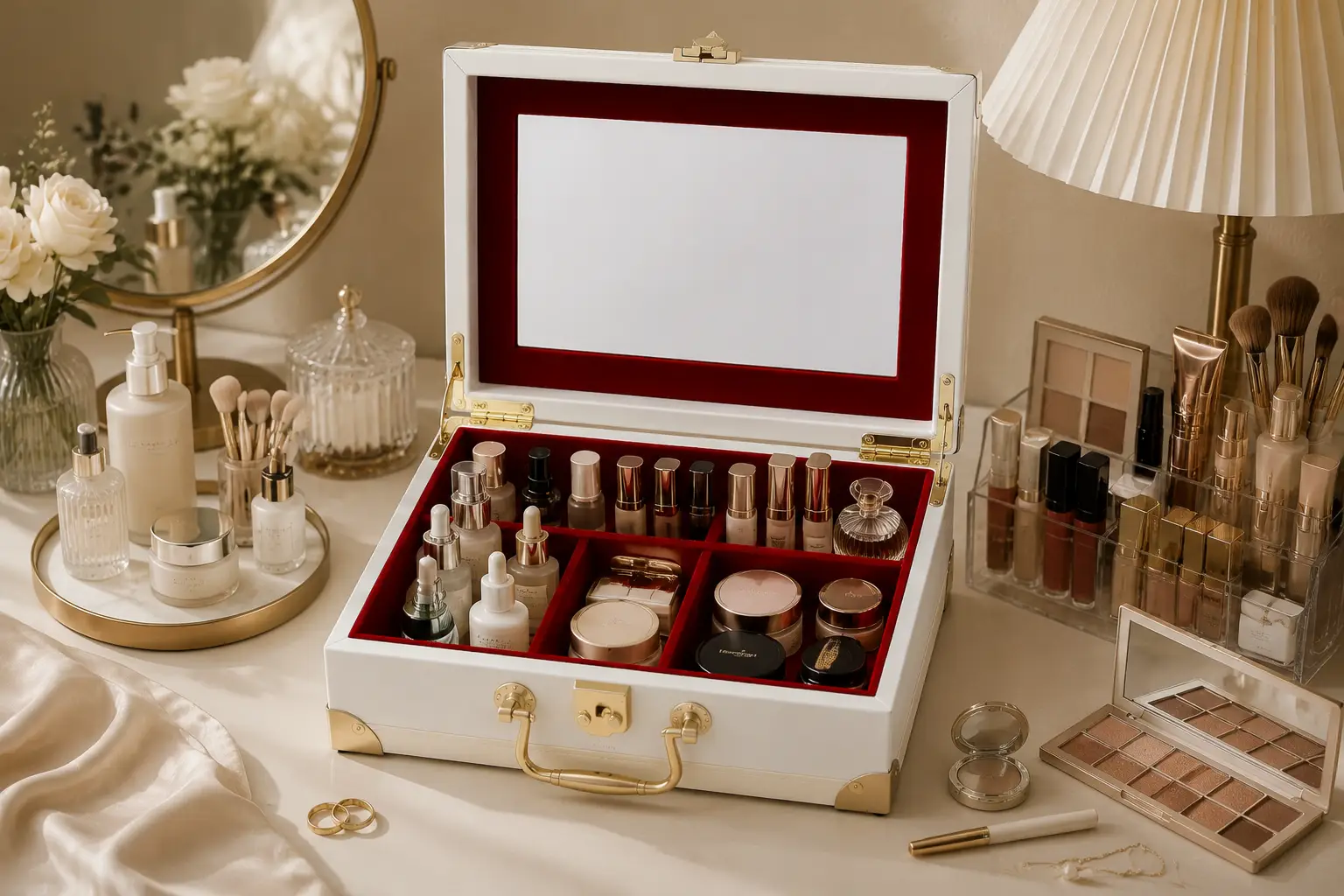
For brands sourcing several cosmetic structures across a product line — a bottle box here, a compact case there — some suppliers can combine several SKUs into one coordinated production and shipping schedule. Our custom cosmetic box and magnetic closure lines are examples of structures that are often ordered together as part of the same launch.
Single-Source vs. Multi-Supplier Strategies
Some brands deliberately split cosmetic packaging orders across more than one supplier — one for a core structure, another for a seasonal or limited-run item — as a hedge against a single point of failure. This adds coordination overhead but reduces the risk of a single cosmetic packaging supplier’s capacity problem or quality lapse affecting an entire product line at once. 
Smaller brands more often consolidate with a single cosmetic packaging supplier across their full range, which simplifies quoting and quality tracking but concentrates risk. Neither approach is universally correct; the right choice depends on order volume, how many distinct structures a brand runs, and how much internal capacity exists to manage multiple supplier relationships at once.
Lead Times and Planning Around Them
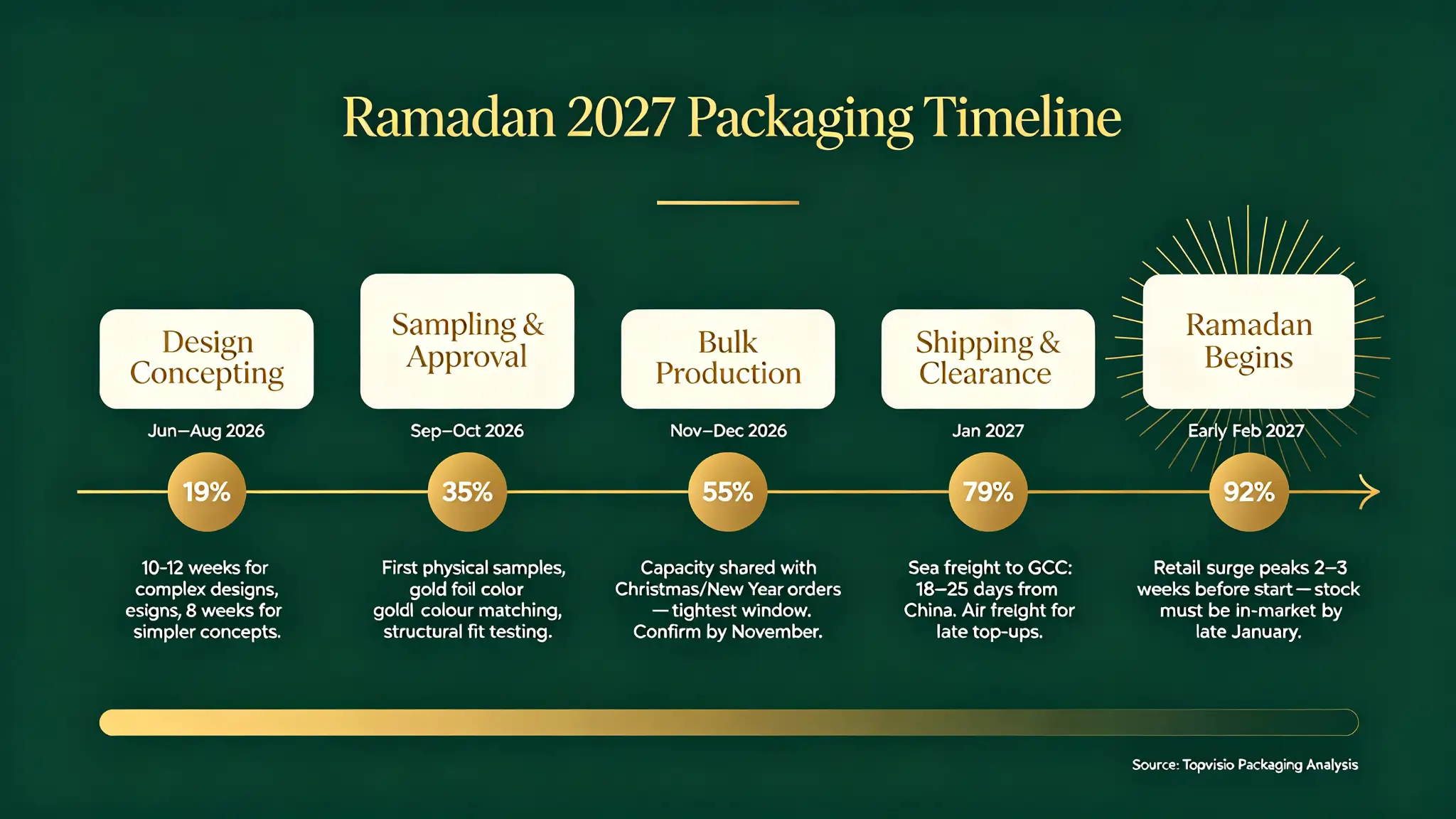
Beyond the sample stage, a reasonable range to expect from a capable cosmetic packaging supplier is bulk production of 25-45 business days depending on order volume, insert complexity, and finishing steps like foil stamping or embossing. Seasonal launches — holiday gift sets in particular — compress capacity industry-wide in the months leading up to major gifting periods, so booking a production slot earlier rather than later is standard practice regardless of which supplier a brand works with.
A cosmetic packaging supplier that can commit to a firm production window in writing, rather than a rolling estimate, is generally easier to plan a launch calendar around.
Red Flags Worth Taking Seriously
A few patterns are worth treating as genuine warning signs rather than minor inconveniences. A supplier unwilling to provide certification documents on request, only verbal assurances. A quoted sample lead time that’s consistently much faster than industry norms without explanation. Reluctance to confirm whether production is in-house or subcontracted. And pricing that’s meaningfully below every other quote you’ve received for a comparable structure, which sometimes reflects a real efficiency advantage but more often reflects a shortcut somewhere in materials or process that only becomes visible later.
None of these individually rules out a cosmetic packaging supplier, but more than one together is a reasonable basis for caution before committing to a full production order.
Geography and Logistics
Where a cosmetic packaging supplier is physically located affects lead times and freight cost more than it affects finished-product quality in most cases, though it’s still worth factoring into total landed cost rather than comparing unit prices alone. A supplier with in-house production near a major port, for instance, generally has more predictable outbound logistics than one relying on a longer domestic trucking leg before goods even reach a port for export.
For brands sourcing packaging alongside the actual cosmetic product from a nearby manufacturer, coordinating a cosmetic packaging supplier’s delivery schedule with the filling or assembly line’s own production calendar can meaningfully reduce warehousing time and cost — worth raising early in a sourcing conversation rather than treating packaging and product timelines as fully separate workstreams.
Working With Topvisio
Topvisio Packaging runs 14+ automated production lines alongside dedicated hand-assembly stations for cosmetic and beauty structures, with production managed directly rather than subcontracted to a third factory. FSC certification is available on request alongside PPWR compliance, ISO 9001, ISO 14001, and SEDEX audit standing, and samples are typically ready within 7 business days of design confirmation. You can read more about the production setup on our About Us page or browse our custom skincare boxes .
Frequently Asked Questions
What’s the difference between a cosmetic packaging supplier and a cosmetic box manufacturer?
The terms overlap heavily in practice. “Supplier” is sometimes used for a company that sources from multiple factories rather than owning production directly, while “manufacturer” implies in-house production — but this isn’t a strict rule, so it’s worth confirming directly regardless of which term a company uses about itself.
How do I verify a cosmetic packaging supplier’s certifications are real?
Ask for the certificate documents directly rather than a general claim, and check that certification numbers or registrations can be verified against the issuing body’s own records where that’s possible, such as an ISO certification body’s public registry.
Should I order a sample before committing to a bulk cosmetic packaging order?
Yes, in nearly all cases. A physical sample surfaces fit, color, and finish issues that are difficult to catch from a rendering or a previous supplier’s comparable work.
Is it normal for a cosmetic packaging supplier to subcontract production?
It happens, and isn’t automatically a problem, but it’s worth knowing upfront so you understand who is directly accountable for quality issues if they arise.
What certifications should a cosmetic packaging supplier be able to provide?
FSC chain-of-custody (on request), ISO 9001 and ISO 14001, SEDEX audit standing, and PPWR compliance documentation are the most commonly requested by EU buyers and major retail partners.
Request a Cosmetic Packaging Sample
Send Topvisio your product dimensions, target market, order quantity, and reference images. Our cosmetic packaging supplier team will recommend suitable structures, finishes, and inserts, with a real-material sample normally ready within 7 days.