In short: Australian wineries sourcing wine gift boxes typically face longer freight timelines than domestic Chinese buyers, which makes production and shipping lead time planning more important than for closer markets. Structural requirements — insert design, closure type, board weight — stay the same as any other wine gift box market.
A wine gift box Australia buyer is usually solving the same structural problems as any other wine packaging project — bottle protection, presentation, closure — but with added considerations around freight distance and, for boutique and mid-sized wineries specifically, order volumes that may not match the assumptions built into a manufacturer’s standard MOQ and pricing tiers.
Topvisio Packaging produces wine gift boxes out of Dongguan, Guangdong, running 14+ automated production lines, with FSC certification available on request, PPWR compliance, ISO 9001, ISO 14001, and SEDEX audit standing. Our guide on how to make a wine gift box covers the structural fundamentals that apply regardless of destination market.
Freight Timelines From China to Australia
Sea freight from major Chinese ports to Australian ports typically takes several weeks longer to reach final delivery than shipments to some other major markets, given the shipping routes and port scheduling involved. This makes buffer time in the overall project timeline more important for Australian buyers than for markets with shorter freight distances — a production timeline that leaves no cushion for shipping delays is more likely to cause a missed launch date for an Australian wine gift box order than the same timeline would for a market with faster freight access.
Order Volume Considerations for Boutique Wineries
Australia’s wine industry includes a significant number of boutique and family-owned wineries producing smaller volumes than large commercial operations, and this affects how packaging orders should be planned. A standard MOQ of 1,000 units per structure may represent a much larger share of annual production for a small winery than for a larger operation, which makes semi-custom tooling — a standard structure with customized print — a particularly practical option for smaller Australian producers testing a new gift packaging line before committing to fully bespoke tooling.
Structural Options for Wine Gift Boxes
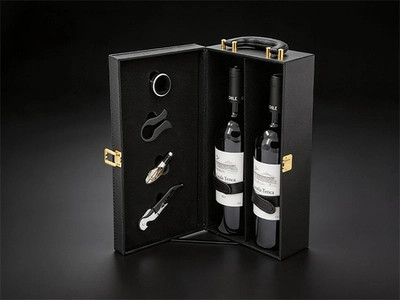
Single-bottle rigid boxes, two-bottle carry cases, and slide-out sleeve-and-drawer formats cover most wine gift box needs regardless of destination market. Our wine bottle box and luxury wine box lines cover the standard range. Insert design matters as much for Australia-bound shipments as any other market — a molded EVA foam or die-cut pulp cavity sized precisely to the bottle’s neck and base diameter is what actually prevents breakage during the longer freight journey this market typically involves.
Certifications Relevant to the Australian Market
Australian retailers and wine industry buyers increasingly ask about sourcing credentials alongside packaging quality. FSC chain-of-custody certification is available on request — see FSC International for how that documentation works — and packaging validated against a recognized transit-testing protocol like the ISTA 3A series, maintained by the International Safe Transit Association, is worth confirming given the extended freight distance involved in shipments to Australia specifically.
Planning a Wine Gift Box Launch for the Australian Market
Working backward from a target launch date — a specific vintage release, a seasonal gifting window, a trade show — and building in both production lead time and the longer freight timeline this market involves gives a more realistic project schedule than planning around production time alone. A reasonable range to expect is a physical sample within 7-10 business days of design confirmation, bulk production of 30-45 business days, and freight time on top of that which should be confirmed directly given current shipping conditions rather than assumed from a general estimate.
Choosing Between Air and Sea Freight
Most wine gift box Australia orders travel by sea freight given the volume and weight involved, but sample shipments or urgent smaller orders sometimes justify air freight despite the higher cost. Sea freight offers significantly lower per-unit shipping cost for bulk orders but requires the longest lead time; air freight moves faster but at a cost premium that only makes sense for time-sensitive samples or genuinely urgent small quantities. Most wineries use sea freight for bulk production and reserve air freight for the initial sample round, where speed matters more than cost efficiency.
Working With a Manufacturer Familiar With the Australian Market
A manufacturer with existing experience shipping to Australian ports typically has more accurate freight timeline estimates and established customs documentation processes than one shipping to the region for the first time. This experience matters less for the packaging quality itself and more for avoiding the logistical surprises — customs delays, incomplete documentation — that can add unplanned time to an already lengthy freight journey.
Real-World Scenarios: Different Winery Profiles
A boutique family winery in the Barossa Valley or Margaret River releasing a limited single-vintage bottling faces different packaging needs than a large commercial operation shipping thousands of cases to national retail chains. The boutique winery typically prioritizes distinctive presentation and is more willing to accept a longer development timeline for a fully bespoke structure, since the release itself is meant to feel special and limited. The larger commercial operation prioritizes cost efficiency and consistent supply across a much higher volume, often favoring a proven semi-custom structure that can be reordered reliably rather than a unique design developed for a single release.
A wine club or direct-to-consumer subscription service sending bottles to individual customers across Australia has yet another set of priorities: the packaging needs to survive last-mile courier delivery to a residential address, which is generally rougher handling than palletized freight to a retail distribution center, making insert security and outer structural strength particularly important for this specific use case.
Certifications and Australian Retail Requirements
Major Australian retailers and wine distributors increasingly request sourcing documentation alongside packaging quality specifications, similar to trends seen in other developed markets. FSC chain-of-custody certification is worth having ready for retail conversations even when not explicitly requested upfront, since sustainability credentials are increasingly a standard part of supplier onboarding conversations with larger Australian retail chains and distributors.
Cost Comparison: Local vs Imported Wine Packaging
Australian wineries weighing locally produced packaging against imported options from manufacturers like Topvisio typically find that imported structures offer meaningful cost advantages for mid-to-large volume orders, even accounting for freight, given the scale of automated production available through established Chinese manufacturing. This advantage narrows for very small orders, where the fixed costs of international freight and customs processing represent a larger proportional share of total cost — which is part of why semi-custom tooling, rather than fully bespoke development, tends to make more sense for Australia’s many boutique wineries specifically.
Customs and Import Considerations
Beyond freight timing, Australian wineries importing packaging should confirm customs documentation requirements with their manufacturer early in the process, since incomplete or incorrect documentation can add delays on top of the freight timeline itself. A manufacturer experienced in shipping to Australian ports typically has established processes for this documentation, which reduces the risk of unexpected customs holds compared with working with a supplier shipping to the region for the first time.
Packaging for Australia’s Wine Export Market
Beyond domestic sales, Australian wineries exporting to Asian markets, the UK, or elsewhere sometimes source wine gift box packaging through the same manufacturer supplying their Australian retail packaging, coordinating production and shipping schedules across multiple destination markets simultaneously rather than managing entirely separate sourcing relationships per market. This consolidation can simplify quality control and reduce the coordination overhead of working with multiple packaging suppliers, though it requires confirming the manufacturer has genuine experience shipping to each relevant destination rather than assuming Australian shipping experience automatically extends to other markets.
Insert Design for Australian Wine Varieties
Australia’s wine industry spans a wide range of bottle shapes and sizes across its major varieties — Shiraz, Chardonnay, and Riesling bottles don’t share identical shoulder profiles or base diameters, and a wine gift box Australia order covering multiple varieties within one product line sometimes needs to accommodate this variation. Confirming insert compatibility across the specific bottle shapes a winery actually produces, rather than assuming one generic wine bottle profile fits all varieties, avoids a mismatch that only becomes apparent once a full order is already in production.
Sustainability Expectations in the Australian Wine Industry
Australian wine consumers and retail buyers increasingly factor sustainability into purchasing decisions, and packaging plays a visible role in that assessment even when the wine itself is produced under sustainable viticulture practices. FSC-certified paper and greyboard, alongside recyclable pulp inserts where cushioning precision allows, give wineries a documented sourcing story that complements sustainability claims already being made about the wine production itself. Pairing packaging sustainability credentials with existing vineyard sustainability certifications creates a more complete brand narrative than either credential alone.
Planning Around Australian Seasonal Release Calendars
Australian wine releases often follow a seasonal pattern tied to harvest timing and traditional release windows — a wine gift box Australia order timed for a specific vintage release needs production and freight lead time planned backward from that release date, accounting for both the standard production timeline and the extended sea freight duration this market typically involves. Wineries planning a first international packaging order for a seasonal release should build in more buffer time than they might assume necessary, given how compounding delays across production and freight can affect an otherwise well-planned release calendar.
Comparing Manufacturer Options for Wine Gift Box Sourcing
Australian wineries evaluating packaging suppliers should weigh a few factors beyond unit price alone: demonstrated experience shipping to Australian ports specifically, a certification stack that satisfies both domestic retail requirements and any export market documentation needs, and sample turnaround time that fits realistic release planning. A supplier unable to provide a clear answer on any of these three points is worth further scrutiny before committing to a full production order, regardless of how competitive their initial quote appears.
Requesting references or examples of comparable work for other Australian or Asia-Pacific wine clients, where a manufacturer can share them, gives additional confidence beyond a supplier’s own claims about their export experience and production capability.
For wineries entering an international packaging sourcing relationship for the first time, starting with a smaller trial order — even above the standard MOQ where possible — before committing to a full annual volume gives a practical way to validate a manufacturer’s actual performance against their stated capabilities before larger budgets are at stake.
Communication and Time Zone Considerations
Australian buyers working with a Chinese manufacturer need to account for time zone differences when planning communication during sampling and production, particularly for time-sensitive decisions like artwork approval or an urgent quality question during production. Establishing a clear communication cadence and expected response windows early in the relationship helps avoid the frustration of messages sitting unanswered overnight simply due to the time difference rather than any actual delay in the manufacturer’s process.
This is a practical rather than a structural consideration, but it affects how smoothly a wine gift box Australia project runs day to day, and it’s worth addressing explicitly at the start of a new supplier relationship rather than discovering the friction partway through a production cycle.
Common Mistakes for Australian Wine Gift Box Orders
The most common mistake is planning a launch timeline around production lead time alone without adding freight time on top, which routinely causes Australia-bound orders to arrive later than a winery’s marketing or release calendar assumed. The second common mistake is ordering at a volume that doesn’t match actual production scale — either over-ordering to hit a lower per-unit price and ending up with excess inventory, or under-ordering below a manufacturer’s practical MOQ and paying a disproportionate setup cost for a small run.
Manufacturing and Certifications
You can browse our full product range or check FSC-certified packaging options for available material grades.
Establishing these communication norms upfront, alongside the certification and freight planning already covered, gives an Australian winery a genuinely complete picture before committing to a first production order rather than discovering gaps one at a time as the project unfolds. A well-planned wine gift box Australia project accounts for logistics, certification, and communication as equally important pieces of the same puzzle, not as separate afterthoughts to be handled once the core structural decisions are already locked in.
With production, certification, freight, and communication all planned deliberately from the outset, an Australian winery can move through a first international packaging order with far fewer surprises than treating each of these as a separate problem to solve reactively.
Frequently Asked Questions
Frequently Asked Questions
How long does it take to ship a wine gift box order to Australia?
Sea freight from major Chinese ports typically takes several weeks on top of production time. Buyers should confirm current shipping timelines directly rather than assuming a fixed duration, and build buffer time into their launch schedule.
What is the minimum order quantity for a wine gift box Australia order?
MOQs for fully custom structures typically start around 1,000 units. Semi-custom tooling with a standard structure and customized print can be a more practical option for smaller boutique wineries.
What materials protect wine bottles best during long-distance shipping?
Molded EVA foam or die-cut pulp inserts sized precisely to the bottle’s neck and base diameter, combined with a greyboard core in the 1,200-1,800 gsm range, provide the protection needed for extended freight journeys.
Is FSC certification available for wine gift boxes shipped to Australia?
Yes. FSC-certified paper and greyboard are available on request, alongside PPWR compliance, ISO 9001, ISO 14001, and SEDEX audit standing.
What packaging testing standard applies to wine boxes shipped long distances?
Protocols like the ISTA 3A general simulation series are widely used to validate that a box and insert design will survive realistic transit conditions, which matters especially for longer freight journeys.
Should a boutique winery order the same volume as a large commercial winery?
Not necessarily. A standard MOQ can represent a much larger share of annual production for a small winery, making semi-custom tooling a more practical starting point than fully bespoke structures.
Do all Australian wine varieties fit the same bottle insert design?
Not necessarily. Different varieties have different bottle shoulder profiles and base diameters, so a wine gift box Australia order covering multiple varieties should confirm insert compatibility across the specific bottles used.
Can wine gift box packaging support export to other markets beyond Australia?
Yes, and some wineries coordinate production for both domestic Australian and export packaging through the same manufacturer, provided the manufacturer has genuine shipping experience to each relevant destination market.