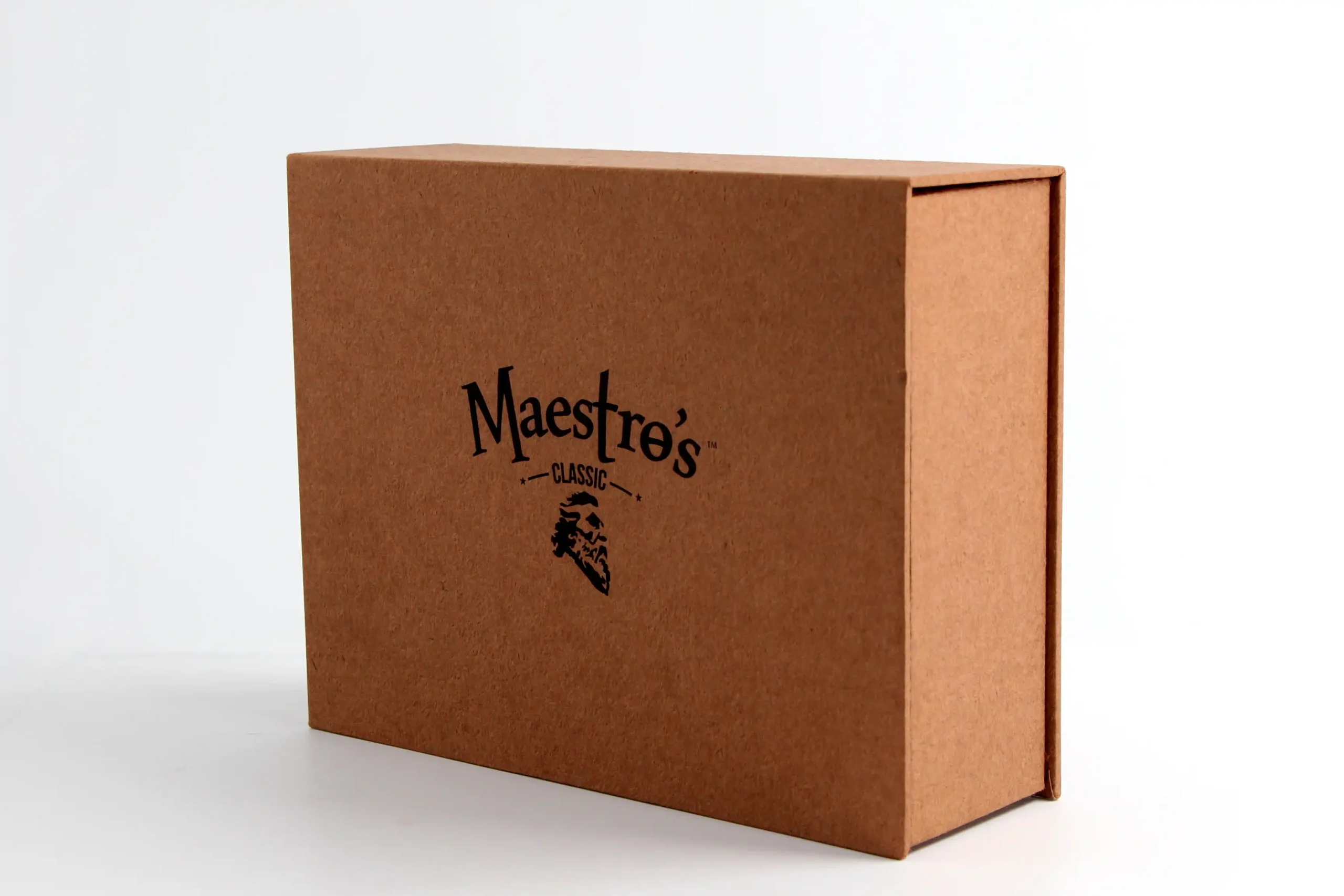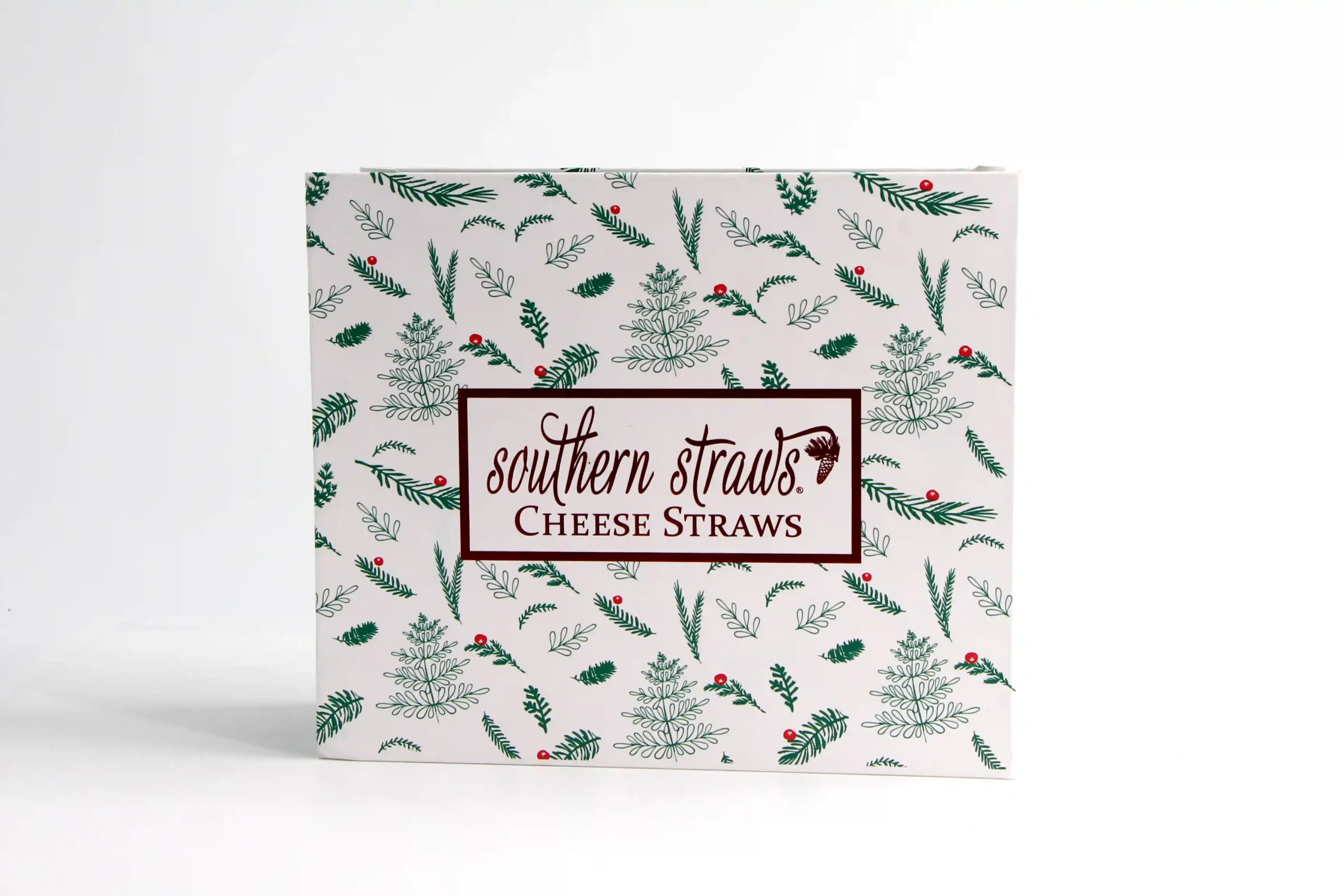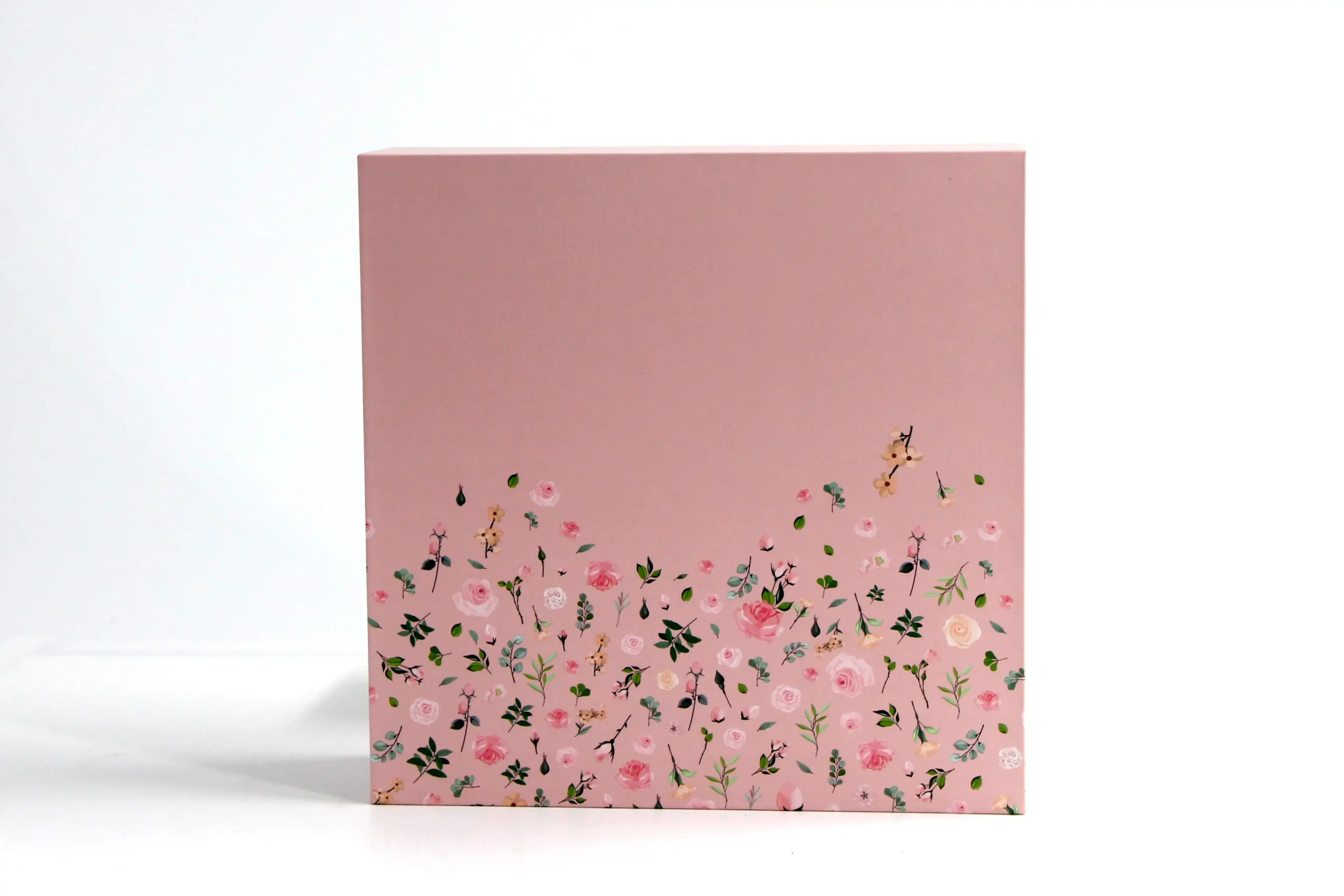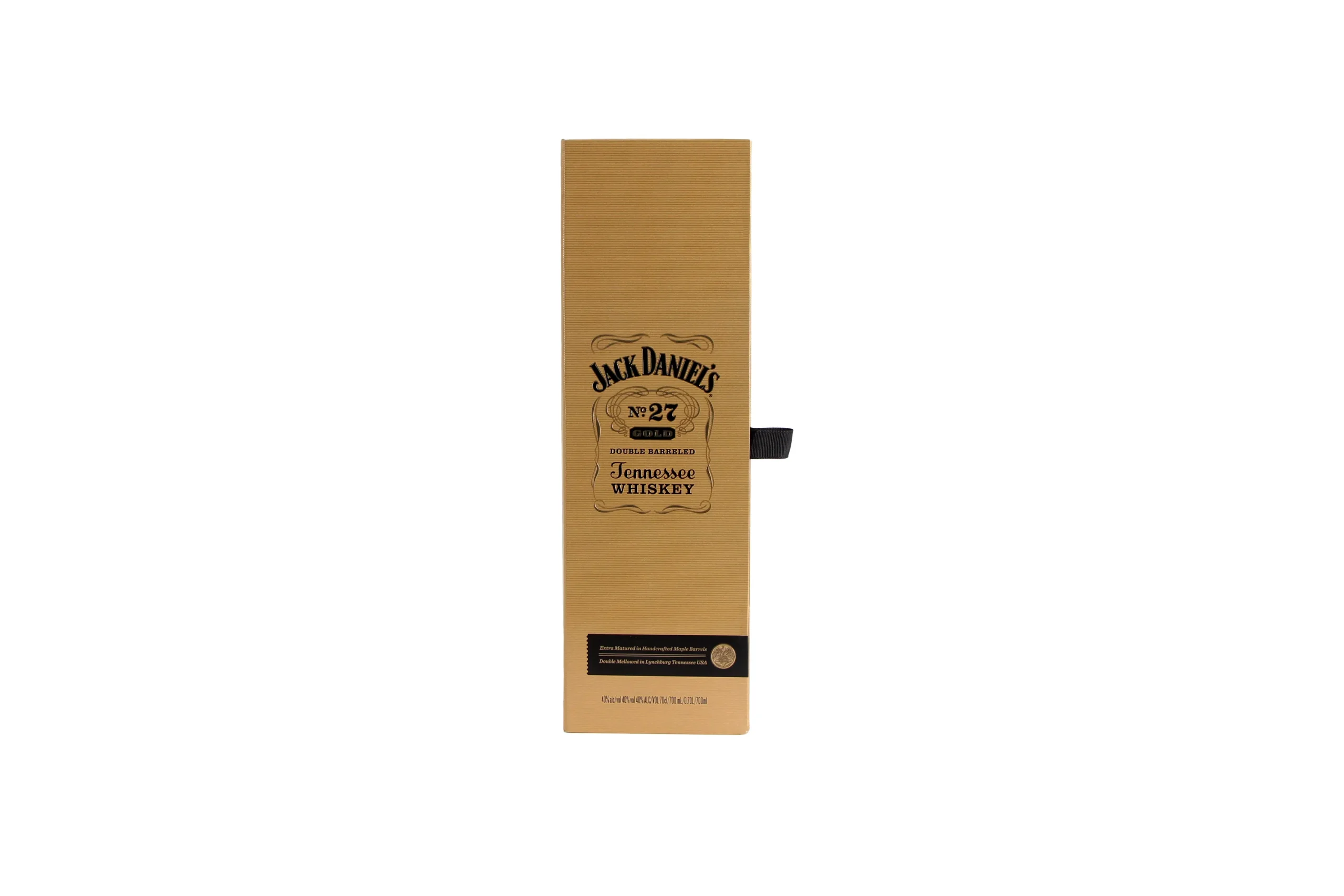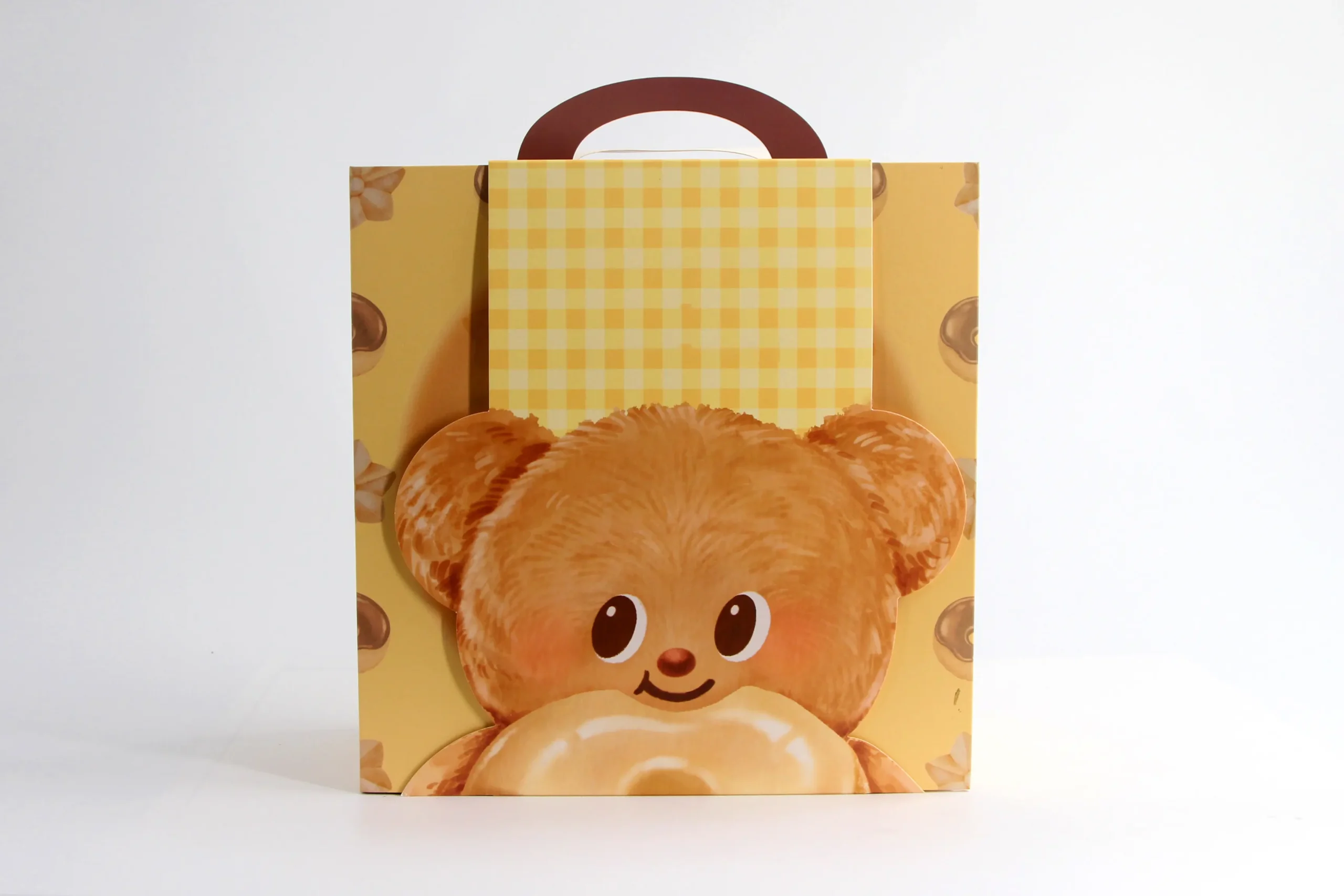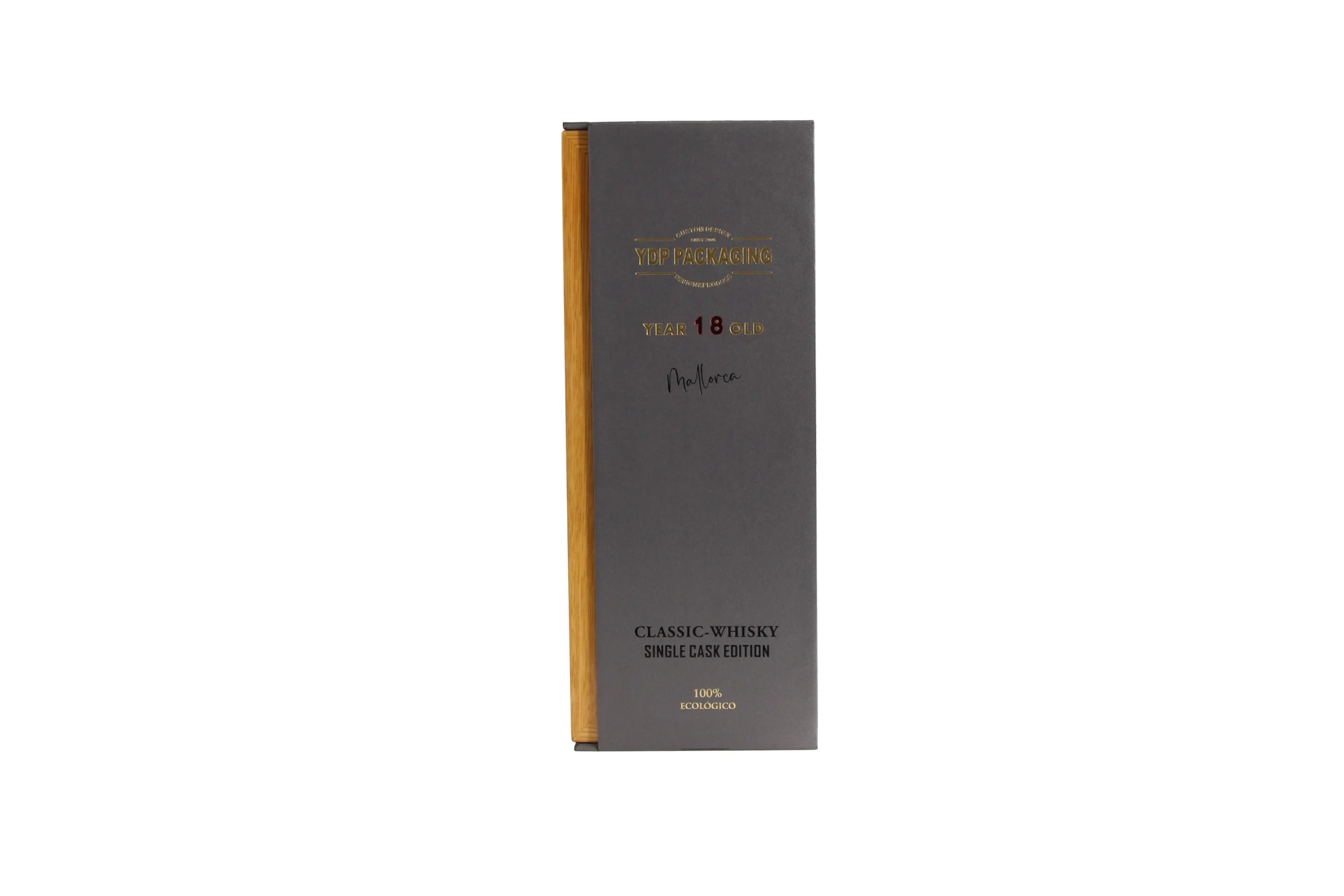
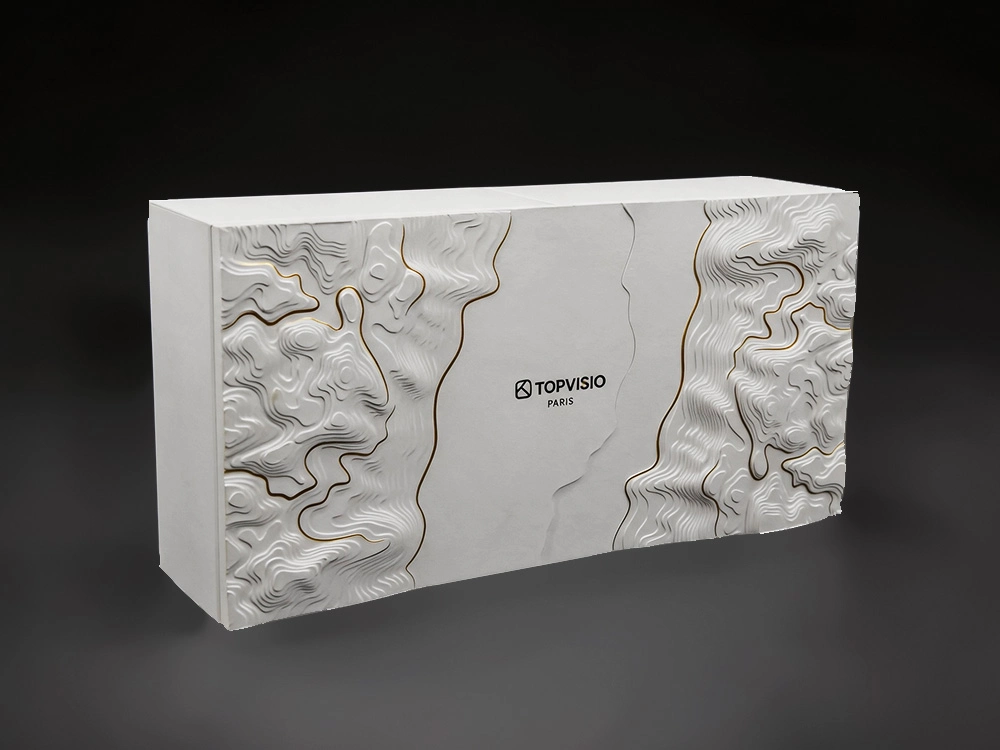
What is a rigid box? It is a non-collapsible box made from thick greyboard wrapped in printed or specialty paper, built at the factory to hold its shape from the production line to the customer’s hands. You will also hear it called a set-up box or rigid paper box.
Topvisio Packaging manufactures rigid boxes in its own factory in Dongguan, Guangdong, China, running 14+ automated production lines with a monthly capacity of 1,500,000 units for two-piece lid and base boxes and 800,000 units for drawer and book-style boxes. The factory holds ISO 9001, ISO 14001 and SEDEX certifications, its packaging is PPWR compliant, and FSC-certified materials are available on request.
This guide covers what a rigid box is at a structural level, the main box types, how they are produced, what the market looks like, and what to check before you place an order. We have made rigid boxes for cosmetic, fragrance, wine and chocolate brands across Europe, North America and the Middle East since 2010, so most of what follows comes from the production floor rather than from textbooks.
What Is a Rigid Box, Exactly?
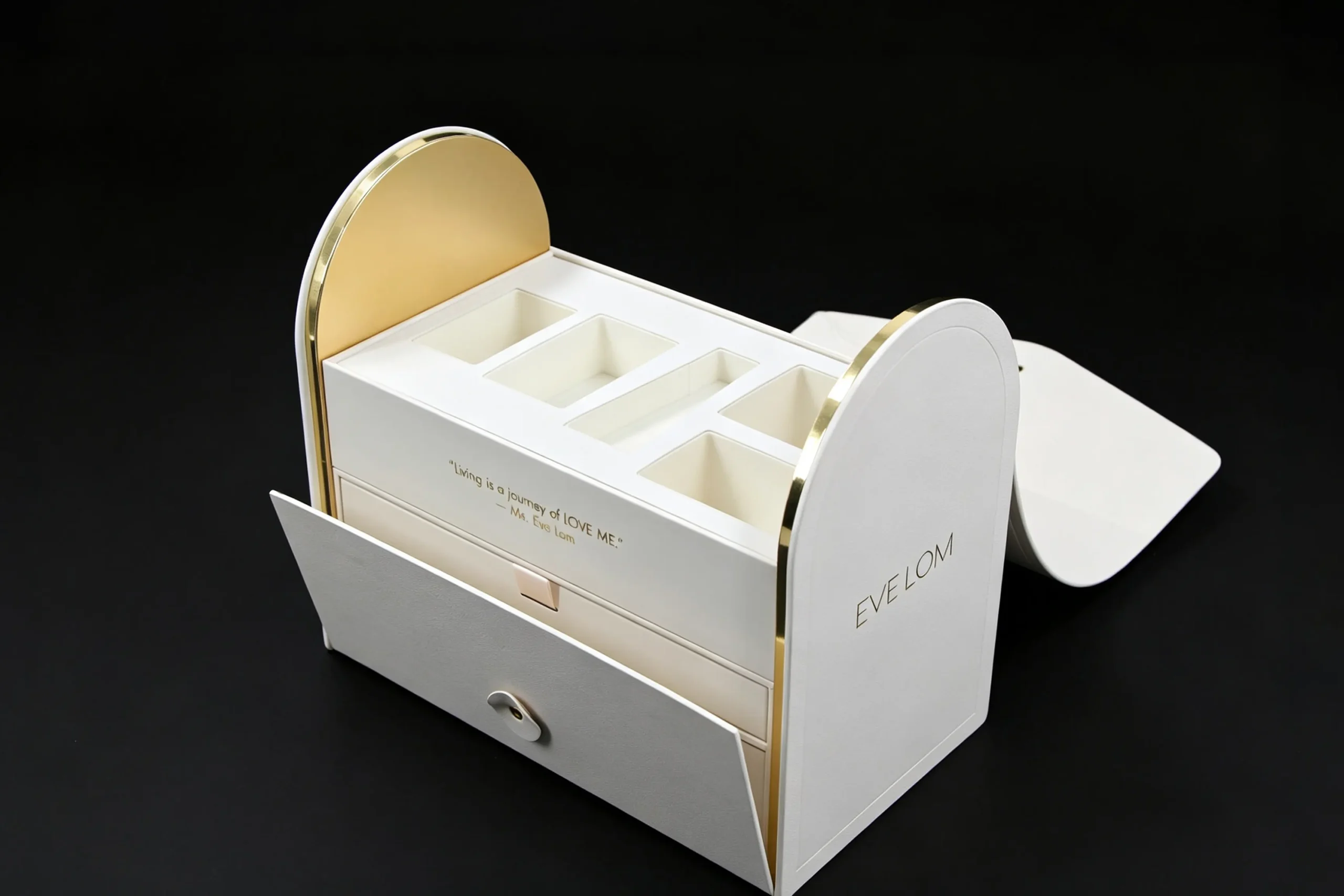
So what is a rigid box made of? Strip one down and you find a structural inner board, usually greyboard at 1,200 to 1,500 g/m², covered by an outer wrap paper that carries the print and finish. Because the walls are glued and formed before shipping, the box never needs to be folded up by the end user, and it resists denting under normal handling. Most of the rigid boxes you handle day to day sit between 1.5 mm and 3 mm in wall thickness.
The terms get mixed up a lot, so here is how they line up. “Rigid box” and “set-up box” mean the same product; set-up box is the older trade name. “Rigid paper box” stresses that the structure is paper-based rather than plastic or wood. “Rigid packaging” and “rigid container” are broader industry terms that also cover plastic tubs, glass jars and metal tins, so if you are searching for a supplier of premium paper gift boxes, “rigid box” is the term that will get you to the right factories.
Types of Rigid Boxes
Part of the answer to what is a rigid box depends on its structure, and choosing one is usually the first real decision a brand makes. Each one changes the unboxing experience, the unit cost and the production speed.
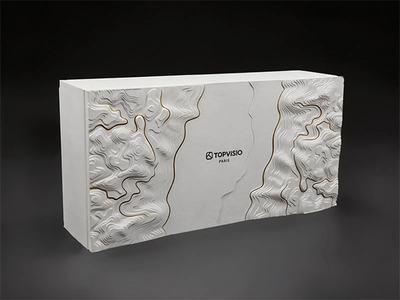
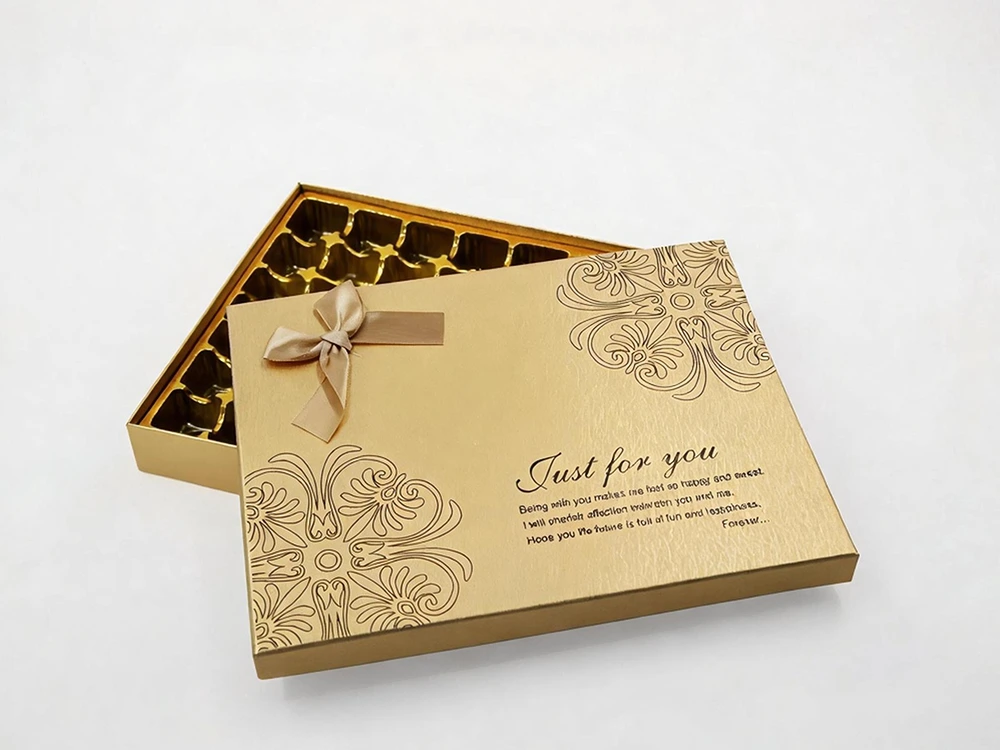
Two-piece lid and base. A separate lid sits over a base tray. It is the simplest and most cost-efficient rigid structure, which is why it dominates gift sets, apparel and chocolate. See our two-piece lid and base rigid box for typical specifications.
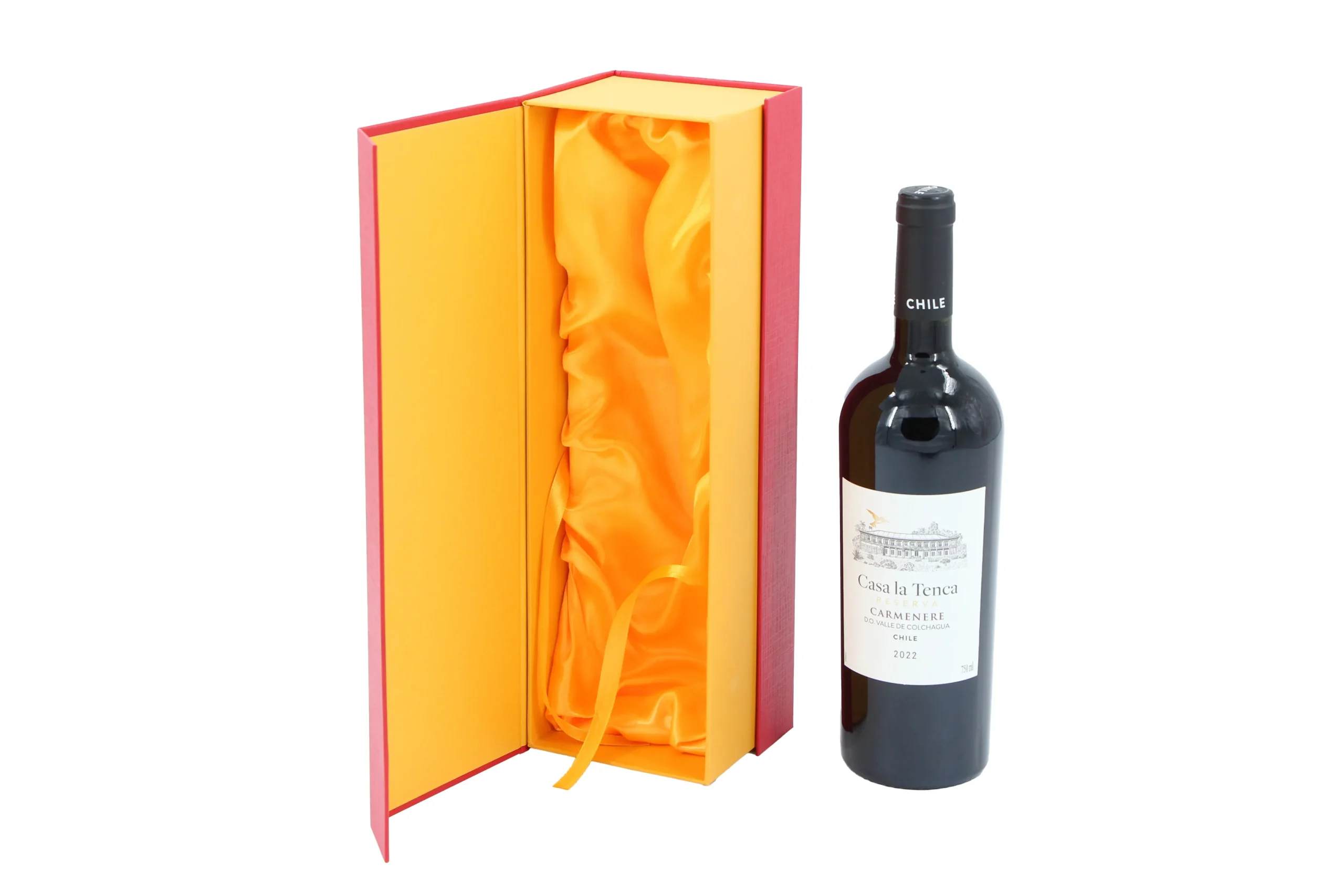
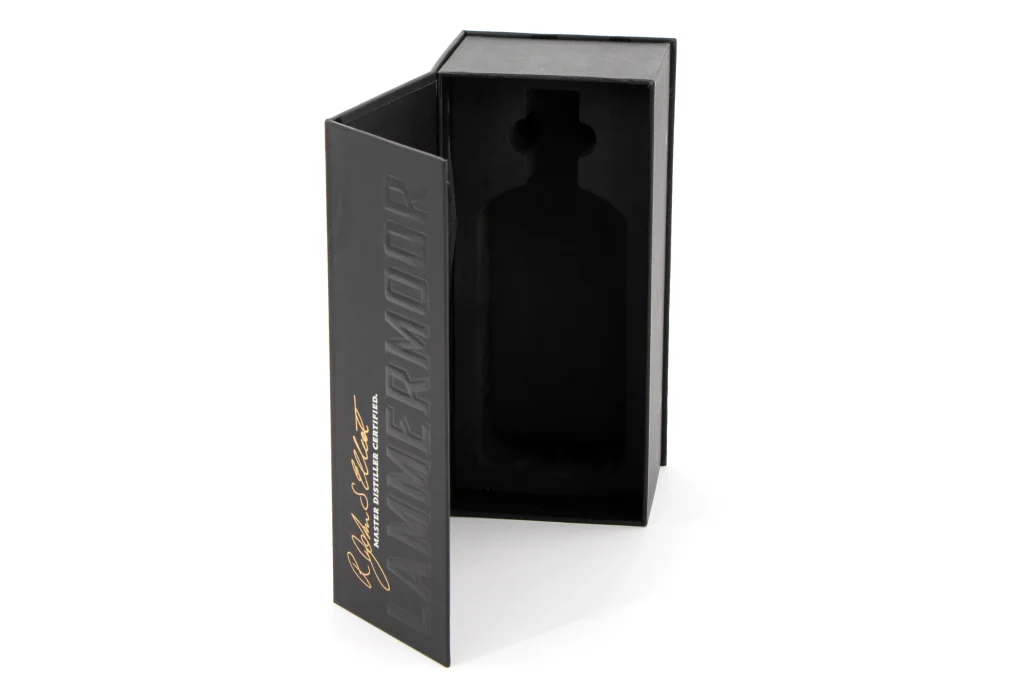
Book-style magnetic box. The lid opens like a book cover and closes with hidden magnets. It is the go-to choice for fragrance, skincare sets and PR mailers because the closing “click” adds to the experience. Our book-style magnetic rigid box shows a common build.
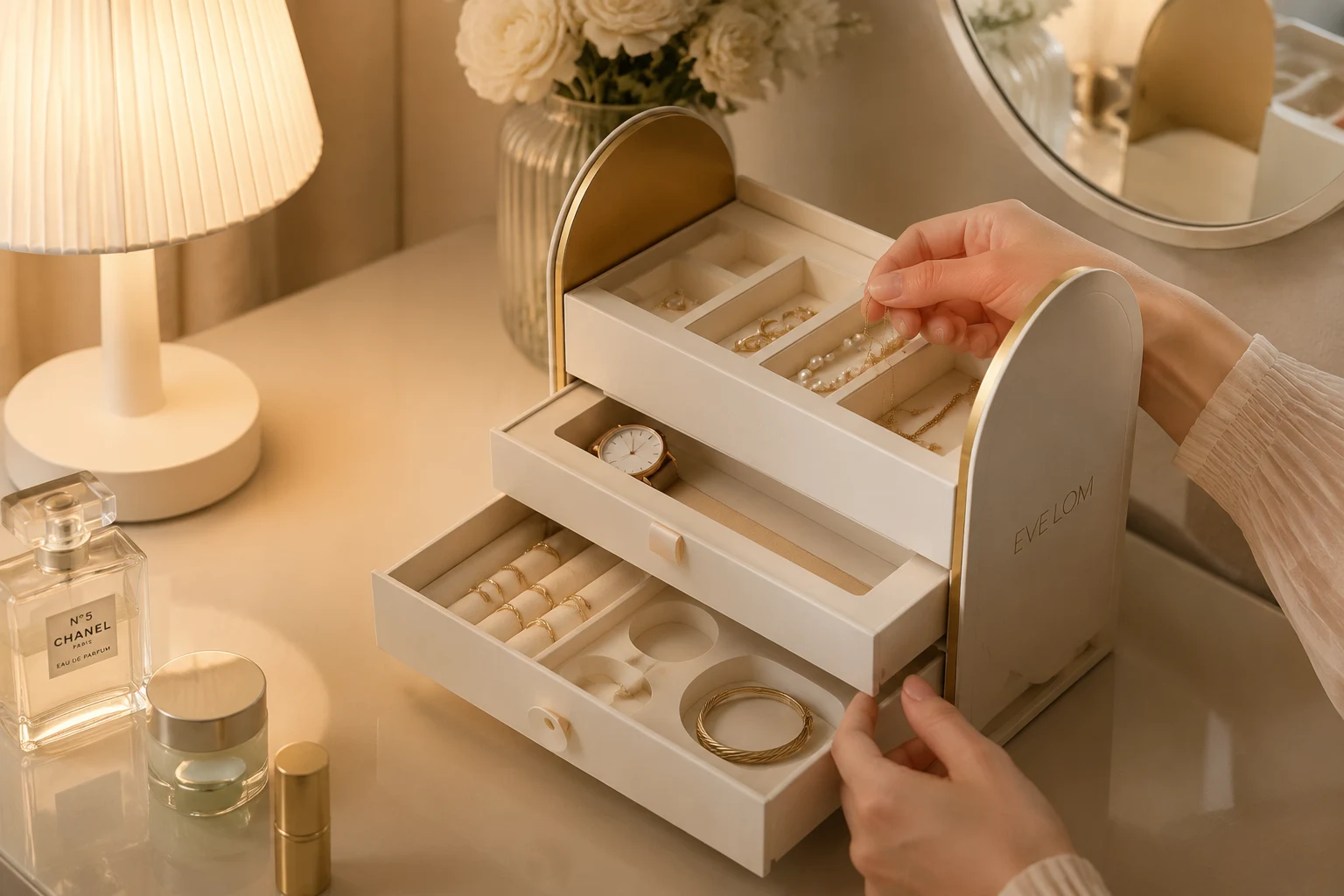
Drawer box. An inner tray slides out of a sleeve, often with a ribbon pull. Jewelry, watches and small luxury accessories use this format widely. The rigid drawer box page lists available sizes and inserts.
Collapsible rigid box. This structure looks and feels rigid once assembled but ships flat, which can cut freight volume sharply for e-commerce brands. Our foldable rigid box is built for exactly that trade-off.
How Rigid Boxes Are Made
After “what is a rigid box,” the question we hear most is how one gets made. The production sequence has more steps than a folding carton, and that is a big part of why rigid boxes cost more.
1. Greyboard cutting. Large greyboard sheets are cut into wall pieces, base and lid. Magnetic, drawer and book-style boxes need more complex cuts than a simple lid and base.
2. Corner assembly. The walls are joined at the corners, traditionally with paper tape and today more often on CNC auto-bending machines. Our automated bending lines keep the right angles consistent across thousands of units.
3. Wrapping. The pre-printed outer paper is glued and wrapped around the greyboard. Finish defects such as bubbles, misaligned edges and glue bleed show up here if the line is rushed, so this is where an experienced team earns its keep.
4. Insert installation. EVA foam, paper pulp, blister or fabric-covered inserts go in at this stage. For magnetic closures, neodymium magnets (typically N35 grade) are set between the paper layers.
5. Quality inspection. Every order goes through incoming-material checks, in-line sampling and pre-shipment inspection, with third-party verification available.
A 5,000-unit rigid box order typically takes 18 to 25 days in production after sample approval, compared with 10 to 15 days for a folding carton of similar complexity.
How to Specify a Rigid Box for Your Product
Knowing what is a rigid box in theory is one thing; writing a spec a factory can quote from is another. Most quoting delays we see come from incomplete briefs, and the fix is to start with the product rather than the box. Measure the product, or the product in its primary packaging, and give the inner dimensions you need in length, width and height, plus any clearance for an insert.
Outer dimensions are larger by roughly twice the board thickness plus the wrap, so quoting on outer size by mistake can leave a bottle rattling around or not fitting at all.
Next, match board thickness to weight. As a working guide from our production line, 1.5 mm greyboard handles light items such as cosmetics and jewelry, 2 mm suits most gift sets, and 2.5 to 3 mm is worth it for glass bottles, multi-bottle wine sets or anything over a kilogram.
Then pick the insert: EVA foam inserts for heavy or fragile items, paper pulp or card inserts if you want a plastic-free build, and fabric-covered trays when presentation matters most. Finally, share the artwork plan, meaning the number of print colors or Pantone references, the finishes, and where the logo sits. A short brief with these points and one reference photo is usually enough for an accurate quote.
Common Rigid Box Problems and How to Avoid Them
Warping. Greyboard and wrap paper absorb moisture at different rates, so boxes made or shipped in humid conditions can bow. A balancing liner on the inside, controlled drying time and moisture-resistant export cartons for sea freight keep panels flat. Cracked corners and edges. Dark, laminated wrap papers can crack white along folds and corners. Choosing a paper with good folding strength and setting the right score depth during sampling prevents most of it.
Color drift between sample and bulk. Screen colors and print colors rarely match by chance. Give Pantone references, approve a printed proof on the actual paper, and keep the approved sample as the color standard for the bulk run. Weak or overly strong magnetic closures.
Magnet size and magnet grade need to match the lid weight; test the closure on the real-material sample, not on a white mock-up. Loose inserts. Products shift in transit when cavity tolerances are too generous, so send the actual product for sampling whenever you can.
Rigid Box vs Folding Carton in Brief
A rigid box uses 1.5 to 3 mm greyboard and stays permanently formed, while a folding carton is printed on 250 to 400 g/m² paperboard and ships flat. Rigid boxes cost roughly three to eight times more per unit and take up more space in transit, but they deliver the weight, structure and presentation that gift and luxury products need.
Folding cartons win on price, speed and logistics for mass retail. For the full side-by-side breakdown of cost, MOQ, lead time and shipping, read our rigid box vs folding carton comparison.
Who Uses Rigid Boxes
This is where the question of what is a rigid box becomes practical. Five categories account for most of the orders we run.
Cosmetics and skincare. Holiday gift sets, anniversary editions and influencer PR boxes almost always use rigid construction, and the closure becomes part of the unboxing video. Fragrance. Glass bottles need transit protection and shelf presence, so prestige fragrance relies on rigid boxes with EVA cavity inserts and satin linings.
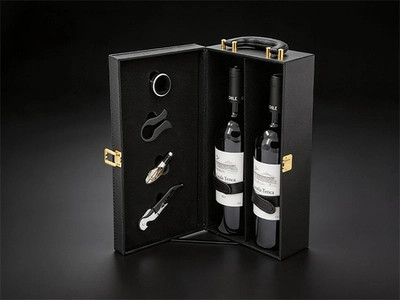
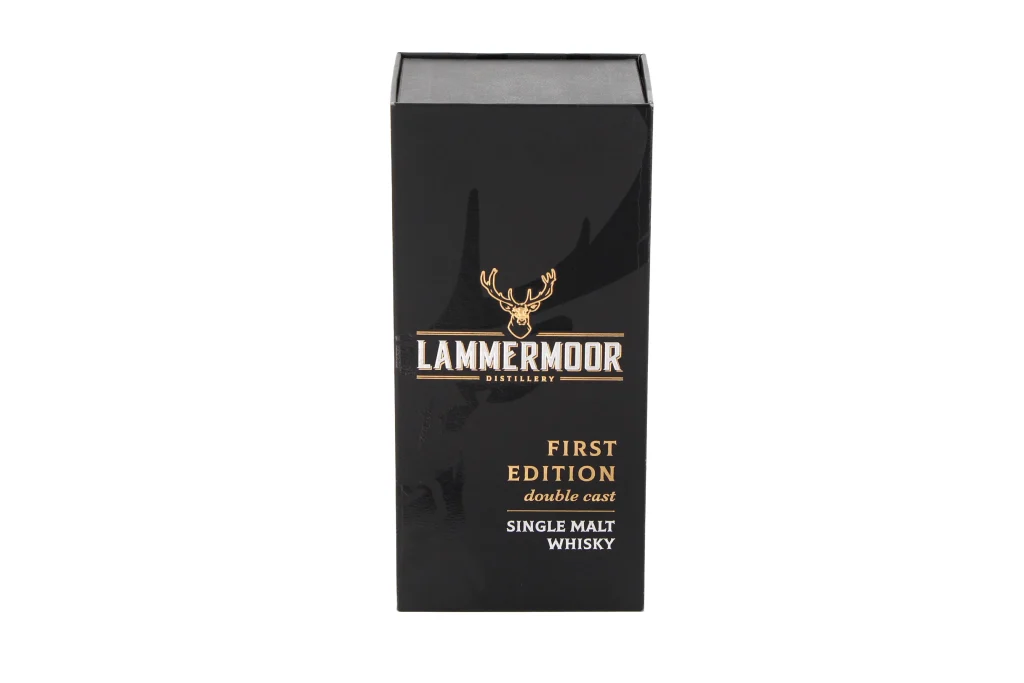
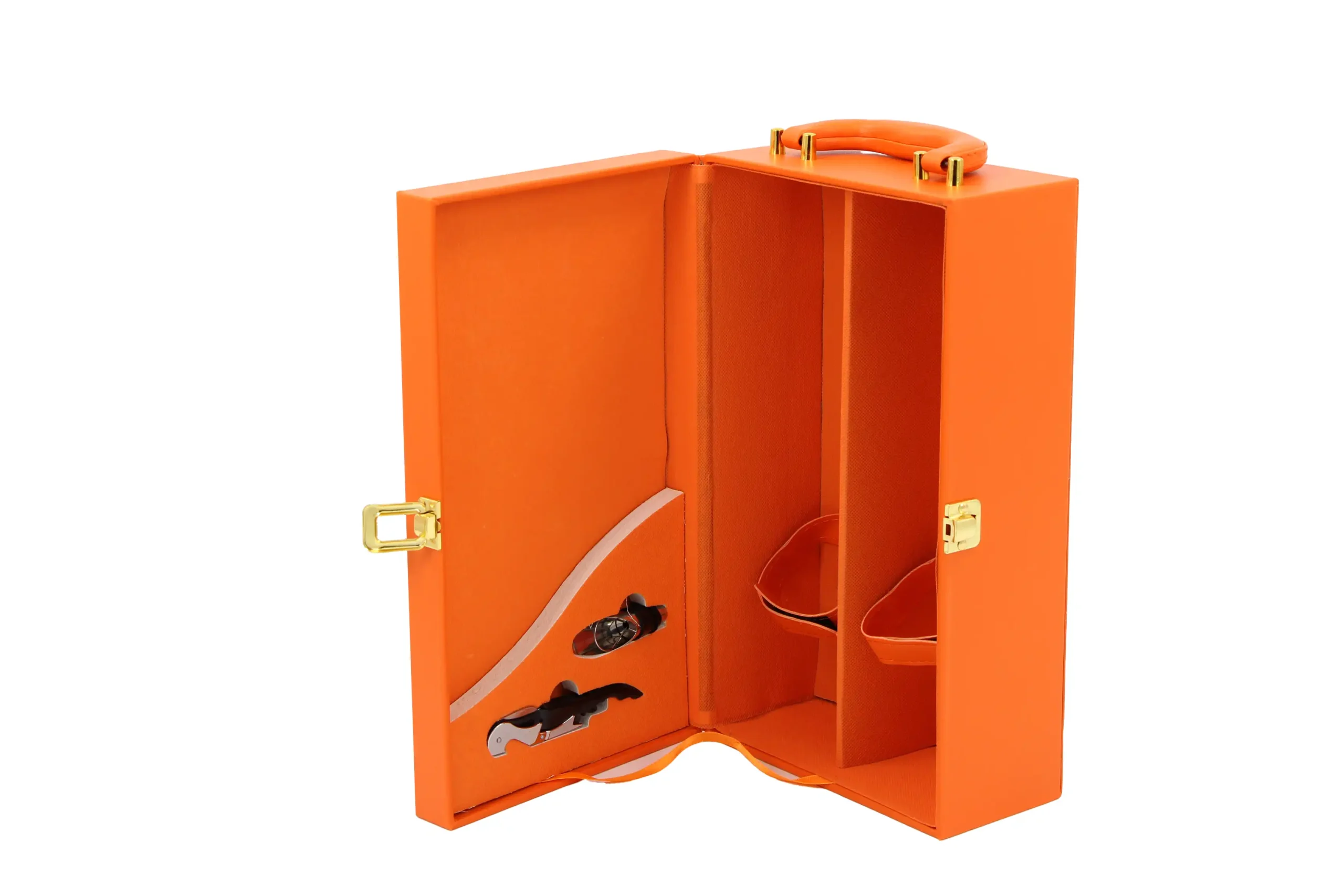
Wine and spirits. One- and two-bottle gift packaging is dominated by rigid builds with magnetic or hinged lids, as in our two-bottle wine gift box. Chocolate and confectionery. Seasonal SKUs for Valentine’s Day, Mother’s Day, Eid and Lunar New Year use rigid boxes with FDA or LFGB-compliant materials for food contact.
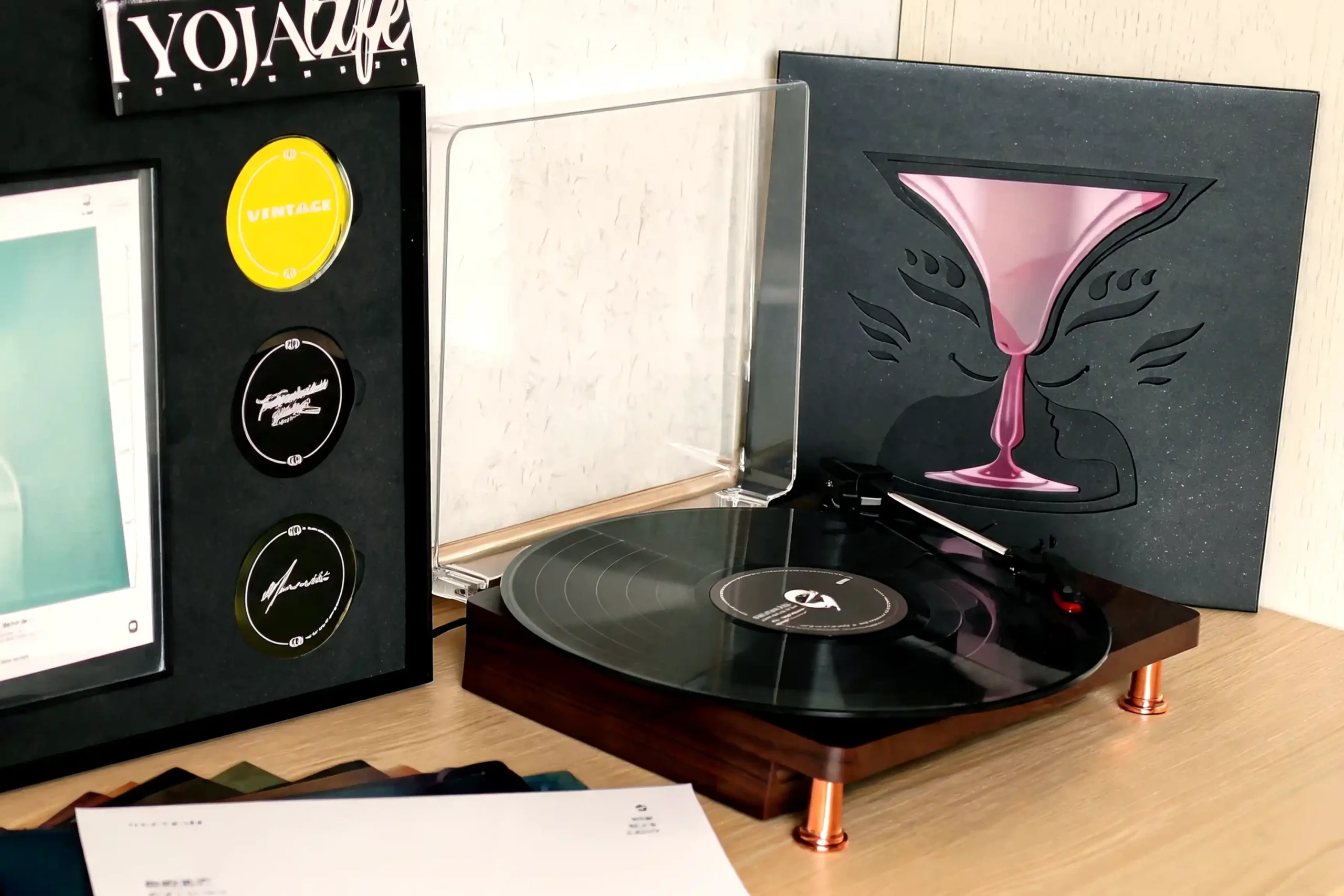
Collector and limited editions. Watch boxes, vinyl reissues and launch kits push structural complexity furthest, like our 4-tier kinetic lantern gift box with built-in LED. As a rule of thumb, if your product retails above about $30 and is often bought as a gift, a rigid box is the right starting point.
The Rigid Box Market
In market terms, rigid boxes are a large and steadily growing segment. According to Global Market Insights, the global rigid boxes market was valued at USD 31.2 billion in 2025 and is projected to reach USD 48.9 billion by 2035, a compound annual growth rate of 4.6%.
The same report names cosmetics and personal care as the largest end-use segment in 2025, lid and base boxes as the leading box type, and magnetic closure boxes as one of the fastest-growing formats. From the factory side, the drivers are clear: direct-to-consumer brands investing in unboxing, corporate gifting and subscription boxes.
Materials and Finishing Options
Most of the visual decisions happen on the outer paper. Uncoated specialty papers suit sustainability-minded brands, while coated art paper is the workhorse for vivid CMYK printing in cosmetics and fragrance.
Pearlescent and metallic papers lift seasonal SKUs, textured papers such as linen or leather-effect add feel, and fabric or PU leather wraps sit at the ultra-premium end. For independent guidance on balancing material choice with sustainability goals, the Sustainable Packaging Coalition is worth reading alongside our recommendations.
Standard finishes across all our rigid structures include hot stamping in gold, silver, copper and holographic foils, embossing and debossing, spot UV and 3D UV, soft-touch and silk lamination, screen printing and selective matte or gloss varnish.
For FSC-marked boxes we handle the full chain-of-custody paperwork, which more and more large retailers in the US and Europe ask for on paper packaging. See our FSC-certified packaging options for available grades, or visit FSC International for background on chain-of-custody certification.
Sustainability and Compliance
Because rigid boxes are mostly paper and board, they start from a good position on recyclability. The add-ons are what complicate things: plastic windows, PU leather wraps, EVA foam and glued-in magnets all make a box harder to sort and recycle.
For brands selling into Europe, this matters more now that the Packaging and Packaging Waste Regulation, Regulation (EU) 2025/40, applies from 12 August 2026 and puts packaging design for recycling at the center of compliance. Our PPWR packaging guide explains what it means for gift boxes in practice.
In practical terms, the lowest-impact rigid box is a mono-material build: FSC greyboard, FSC paper wrap, water-based glue, a paper or pulp insert and no plastic lamination. Not every brand needs to go that far, but swapping EVA for card inserts or gloss lamination for a varnish usually costs little and makes the box easier to recycle. We review these options with every client during sampling, so sustainability is decided before the order rather than after it.
Choosing a Rigid Box Manufacturer
If you are sourcing rigid boxes for the first time, three things matter more than the headline price. The first is sample turnaround: a supplier who can deliver a real-material sample in about a week has a working design and prototyping team, and one who needs three weeks usually does not. The second is the certification stack.
Brands selling into US and EU retail should expect FSC, ISO 9001, ISO 14001 and SEDEX on file, plus FDA or LFGB if the box touches food, because missing paperwork is what stalls onboarding with a retailer’s compliance team. The third is a single point of accountability.
Plenty of “manufacturers” are trading companies spreading orders across several factories without owning QC, so when a print color drifts or a magnet fails, nobody takes responsibility for the fix.
We built our process around those three points. The in-house design team handles structural engineering and artwork in Adobe Illustrator and CAD, with samples ready in 7 working days.
Our own factory in Dongguan covers 20,000 m² and runs 14+ automated rigid box lines alongside Heidelberg and KBA presses. Because printing, assembly and inspection all happen under one roof, every project is managed through one account contact from quote to shipment, and quality problems are solved on our floor rather than passed between suppliers.
What Is a Rigid Box? Frequently Asked Questions
What is a rigid box in simple terms?
It is a sturdy, pre-assembled box made of thick greyboard wrapped in printed paper. It does not fold flat, and it is used for products where presentation matters, such as perfume, cosmetics, spirits, jewelry and chocolate.
What is a rigid box made of?
A greyboard core of 1.5 to 3 mm, an outer wrap of printed, specialty or textured paper, and an optional insert such as EVA foam, paper pulp or a fabric-covered tray. Magnetic versions add concealed neodymium magnets.
What is a rigid box used for?
Mainly premium retail and gifting: perfume, skincare sets, spirits, chocolate, jewelry, watches, electronics accessories and corporate gifts. Brands choose it when the packaging has to protect the product and also feel like part of the purchase.
What is the minimum order quantity for a custom rigid box?
Our standard MOQ is 1,000 units for fully custom rigid boxes. Simpler structures can sometimes run at 500 units with a setup surcharge, and orders above 5,000 units qualify for volume pricing.
How long does a rigid box order take?
Sampling takes 7 working days. After approval, production runs 18 to 25 days for orders up to 10,000 units on our 14+ automated lines in Dongguan, followed by 25 to 40 days of sea freight to most US and EU ports.
How much does a custom rigid box cost?
Price depends on size, structure, materials, finishing and quantity. As a rough guide, a 200 x 200 x 80 mm magnetic closure box with 2-color printing and matte lamination runs $1.20 to $2.50 per unit at 3,000 units. Hot stamping, EVA inserts or specialty paper raise the price. Formal quotes go out within 1 to 2 working days of receiving your specs.
Can rigid boxes be FSC certified?
Yes. FSC-certified greyboard and outer paper are available on request across the full range, with chain-of-custody documentation for retail buyers. The factory also holds ISO 9001, ISO 14001 and SEDEX certifications, and its packaging is PPWR compliant for the EU market.
What is a rigid box compared to a setup box?
They are the same product. “Setup box” is the older industry term, while “rigid box” is more common in brand and marketing contexts today. Some markets also use “premium gift box” for the same thing.
Ready to move from “what is a rigid box” to “which rigid box fits my product”? Send us your product dimensions, target retail price, market region and any reference images. We will come back with a structural recommendation and a real-material sample within 7 working days, and the sampling fee is refunded against your first production order.