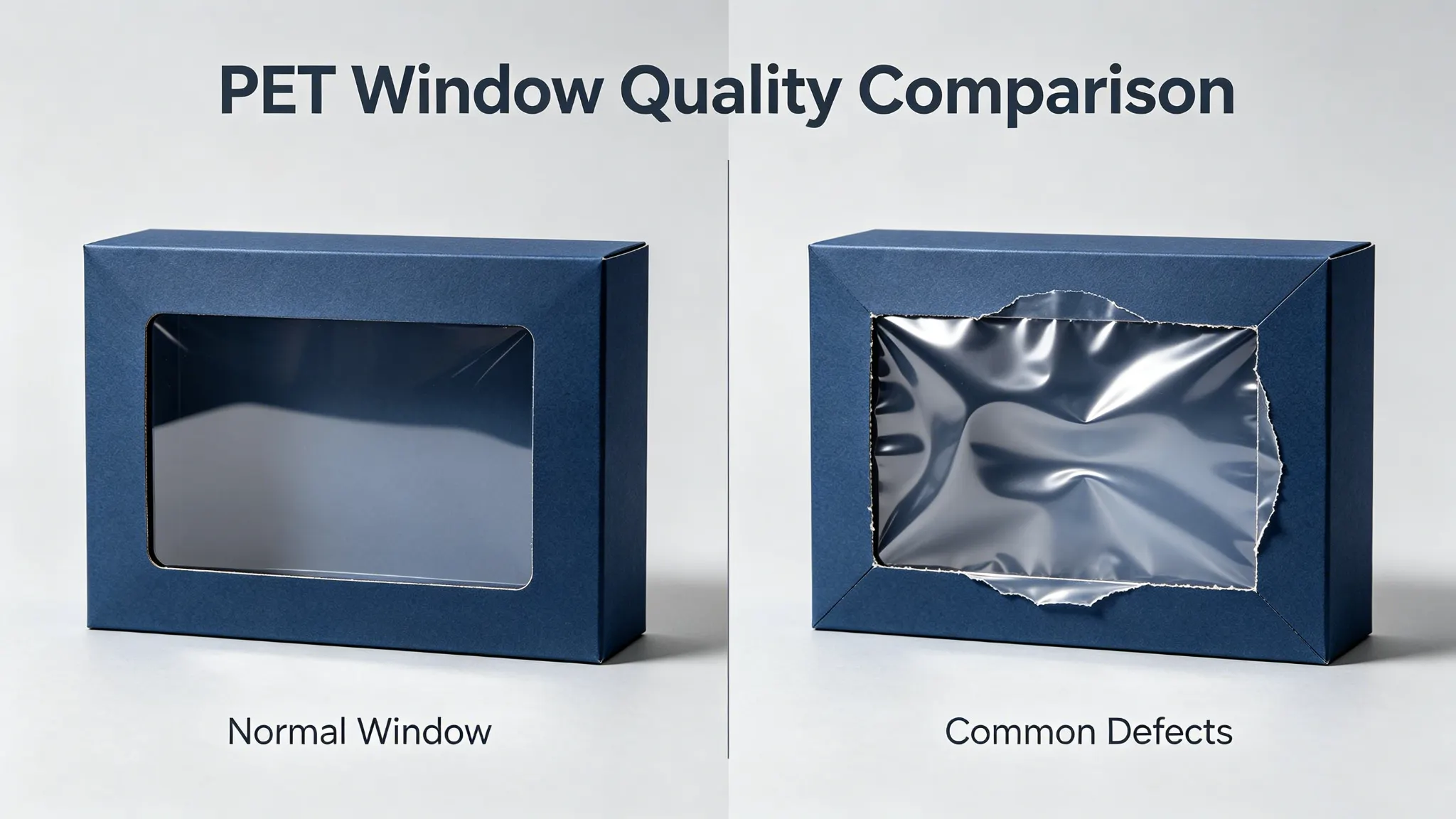
A window that looks perfect on a flat sample can bow, cloud, or peel at the edge once it’s mounted on an actual box. Clear packaging components — PET windows and blister trays — get treated as an afterthought more often than any other material in this series, mostly because they’re small relative to the rest of the structure. That’s a mistake: a warped window is one of the most visible defects a customer can spot, precisely because it’s the one component designed to be looked through.
This guide covers PET windows and blister or tray inserts, the two most common forms of clear packaging used in gift boxes, and where each one needs more care than a standard spec sheet suggests.
PET Window Basics: Thickness Ranges and What They’re Used For
PET film used for display windows generally runs from around 0.25mm to 0.5mm, with thickness chosen based on window size rather than a single default. Thin PET, toward the 0.25mm end, works fine for small windows where the span between edges is short and there’s little unsupported area to flex. Larger windows need thicker film simply to resist bowing under their own rigidity requirements, independent of any heat exposure.
Heat-Resistant PET for Long Window Spans
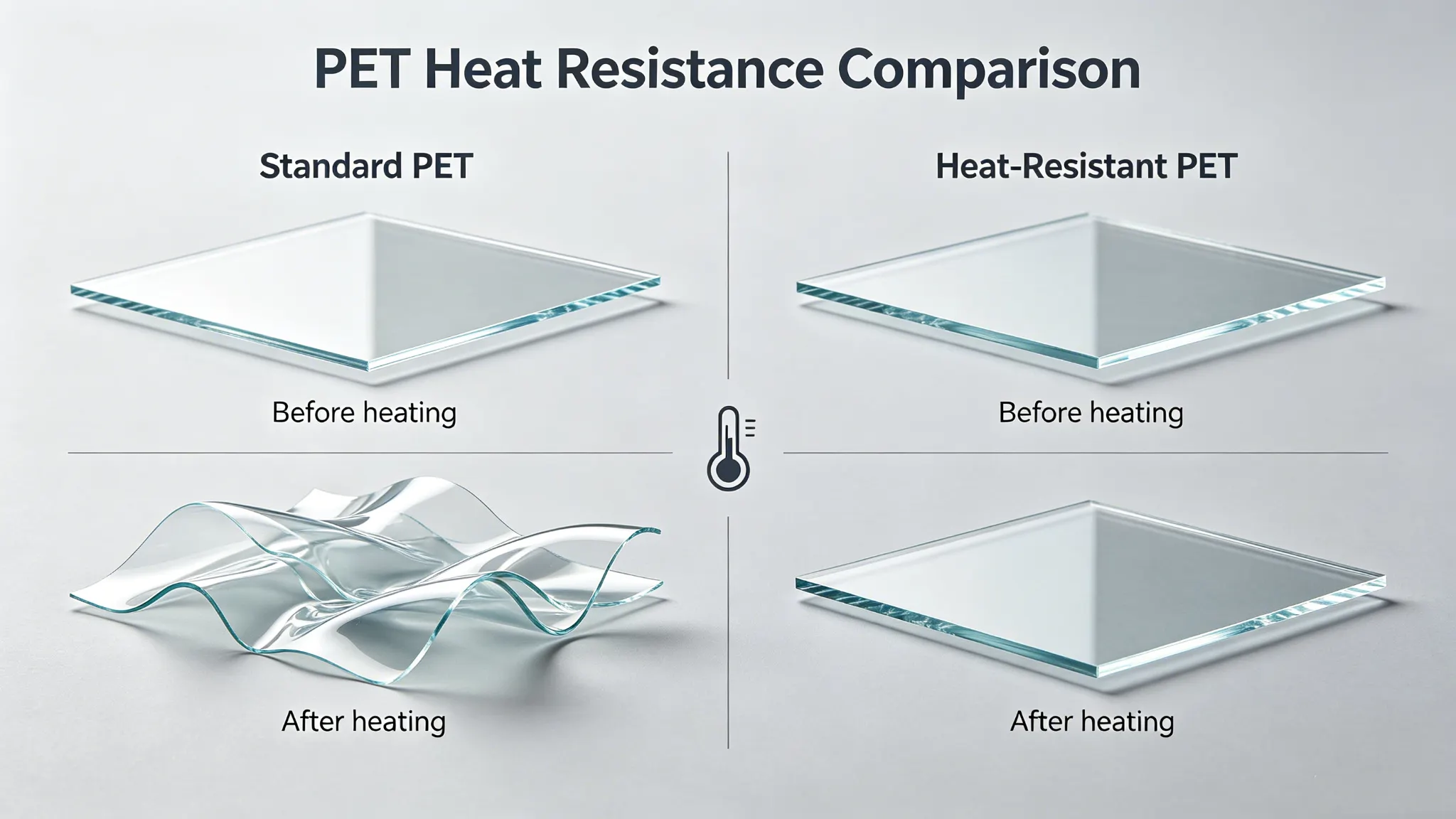
Standard clear packaging film can soften and distort under heat exposure during shipping, storage in a warm warehouse, or transit through uninsulated cargo space. This isn’t usually visible in a factory sample tested at room temperature, which is exactly why it catches buyers off guard.
Why Long Spans Warp Without It
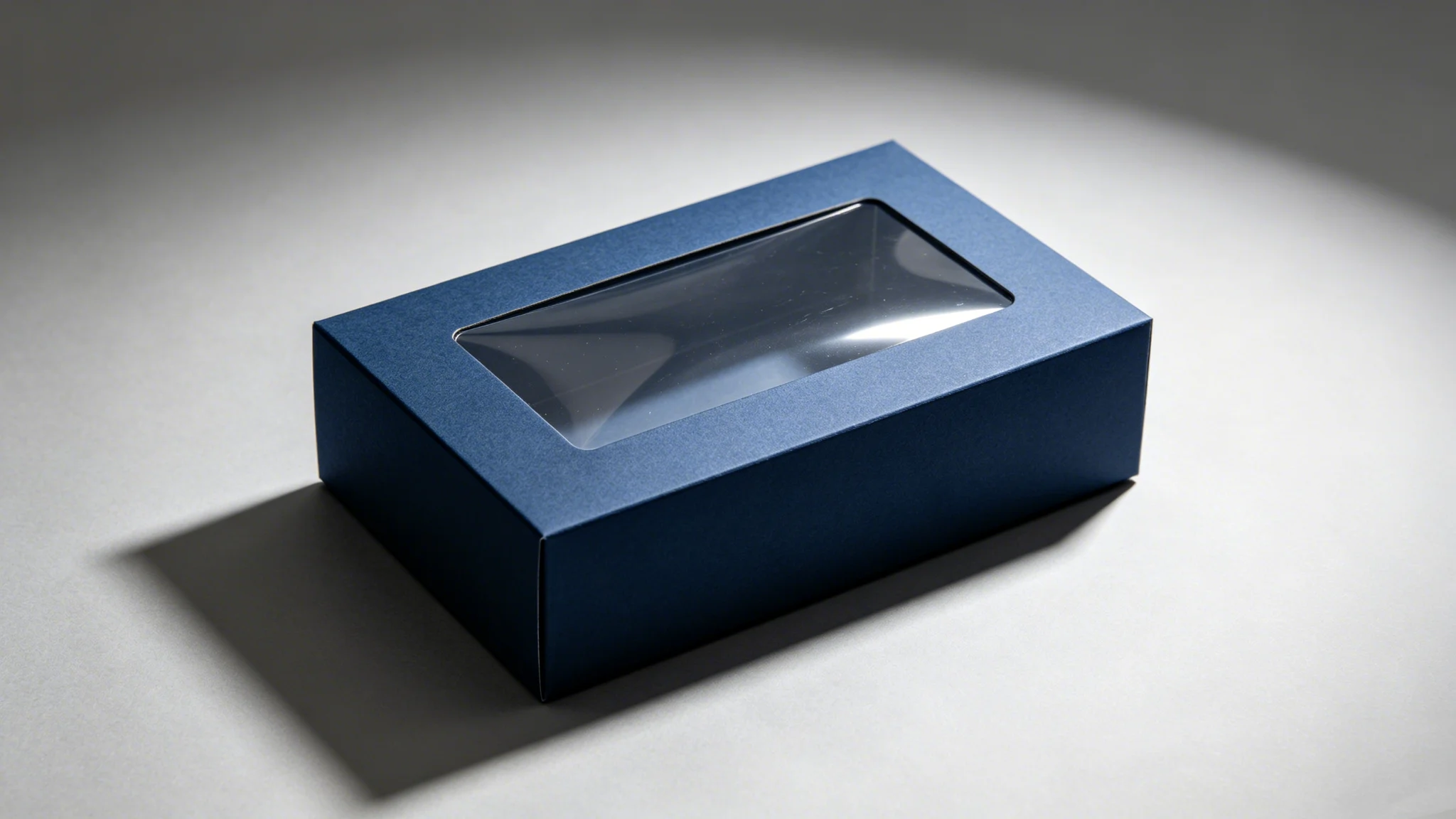
A window spanning more than roughly 80 to 100mm across an unsupported area is far more likely to show visible bowing under heat than a small window reinforced by surrounding structure on all sides. Heat-resistant PET grades, formulated to maintain rigidity at higher deflection temperatures, cost more per sheet but eliminate this failure mode on long spans. If your box design includes a large window and ships through regions with hot transit or storage conditions, specify heat-resistant PET rather than standard grade, and ask your supplier for the deflection temperature rating rather than just a generic “heat-resistant” label.
Blister Trays: Custom-Cut vs Generic Cavity Sizing
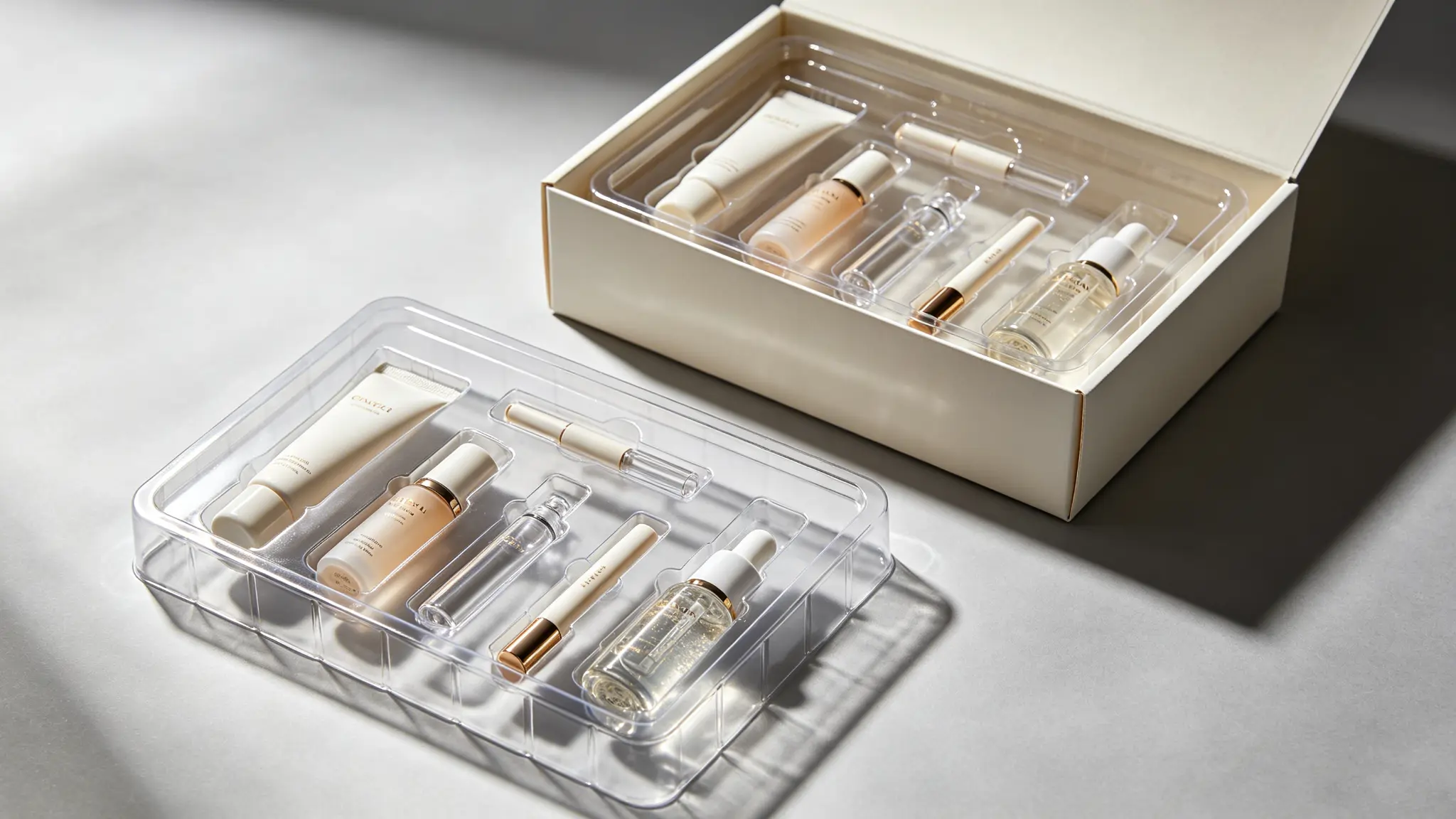
Blister and tray inserts made from clear plastic hold a product in a fixed position while keeping it visible, commonly used for cosmetics, small electronics accessories, and confectionery.
The Cost Trade-off
Generic cavity sizing uses a mold that approximately fits a product category, cheaper because the tooling is reused across multiple clients and products. Custom-cut cavities are molded to the exact dimensions of your specific product, costing more upfront in tooling but eliminating the gap or looseness that a generic size often leaves. For products that move around noticeably in a generic tray, the custom tooling cost is usually recovered quickly through fewer damage claims and a tighter, more premium presentation.
Partial-Reveal Windows as a Marketing Choice
Not every clear packaging window is meant to show the full product. A window that reveals only part of an item — a corner, a texture, a single design element — is often a deliberate choice rather than a design limitation. Partial reveal creates curiosity and directs attention to a specific detail the brand wants noticed, while a full window shows everything at once and can sometimes undersell a product that photographs better than it displays through plastic. If a supplier suggests reducing window size, it’s worth asking whether that’s a cost-driven suggestion or a genuine design opportunity before assuming it’s a downgrade.
Matching Clear Packaging to Product Type
Product Type | Typical Clear Packaging | Priority |
Cosmetics & Skincare | Small partial-reveal window | Limit light exposure, confirm color/texture |
Confectionery & Chocolate | Full or near-full window | Visual appeal drives the sale |
Electronics Accessories & Jewelry | Custom-cut blister tray | Secure fit over display |
Quality Control: What to Check for Clear Packaging Fit
A window or tray that looks correct in isolation doesn’t guarantee it performs once mounted to the actual structure.
Edge Adhesion Testing
PET windows are typically glued into a die-cut opening, and that adhesive bond is what fails first if a window is going to fail. Request a sample with the window mounted exactly as it will be in production, and check edge adhesion after normal handling, not just immediately after assembly.
Fit Verification with Actual Product
For blister and tray inserts, request a sample with your actual product placed inside, not just the empty cavity. A cavity that measures correctly on a drawing can still bind or leave excess play once a real product with its actual tolerances is inserted. For products shipping internationally, ISTA transit testing can also confirm that clear packaging survives handling before committing to full production.
What to Know Before You Request a Quote
A few production basics apply to both PET windows and blister tray clear packaging.
Minimum Order Quantity
1,000 units per SKU is standard across our product range.
Sample Lead Time
7 days from confirmed spec to sample in hand.
Production Lead Time
30 to 45 days, depending on material complexity and finish.
Sourcing Note
PET used in clear packaging carries a resin identification code under ASTM D7611, which is worth confirming with your supplier if recyclability claims matter for your market. Heat resistance ratings for PET film follow deflection temperature testing standardized under ASTM D648.
FAQ
What thickness of PET should I use for a display window?
Small windows can use PET as thin as 0.25mm. Larger unsupported spans need thicker film, generally toward 0.5mm, or a heat-resistant grade if the box will be shipped or stored in warm conditions.
How do I know if I need heat-resistant PET for clear packaging?
If your window spans more than about 80 to 100mm without surrounding support, or your product ships through hot climates or uninsulated transit, heat-resistant PET is worth the added cost to prevent visible bowing.
Is custom-cut blister tray sizing worth the extra cost?
For products that shift or sit loosely in a generic tray, yes. The tooling cost is usually offset by fewer damage claims and a noticeably tighter, more premium fit.
Why would a brand choose a partial window instead of a full display window?
Partial reveal can create curiosity and highlight a specific design detail rather than showing everything at once. It’s a deliberate choice as often as it’s a cost consideration.
What’s the minimum order quantity for custom clear packaging components?
1,000 units per SKU is standard. Sampling takes about 7 days, full production 30 to 45 days after that.
Where can I learn more about packaging materials beyond clear packaging?
See our Packaging Materials Guide for the full picture across structural, surface, functional, and finish materials.