Most packaging quotes fall apart at the material stage, not the structure, not the printing. A buyer settles on a beautiful drawer box design, then gets a quote back listing three different greyboard options with no clear reason to pick one over another. That gap is what this guide is for.
Packaging materials aren’t a footnote you fill in after the design is locked. They set the unit cost, they decide whether a box survives six weeks on a container ship, and they’re a big part of what a customer actually feels the moment they pick the box up. Get the structure right and the materials wrong, and none of it holds together, sometimes literally.
Why Does Material Choice Matter More Than Most Buyers Expect?
Structure gets most of the attention early on: magnetic closure, drawer box, two-piece lid. Materials get treated as a detail the factory sorts out later. That’s backwards. The same drawer box built with a light greyboard flexes under a heavy candle. Built with a heavier board, it holds its shape for years. Same structure, two very different products — and the difference is entirely in the packaging materials underneath.
The Three Questions to Answer Before Choosing Materials
What’s the Use Case?
Shipped direct to a customer, handed over in a retail moment, or kept as a long-term keepsake — each of these needs different packaging materials, even when the box dimensions look identical on paper. A mailer that spends four days in a parcel network needs different packaging materials than a presentation box that’s handed over once, in person, and never shipped again.
What’s the Budget?
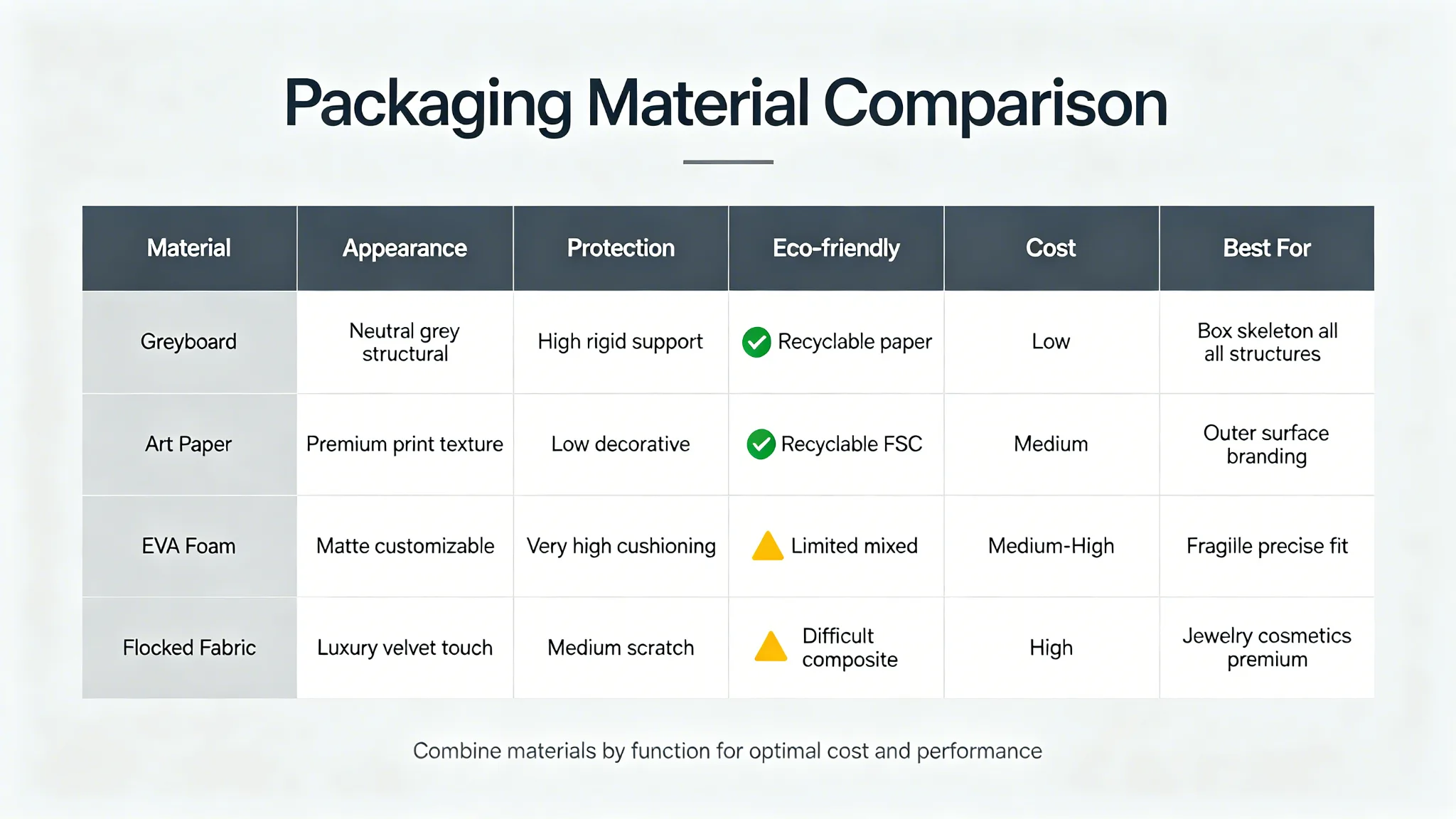
Materials are usually the single biggest line item in a packaging quote. Know your target unit cost before you spec materials, not after the quote comes back higher than expected. It’s common for a beautiful spec to get value-engineered late in the process, and the packaging materials chosen first are usually the ones that survive that process intact.
How Much Weight Is It Holding?
A 750ml wine bottle and a silk scarf need very different structural support. Get this wrong and it shows up fast: warped panels, sagging lids, split corners somewhere in transit. Buyers shipping internationally sometimes reference ISTA transit testing standards to validate a structure before committing to full production, rather than finding out the hard way after a container arrives with damaged stock.
Answer these three first. It turns what looks nice into what actually works for this product, this budget, this shipping route.
The Five Categories of Packaging Materials
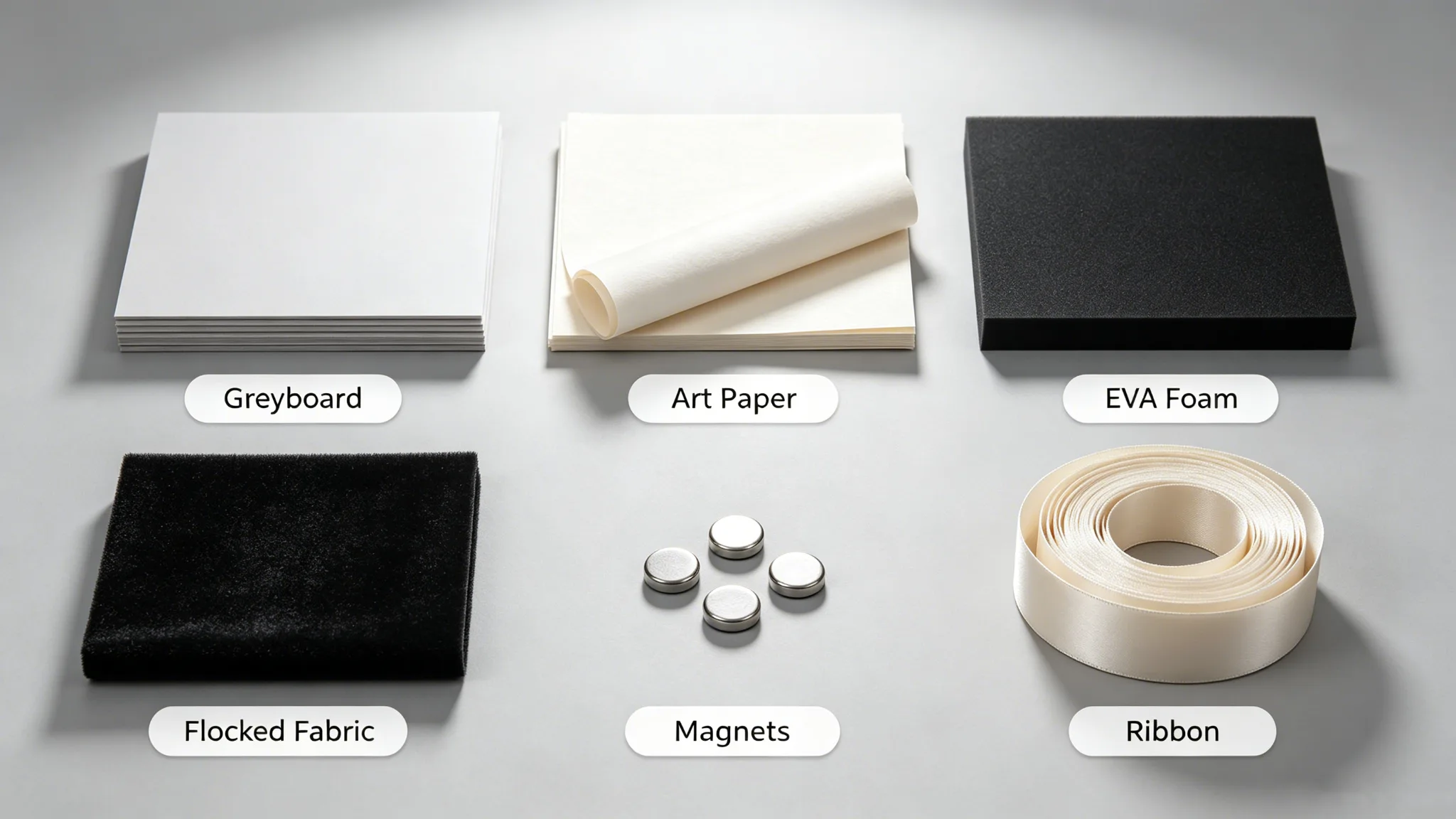
Physically, most rigid boxes are built from three paper layers wrapped around a greyboard core: an outer face paper carrying the print and finish, an inner lining paper glued to the reverse side of the board, and, where the design calls for it, an interior insert paper protecting the product itself. The five categories below aren’t a count of physical layers — they’re the roles different materials play across a complete box, since a finished product usually combines that paper-wrapped shell with separate components like foam inserts, ribbon, or a PET window that aren’t part of the shell’s layer stack at all. Here is a quick map of each category; the linked guides in this series go deep into the how and why.
Structural Materials
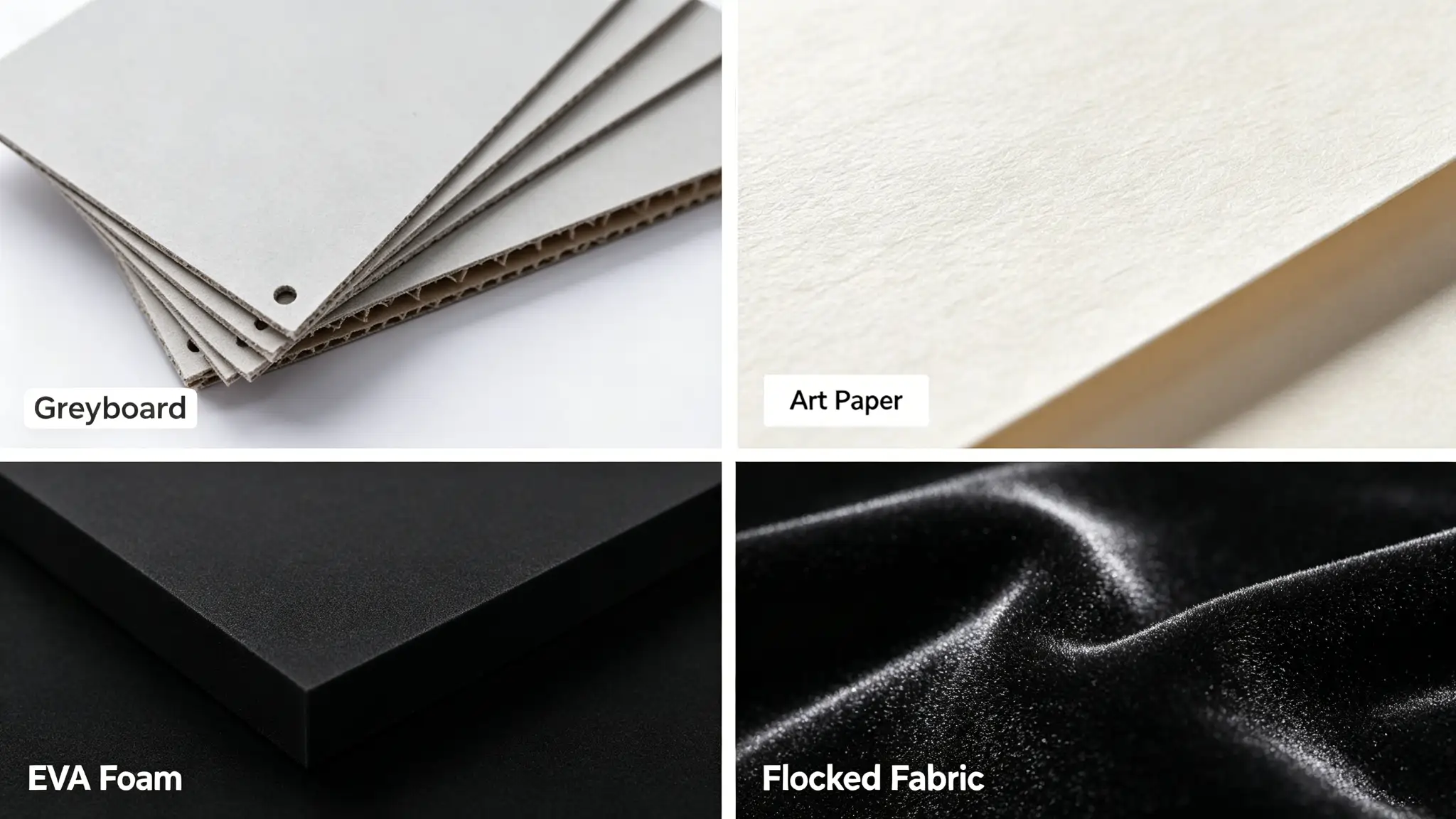
The skeleton, usually greyboard measured in gsm (grams per square meter), a measurement standardized under ISO 536. Structural packaging materials determine whether a box holds shape under weight and survives repeated opening. Full breakdown: Greyboard GSM Guide.
Surface Materials
Coated paper, textured specialty stock, metallic card, glitter finishes. These packaging materials carry almost the entire visual impression, and each comes with its own risk — textured paper cracking at fold corners being a common one. Full breakdown: Paper Finishes Guide.
Functional Interior Materials
EVA foam, flocked fabric, ribbon pulls — they do the quiet work of protecting the product and shaping the unboxing moment. Full breakdown: Interior Packaging Guide.
Clear / Display Materials
PET windows and blister trays let a product be seen without being touched — a deliberate design choice as much as a practical one. Full breakdown: Clear Packaging Guide.
Surface Finish
Matte lamination, gloss lamination, foil, UV coating. Not structural, but often the first thing a customer actually remembers. Full breakdown: Packaging Finish Guide.
How Many Layers Does a Rigid Box Wall Actually Have?
Worth being precise here, because the five categories above answer a different question than this one. They describe the types of materials used across a full packaging system, structure, surface, interior, display, finish, not the number of physical layers in a single box wall. Someone reading “five categories” and assuming a box wall is built five layers thick would be working from the wrong picture.