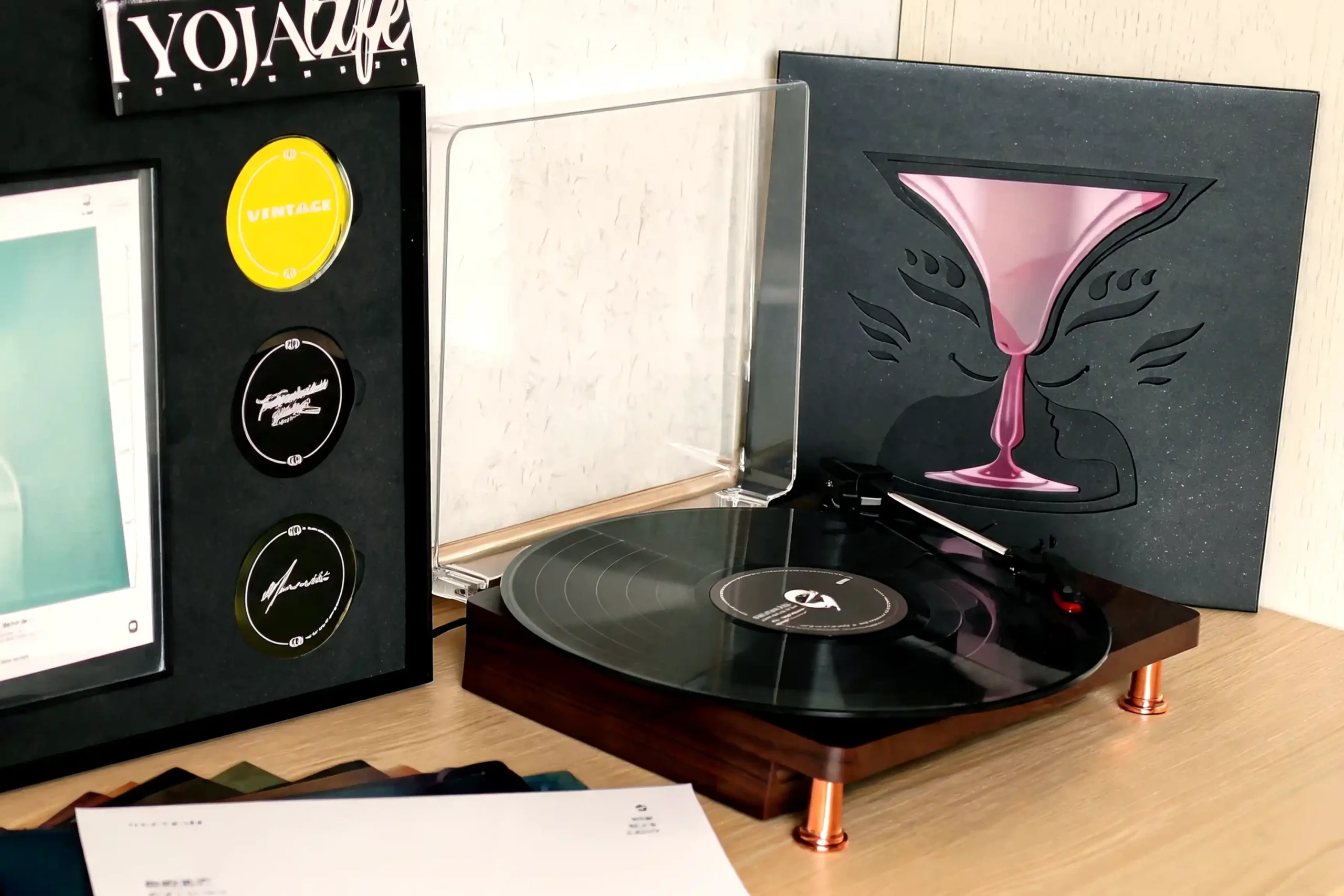
Nobody photographs the inside of a shipping carton, but everyone remembers how a product sat inside its box the first time they opened it. Interior packaging does that quiet work: holding a product still in transit, then presenting it well in the two or three seconds that actually matter to a customer.
This guide covers four materials that make up most interior packaging in gift boxes: EVA foam, flocked fabric, ribbon pulls, and copy paper wraps. Each does a genuinely different job, and mixing them up — using the wrong one for the wrong purpose — is where most problems start.
EVA Foam: Cushioning vs Precise-Fit Cavities
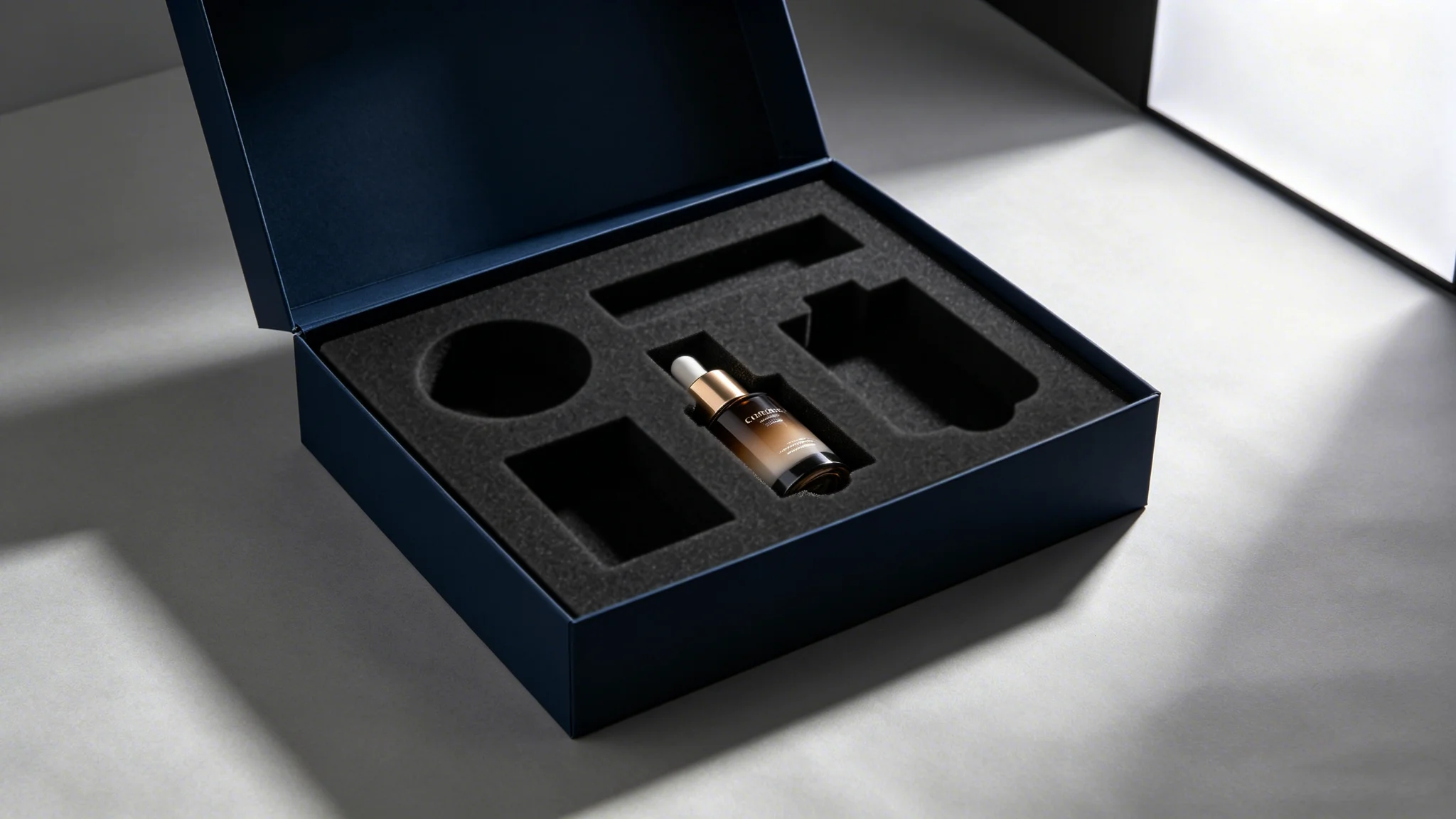
EVA foam shows up in interior packaging in two distinct forms that get treated as interchangeable more often than they should be. Cushioning foam absorbs shock during handling and shipping — a flat or lightly shaped layer that protects a product from impact without holding it in a fixed position. Precise-fit cavity foam is cut to the exact shape of a product, holding it rigidly in place so it can’t shift during transit at all.
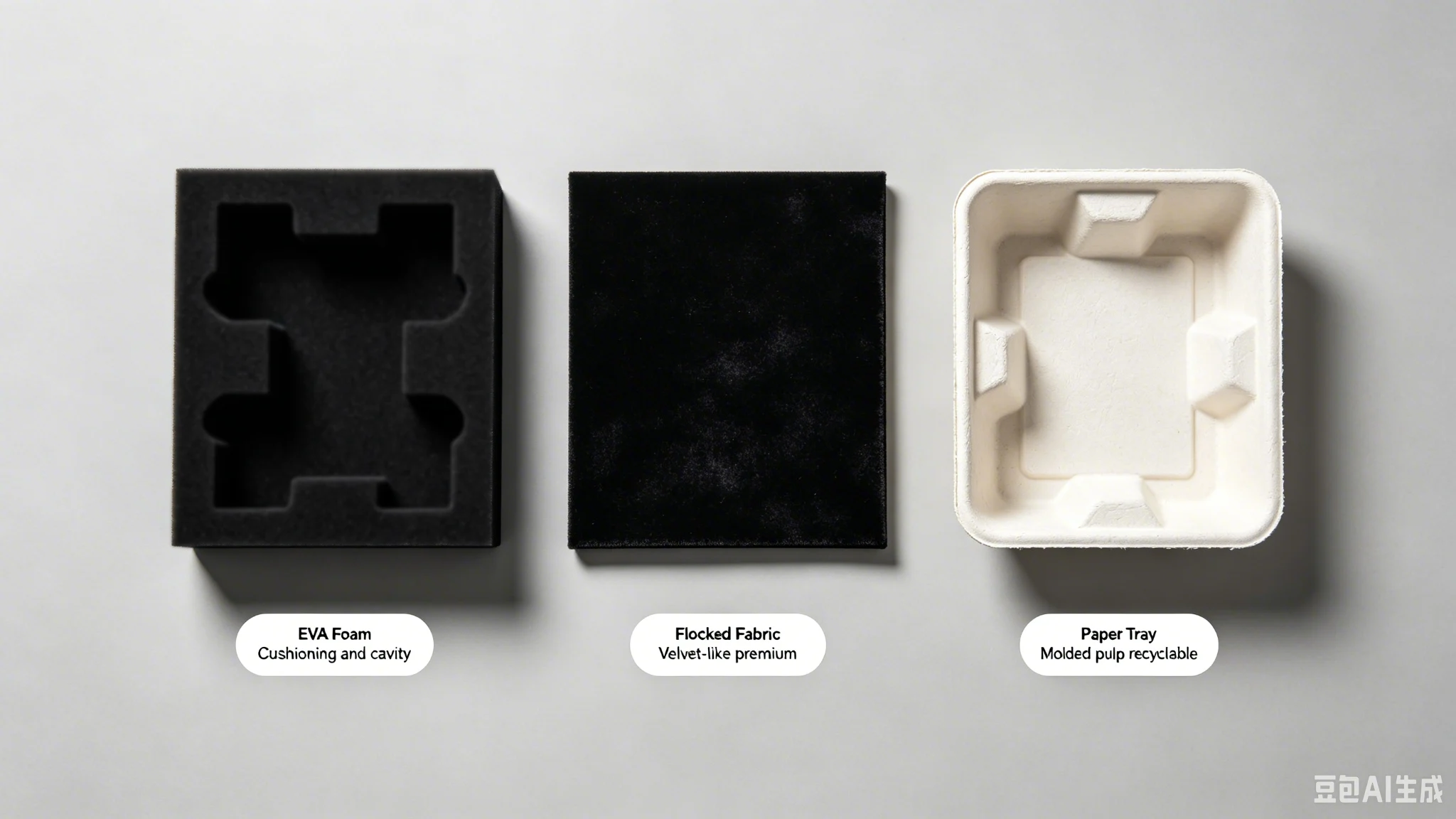
The difference matters for cost and for what actually goes wrong when it fails. Cushioning foam is cheaper and faster to produce but allows some movement — fine for a robust product, risky for anything fragile. Cavity foam costs more because of the custom die-cutting involved, but it eliminates movement almost entirely. If your product has moved or shifted in past shipments, the fix usually isn’t more foam — it’s the right kind of foam.
Flocked Fabric: Visual Softness and Batch Color Consistency
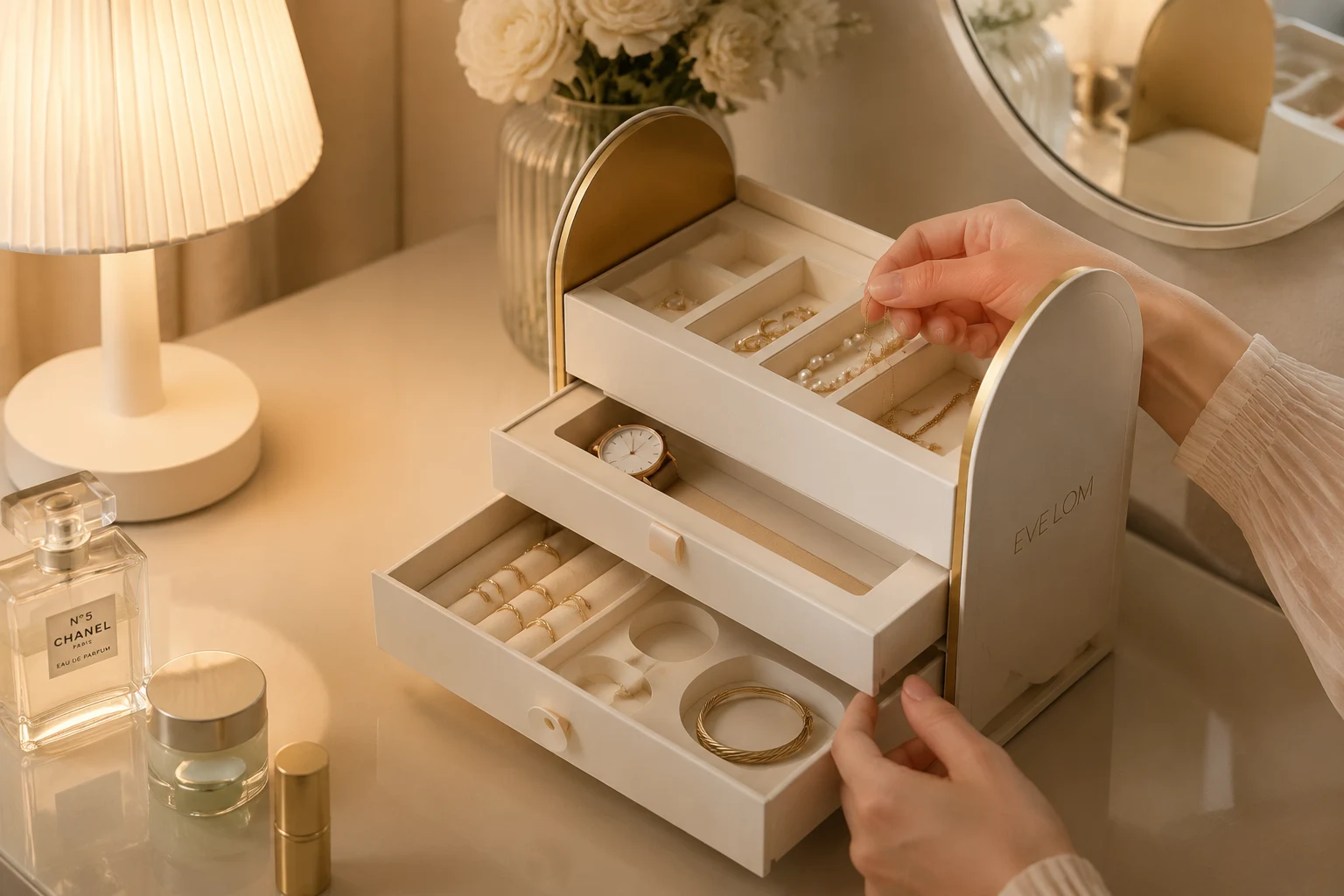
Flocked fabric brings a soft, velvet-like surface to interior packaging, most often used to line a cavity or tray where a product sits visibly against it. It reads as premium immediately, which is exactly why it shows up so often in jewelry and cosmetics packaging.

Why Flocking Color Drifts Between Runs
Flocking is dyed fiber applied to an adhesive-coated surface, and the dye lot used for one production run isn’t guaranteed to match the dye lot used for a reorder months later. This is the single most common complaint we hear about flocked interior packaging: a reorder that technically matches the original spec but looks slightly different sitting next to the first batch. If exact color matching across multiple runs matters to your brand, ask your supplier to retain a physical sample from the first approved batch, and request a measured color comparison, not just a visual check, on future runs.
Ribbon Pulls: Surface-Mounted vs Internally Anchored
Ribbon pulls help a customer lift a product out of a tight-fitting cavity, and they come in two mounting styles that look nearly identical until the ribbon is actually used.
Why the Anchoring Method Affects Durability
Surface-mounted ribbon is glued directly to the visible surface, which is cheaper and faster but relies entirely on adhesive strength. Internally anchored ribbon runs through a slot or is secured beneath the tray structure itself, distributing pulling force across the material rather than concentrating it on a glued point. For products that are pulled out with real force — a full wine bottle, a heavier jar — internally anchored ribbon is the more durable choice, even though it costs slightly more to produce. Surface-mounted ribbon is fine for light items where the pull is closer to a lift than a tug.
Copy Paper Wraps: Two Different Jobs
Copy paper wrap gets used for two genuinely different purposes inside interior packaging, and it’s worth being precise about which one you actually need. Dust protection wrap is a plain, functional layer that keeps a product clean before it reaches the customer, removed and typically discarded during unboxing. Decorative liner wrap is chosen for its look and feel and is meant to be part of the unboxing moment itself — the kind used in chocolate gift boxes, sometimes branded or textured. Specifying a decorative-grade paper for a purely functional dust wrap is a common way unit cost creeps up without adding anything a customer will actually notice.
Matching Interior Packaging to Product Type
Product Type 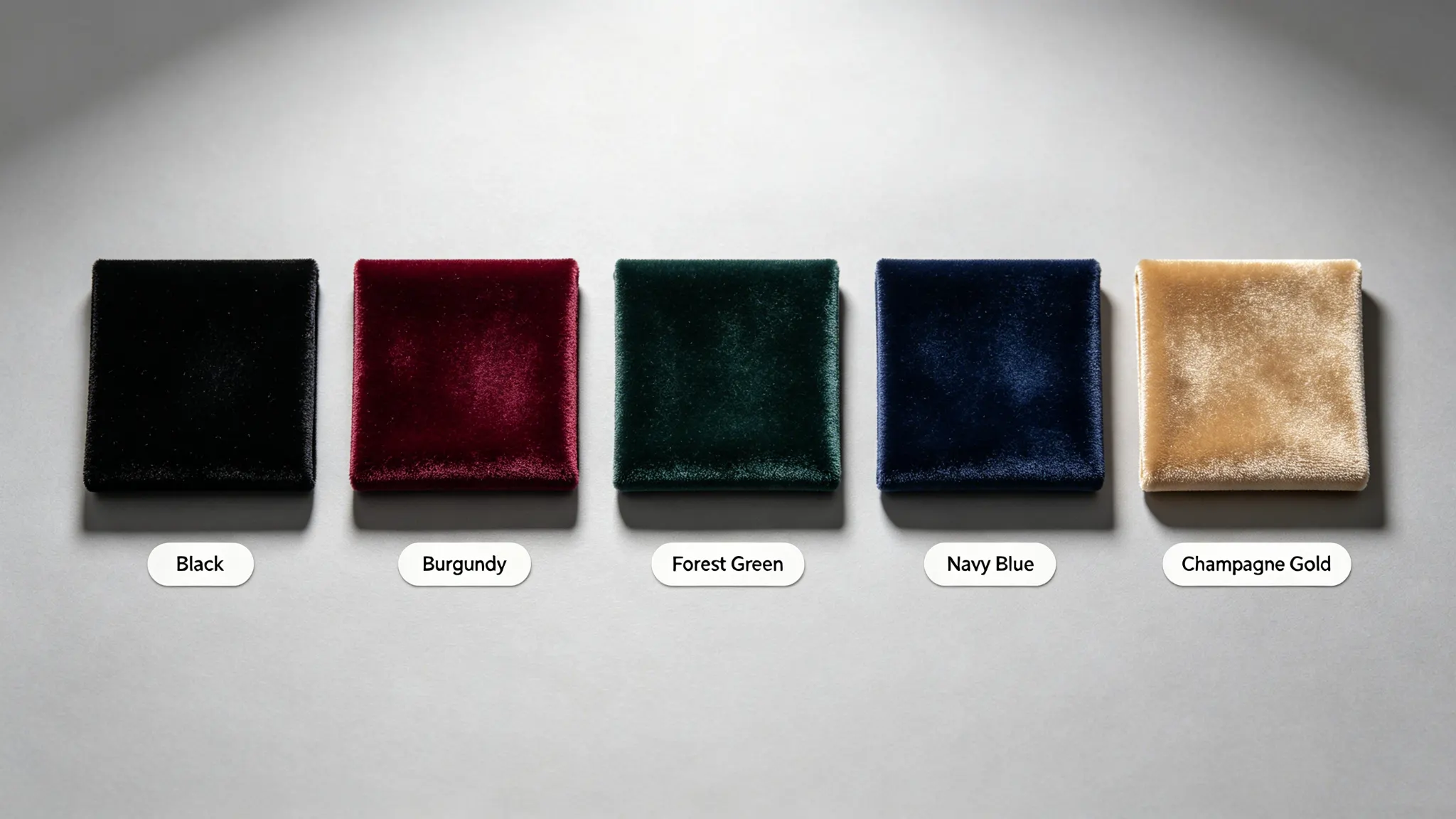 | Recommended Foam | Recommended Ribbon | Key Priority |
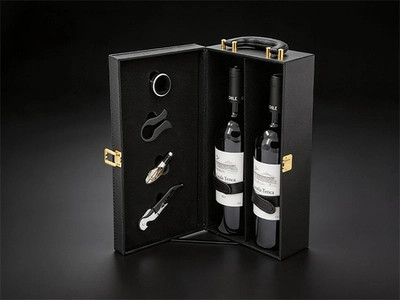
Bottles & Jars | Precise-fit cavity foam | Internally anchored | Impact protection, secure lift |
Jewelry & Small Accessories | Flocked fabric tray | Surface-mounted (light pull) | Visual presentation |
Chocolate & Confectionery | Lightweight cavity tray | N/A (paper liner) | Food-safe contact, presentation |
Quality Control: What to Check Before Production
A spec that looks right on paper doesn’t guarantee consistent results at scale.
Verifying Cavity Fit
Request a physical sample with your actual product placed inside the cavity, not just a technical drawing. Fit tolerances that look fine on paper sometimes bind or leave excess play once a real product is inserted.
Verifying Flocking Color Match
For reorders, request a measured color comparison against the retained sample from the original approved batch, following a method like ASTM D2244 color difference calculation, rather than relying on visual judgment alone.
What to Know Before You Request a Quote
A few production basics apply across all four materials covered here.
Minimum Order Quantity
1,000 units per SKU is standard across our product range.
Sample Lead Time
7 days from confirmed spec to sample in hand.
Production Lead Time
30 to 45 days, depending on material complexity and finish.
Sourcing Note
Copy paper wraps can generally be sourced with FSC chain of custody documentation on request. For products shipping internationally, ISTA transit testing can also validate that interior packaging holds a product securely before committing to full production.
FAQ
What’s the difference between cushioning foam and cavity foam in interior packaging?
Cushioning foam absorbs shock but allows some product movement. Cavity foam is cut to the exact product shape and holds it rigidly in place. Fragile or heavy items generally need cavity foam.
Why does flocked interior packaging look different between orders?
Flocking is dyed fiber, and dye lots vary slightly between production runs. Requesting a retained physical sample and a measured color comparison on reorders is the most reliable way to catch drift before it ships.
Is internally anchored ribbon worth the extra cost?
For heavier products that get pulled out with real force, yes. Surface-mounted ribbon relies on adhesive alone and is more likely to detach under repeated or forceful use.
Can the same paper wrap serve as both dust protection and a decorative liner?
It can, but specifying decorative-grade paper for a purely functional dust wrap usually adds cost without adding anything the customer notices during unboxing.
What’s the minimum order quantity for custom interior packaging?
1,000 units per SKU is standard. Sampling takes about 7 days, full production 30 to 45 days after that.
Where can I learn more about packaging materials beyond interior packaging?
See our Packaging Materials Guide for the full picture across structural, surface, functional, and finish materials.