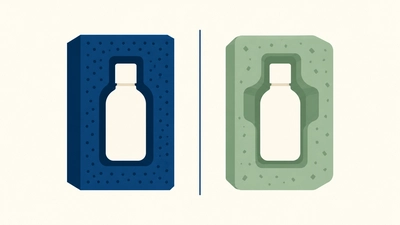
Paper and molded-pulp inserts usually receive more favorable EPR treatment because they can follow the same recycling stream as the surrounding box. Foam inserts for boxes still provide precise cushioning for fragile or irregular products. The right choice depends on protection needs as well as end-of-life handling, so neither material is an automatic upgrade in every project.
This article provides general information and does not constitute legal advice. Recyclability classification and EPR fee treatment vary by jurisdiction and specific material formulation — confirm specifics with your compliance team.
Foam inserts for boxes are one of the most common interior packaging components across cosmetics, jewelry, and gift categories, and the EPR fee implications of choosing foam over a paper-based alternative are worth understanding before a structure is finalized. This guide, part of our broader Extended Producer Responsibility for Packaging series, covers how the two compare.
How EVA Foam Inserts Are Typically Classified
EVA (ethylene-vinyl acetate) foam is a plastic material, and most EPR frameworks classify it accordingly for material composition reporting purposes, separate from the paper or greyboard structure surrounding it. Because a foam insert can’t be recycled through standard paper recycling streams and generally isn’t accepted in most curbside plastic recycling programs either, it’s typically treated as a lower-recyclability component under eco-modulated fee structures like PPWR’s Article 6 mechanism — meaning a box using an EVA foam insert generally faces a higher fee than an otherwise identical structure using a paper-based insert instead.
How Paper and Pulp Inserts Are Typically Classified
Molded pulp trays and die-cut paper inserts are generally classified within the same material stream as the surrounding paper or greyboard structure, since both are fiber-based and can typically be processed together during paper recycling. This alignment is why paper-based inserts usually receive more favorable eco-modulated fee treatment than foam — the entire structure, exterior and interior, can be evaluated as a more unified, separable material category rather than a mixed-material assembly requiring manual separation before recycling.
Cushioning Performance: Where Foam Still Wins
The EPR fee difference doesn’t eliminate foam’s genuine functional advantages. Molded EVA foam holds a precise cavity shape more reliably under repeated handling than pulp, and it generally offers tighter, more consistent cushioning for fragile or irregularly shaped products — a perfume bottle with an unusual silhouette, for instance, often fits more securely in a custom-molded foam cavity than in a pulp tray, which has less dimensional precision in its molding process.
For products where in-transit movement genuinely risks breakage, this cushioning precision can matter more than the EPR fee difference, particularly for high-value items where breakage cost far exceeds any fee savings.
Real-World Scenarios: Choosing Between the Two
A fragrance brand shipping glass bottles internationally, where breakage risk during a long freight journey is a real and costly concern, often finds that foam’s cushioning precision justifies its EPR fee premium — the cost of a single broken bottle and its replacement shipment can exceed the fee difference many times over across a full production run. A jewelry brand packaging lightweight, non-fragile pieces has less functional need for foam’s cushioning precision specifically, making a pulp or die-cut paper insert a more straightforward choice that captures the EPR fee advantage without a meaningful functional trade-off.
A confectionery brand needing food-contact-certified inserts has an additional consideration layered on top, covered separately in our guide on chocolate box packaging, since food-contact requirements sometimes limit which paper-based tray options are viable regardless of EPR fee treatment.
Hybrid Approaches
Some structures use foam only where it’s functionally necessary — a small foam cradle for a bottle neck, for instance — paired with a paper-based tray or divider for the rest of the interior structure. This hybrid approach can capture some of foam’s cushioning precision where it matters most while limiting the overall foam content, and by extension the EPR fee impact, relative to a fully foam-lined interior.
Whether this partial approach meaningfully improves fee treatment compared to full foam use depends on the specific fee calculation methodology in the applicable jurisdiction, so confirming with a manufacturer or compliance advisor familiar with the specific market is worth doing before assuming a hybrid design delivers proportional savings.
Sustainability Claims Beyond EPR Fees
Beyond the direct EPR fee calculation, paper-based inserts generally support broader recyclability and sustainability claims more straightforwardly than foam, which matters for brands building a sustainability narrative independent of the specific fee mechanics. A brand marketing a gift set as “fully recyclable packaging” faces a harder claim to substantiate if the interior insert is EVA foam, regardless of how the exterior structure is finished. For buyers weighing this trade-off, the Sustainable Packaging Coalition publishes independent guidance on interior packaging material choices worth reviewing alongside a manufacturer’s own recommendations.
Testing Insert Performance Before Committing
Whichever material direction a brand leans toward, requesting a physical filled sample — with the actual product seated inside — rather than relying on a rendering or technical drawing is worth the short additional delay, since insert fit is one of the more common gaps between how a design looks on paper and how it performs with a real product inside it.
This matters especially when switching from an established foam insert to a new paper-based alternative, since the fit tolerances and cushioning behavior can differ meaningfully even when both are designed to the same product dimensions.
Regional Variation in Foam Insert Treatment
How foam inserts for boxes are classified and fee-treated isn’t identical across every EPR framework covered in this guide. Under PPWR’s eco-modulation mechanism, applying from August 12, 2026, the emphasis is on demonstrated recyclability and separability, which generally disadvantages EVA foam consistently across all EU member states once the regulation is fully in force. US state programs vary more — California’s SB 54 focuses specifically on single-use plastic packaging categories, which would generally capture foam inserts, while other states’ broader material definitions may treat foam somewhat differently depending on each state’s specific covered-material list.
Brands sourcing foam inserts for boxes destined for multiple markets should confirm treatment per jurisdiction rather than assuming a single classification applies universally.
Cost Comparison Beyond the EPR Fee Line Item
The EPR fee difference between foam inserts for boxes and paper-based alternatives is only one line in a broader cost comparison. Molded EVA foam tooling and material costs are often comparable to or sometimes lower than precision die-cut pulp tooling, depending on cavity complexity, so the base production cost difference doesn’t always favor paper the way the EPR fee difference alone might suggest.
Brands should request a full cost breakdown — base material, tooling, and estimated EPR fee impact — for both options before deciding, rather than assuming the EPR fee delta represents the entire cost difference between the two approaches.
Molded Pulp Manufacturing Considerations
Producing molded pulp trays at the same precision level as EVA foam requires specific tooling and process control, and not every manufacturer offering paper-based inserts has equally refined pulp-molding capability. Buyers switching from foam to pulp for the first time should ask to see comparable pulp tray examples a manufacturer has produced previously, since dimensional accuracy and surface finish quality vary meaningfully between suppliers — a poorly molded pulp tray can undermine both the cushioning performance and the visual presentation a brand is trying to achieve with the switch.
Color and Finish Options for Paper-Based Inserts
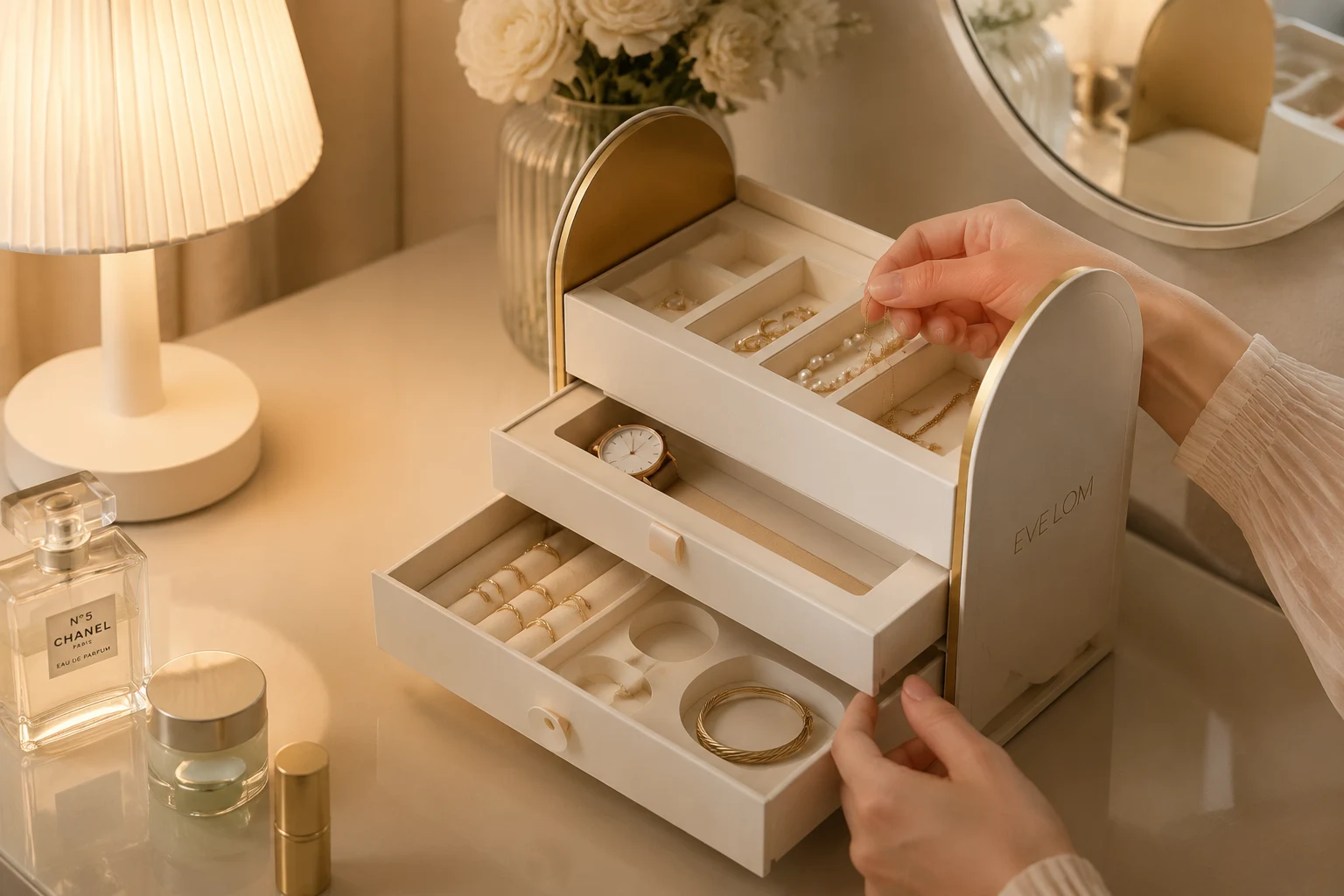
Paper-based inserts aren’t limited to plain, undyed pulp — options include colored pulp matching a brand’s palette, flocked or velvet-effect paper linings for a softer tactile presentation, and printed die-cut paper trays carrying branding or pattern detail directly on the insert itself.
These finishing options mean switching away from foam doesn’t necessarily mean sacrificing visual presentation quality, though some finishes — particularly flocked or velvet-effect coatings — may themselves warrant a material composition check, since certain flocking processes use synthetic fiber that could affect the same recyclability calculation being optimized by moving away from foam in the first place.
Common Mistakes
The most common mistake is defaulting to foam because it’s the established, familiar option without evaluating whether the specific product actually needs foam’s cushioning precision — many products ship and handle perfectly well in a well-designed pulp tray, and the foam choice is sometimes simply inherited from a previous structure rather than deliberately chosen. The second common mistake is switching to a paper-based insert purely for EPR fee savings without testing real-world fit and protection performance first, which risks increased breakage costs that outweigh the fee savings if the switch is made without adequate validation.
How This Decision Connects to the Broader EPR Picture
The choice between foam inserts for boxes and paper-based alternatives is one specific decision within the broader material composition question covered in our guide on how plastic components affect EPR treatment, which addresses exterior structural and closure elements alongside this interior insert question. Both guides feed into the same underlying material composition data covered in our guide on what packaging data to request from your supplier — insert material is simply one line item within that broader reporting requirement, not a separate compliance question handled in isolation from the rest of a structure’s material profile.
Making the Decision for a New Product Launch
For a new product launch, working through this decision alongside a manufacturer early in the design process — rather than defaulting to whatever material was used for a previous, unrelated product — tends to produce a better-fitted outcome. Sharing the product’s actual dimensions, fragility characteristics, and target markets lets a manufacturer recommend whether foam’s cushioning precision is genuinely needed or whether a paper-based alternative would perform adequately while capturing more favorable EPR treatment across the relevant markets.
Sample Cost Scenarios
To make this trade-off more concrete: a cosmetics brand ordering 5,000 units of a two-piece rigid box with a foam insert versus a comparable pulp tray insert might see a modest per-unit EPR fee difference under an eco-modulated system, translating to a meaningful aggregate difference across the full order once eco-modulation is applied consistently.
Whether that aggregate difference justifies a switch depends heavily on the specific product’s fragility profile and the brand’s tolerance for any change in cushioning performance — a calculation best run with real quotes from a manufacturer rather than estimated from general industry figures, since exact fee structures and material costs vary enough by supplier and market to make generic estimates unreliable for actual budgeting purposes.
Manufacturing and Certifications
Topvisio Packaging is based in Dongguan, Guangdong, running 14+ automated production lines, with samples typically ready within 7 working days of specification confirmation. We offer both molded EVA foam and die-cut pulp or paper insert options, with material composition data provided for either choice. FSC chain-of-custody certification is available on request for paper-based components, alongside PPWR-relevant documentation, ISO 9001, ISO 14001, and SEDEX audit standing. You can browse our full product range or check FSC-certified packaging options.
Whichever material a brand ultimately chooses, treating this as a deliberate, data-informed decision — weighing EPR fee impact, cushioning performance, and total production cost together — produces more reliable long-term results than defaulting to a familiar material without reevaluating it against current compliance requirements.
Frequently Asked Questions
Frequently Asked Questions
Are foam inserts for boxes more expensive under EPR fees than paper inserts?
Generally yes. EVA foam is typically classified as a lower-recyclability material under eco-modulated fee structures, while paper-based inserts align more closely with the surrounding paper structure and usually receive more favorable treatment.
Do paper inserts protect products as well as foam?
Not always as precisely. Foam holds a more reliable, tighter cavity shape for irregular or fragile products, while pulp and die-cut paper inserts have less dimensional precision, though they work well for many non-fragile products.
Can foam and paper inserts be combined in one structure?
Yes, in a hybrid approach using foam only where functionally necessary — a bottle neck cradle, for instance — paired with paper-based components elsewhere in the interior.
Does switching from foam to paper inserts always save money overall?
Not necessarily. EPR fee savings need to be weighed against any increase in breakage risk or replacement cost if the paper alternative doesn’t perform as well for a specific fragile product.
Is EVA foam recyclable?
Not through standard paper recycling streams, and it’s generally not accepted in most curbside plastic recycling programs either, which is part of why it’s typically classified as lower-recyclability under EPR frameworks.
Should I request a filled sample when testing a new insert material?
Yes. A physical sample with the actual product seated inside reveals fit and cushioning performance that a rendering or technical drawing can’t fully capture.
Is FSC certification available for paper-based inserts?
Yes. FSC-certified paper and pulp materials are available on request for paper-based insert components, alongside standard PPWR and other certification documentation.
Does foam insert treatment vary between the EU and US EPR frameworks?
Yes. PPWR’s eco-modulation generally disadvantages foam consistently across EU member states, while US state programs vary based on each state’s specific covered-material definitions and focus areas.
Can paper-based inserts be finished to match a foam insert’s visual presentation?
Yes, through colored pulp, flocked or velvet-effect linings, and printed die-cut trays, though some finishes warrant their own material composition check.